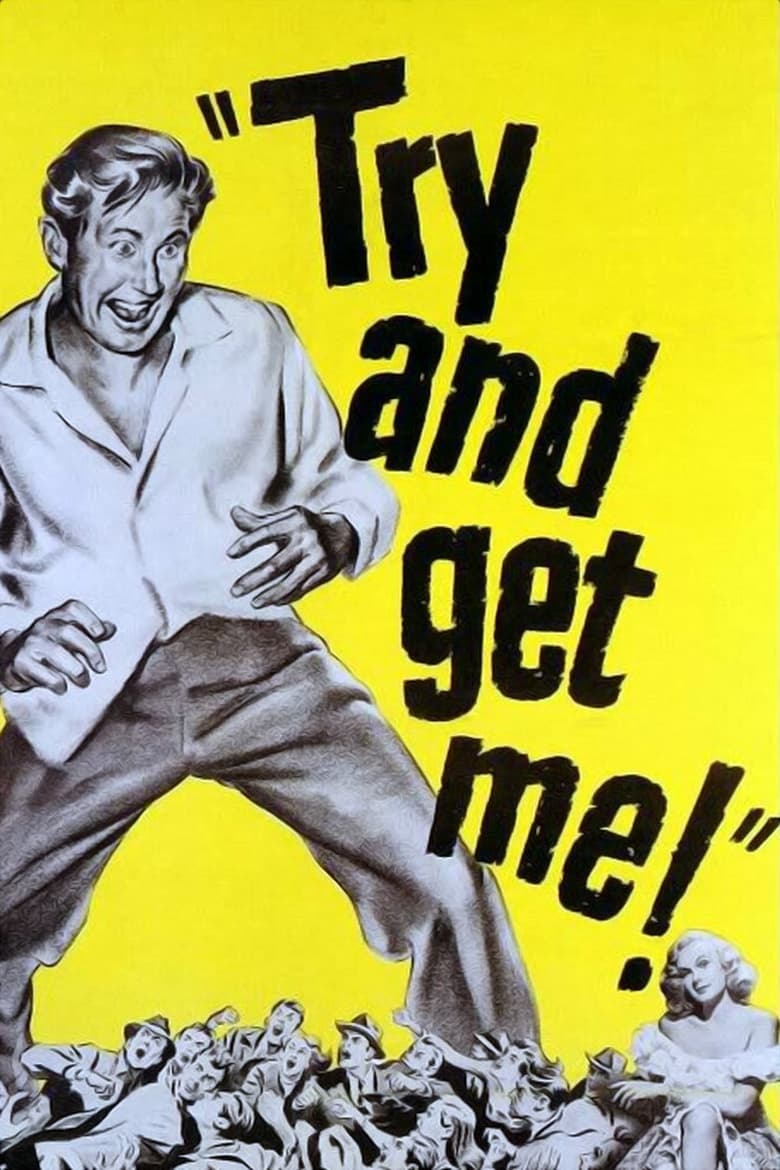
Howard Tyler (Frank Lovejoy) is a veteran adrift in postwar California, chronically unemployed and too proud to admit to his wife Judy (Kathleen Ryan) how thoroughly he is failing. When he meets Jerry Slocum (Lloyd Bridges), a small-time operator with easy money and easier charm, Howard lets himself be pulled into a series of petty thefts that escalate, with terrible logic, toward kidnapping and murder. Judy and their young son wait at home, unaware of what Howard has become.
As Howard sinks deeper, the town around him begins to stir. Gil Stanton (Richard Carlson), a newspaper reporter, feeds the public hysteria with sensational coverage of the kidnapping – then watches, with growing unease, as the mob he has helped create acquires its own momentum. The film splits its attention between the criminal's remorse and the community's excitement, suggesting that guilt is not confined to those who commit the act.
Try and Get Me occupies an unusual position within the noir cycle, adapting Jo Pagano's novel The Condemned with a sociological seriousness more common to the problem pictures of the late 1940s than to hardboiled crime films. Its interest is less in the mechanics of crime than in the conditions that produce it and the violence a respectable society is prepared to sanction in response. The ending, positioned around the threat of mob justice, tests the film's moral argument against its most extreme conclusion.
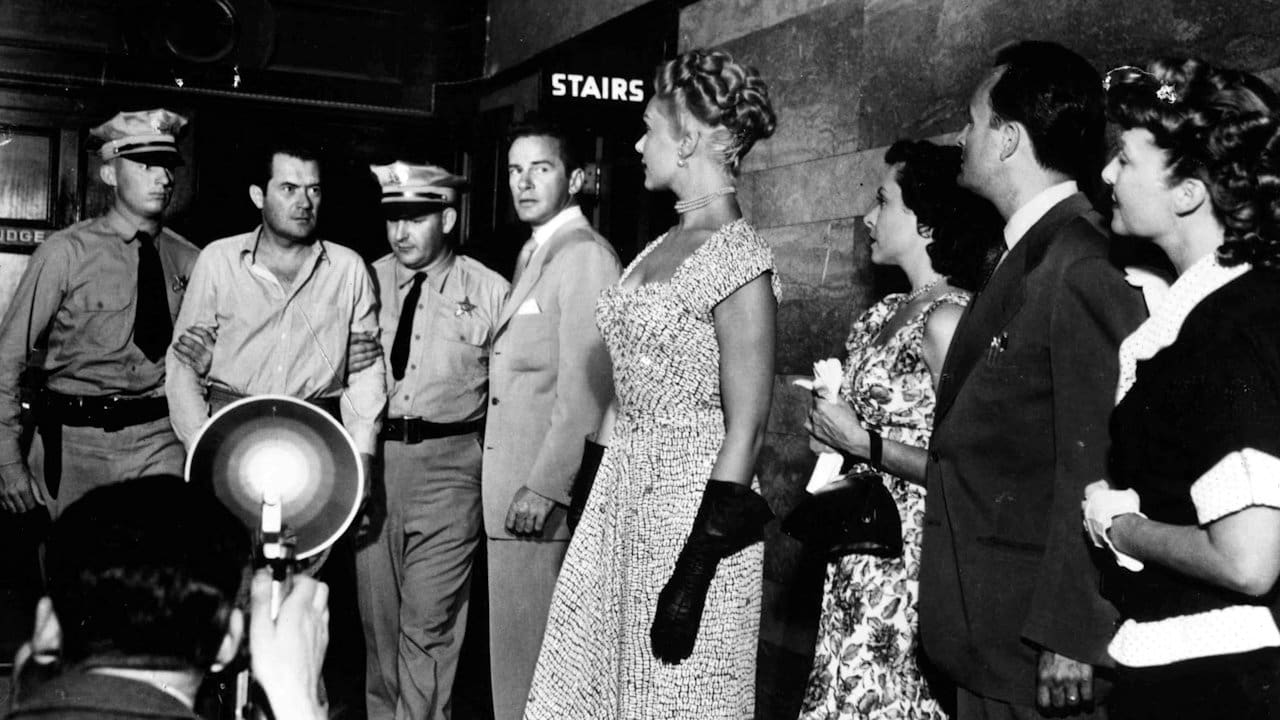
Try and Get Me arrives late in the classical noir cycle but carries convictions that many shinier films in the genre lack. Cy Endfield, who would be blacklisted shortly after the film's release, works with a sociologist's eye and a pessimist's patience, refusing to separate Howard Tyler's criminality from the economic conditions that precede it. Frank Lovejoy gives one of his most controlled performances – hollow rather than corrupt, a man who mistakes passivity for caution. Lloyd Bridges counterbalances him with coiled, instinctive menace. What distinguishes the film is its refusal to let the press or the public off the hook: Richard Carlson's reporter is no detective hero but a man who stokes the fire and is then appalled by the heat. The mob sequence that closes the film draws on real American history – the San Jose lynching of 1933 – and its power comes not from spectacle but from the film's accumulated argument that violence is a social product, not an aberration. In the context of Endfield's own political persecution, the film reads as something close to testimony.
– Classic Noir
Guy Roe shoots the approaching mob at night, from low angles that compress the crowd into a single advancing mass, individual faces briefly caught by torchlight before dissolving back into the collective. The jail exterior is rendered in deep shadow, the building itself almost abstract – a block of darkness against a sky that offers no relief. Roe does not aestheticize the violence; the camera holds steady and observational, which makes what follows worse.
The scene is the film's thesis made physical. Everything Endfield has argued in quieter registers – that ordinary people carry the capacity for sanctioned brutality, that the press mediates and amplifies rather than reports – arrives here without mediation. Howard Tyler, who has been the film's moral problem, becomes in this moment its victim, and the transfer of guilt from the individual to the institution is complete. The film does not editorialise. It simply watches.
Guy Roe's cinematography on Try and Get Me works against the visual pleasures the noir style can too easily provide. Where many films in the cycle use shadow expressively – to glamorize threat, to aestheticize corruption – Roe employs a flatter, more documentary-inflected approach that suits Endfield's social realist intentions. Location shooting in and around the San Jose area grounds the film in an identifiable, unglamorous California, and Roe's compositions favor wide shots that situate characters within their environment rather than isolating them in pools of artful light. When shadows do gather – most forcefully in the jail sequence – they function as mass rather than atmosphere, describing a crowd rather than an interior state. Interiors are lit with practical logic: domestic spaces that feel genuinely modest, a diner and a bowling alley that carry the texture of working-class life without condescension. The overall visual register communicates that this is not a world of fate and style but of circumstance and consequence.
The Criterion Channel has carried Try and Get Me as part of its noir programming and offers a clean, reliable transfer for subscribers.
TubiFree (Ad-Supported)Tubi has made the film available in the past as part of its classic crime catalogue, though transfer quality varies.
Archive.orgFreeAs a public domain title, Try and Get Me is available on Archive.org, though print condition and scan quality are inconsistent across uploads.