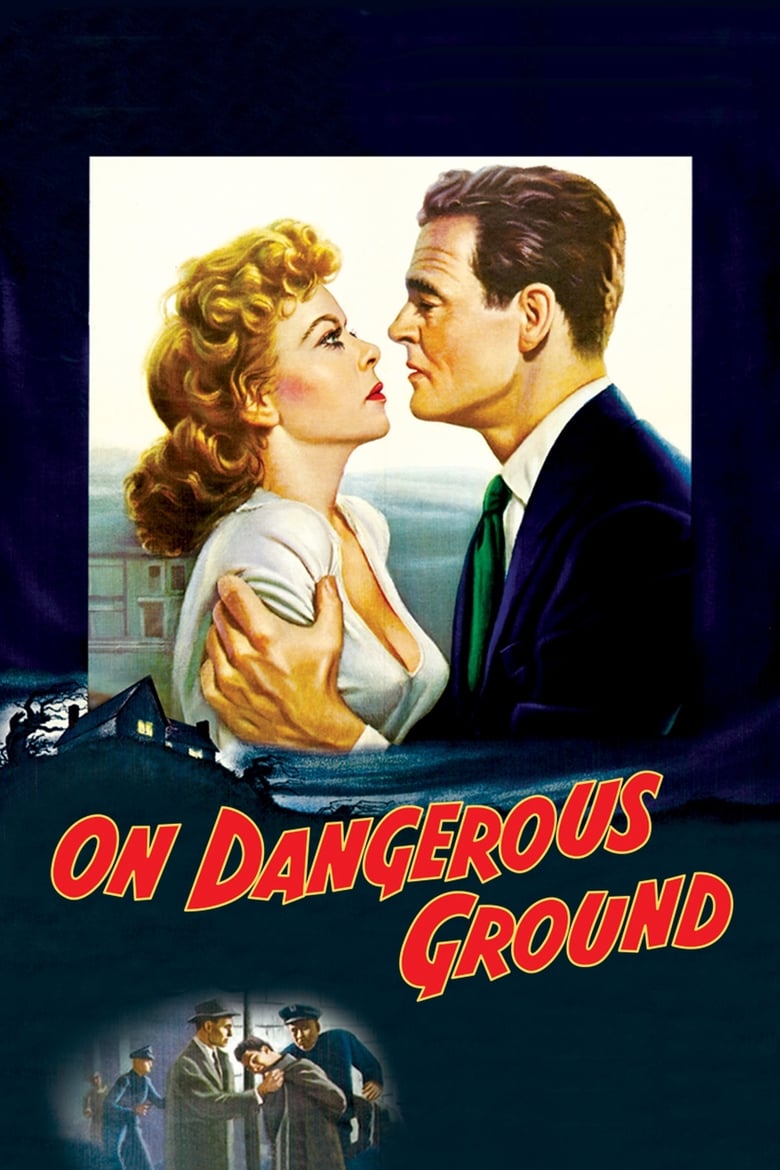
Jim Wilson (Robert Ryan) is a plainclothes detective in an unnamed American city, a man so corroded by years of urban violence that he has become something close to the criminals he pursues. His superiors tolerate his methods; his colleagues grow wary of him. When he badly beats a suspect during a routine investigation, Captain Brawley (Ed Begley) ships him out of the city to assist a rural sheriff in tracking a child killer – a temporary removal that doubles as a warning.
In the snow-covered upstate landscape, Wilson joins Walter Brent (Ward Bond), a grieving father hunting the man who murdered his daughter. The trail leads to Danny Malden (Sumner Williams), a young man with diminished mental capacity, and to his blind sister Mary (Ida Lupino), who shelters Danny with a fierce, protective love. Wilson, trained to pursue and punish, is compelled for the first time to weigh justice against mercy. Mary's calm moral clarity unsettles him in ways that neither a suspect's resistance nor a captain's reprimand ever could.
On Dangerous Ground positions itself at the seam between two strains of American noir: the procedural city film, with its corrupt rhythms and institutional violence, and a quieter, more elemental story about whether a damaged man can be reclaimed. The rural second half is deliberate in its stillness, and the film's unresolved moral tensions – between law and compassion, rage and restraint – mark it as something stranger and more searching than a standard crime picture.
Nicholas Ray made On Dangerous Ground during a period when RKO's noir output was thinning into formula, and the film's structural gamble – abandoning the city midway through – was likely what kept it from finding a large audience in 1951. What it achieves is a study of institutional violence that stays materialist rather than sentimental: Jim Wilson's brutality is not explained away by psychology but shown as a professional deformation, the predictable result of what the city asks of the men it hires to police it. Robert Ryan carries this without softening it; his Wilson is not a hero in recovery but a man whose capacity for tenderness has been so long suppressed that it emerges awkwardly, almost against his will. Ida Lupino's performance as Mary is the film's moral counterweight, and her blindness – rather than functioning as melodramatic device – becomes a formal correlative for a different kind of perception, one not contingent on the hard surfaces that Wilson has spent his career reading. Bernard Herrmann's score, unusually agitated for a RKO production, drives the city sequences and then opens into something more plainspoken for the snow country, tracking the film's tonal argument with precision.
– Classic Noir
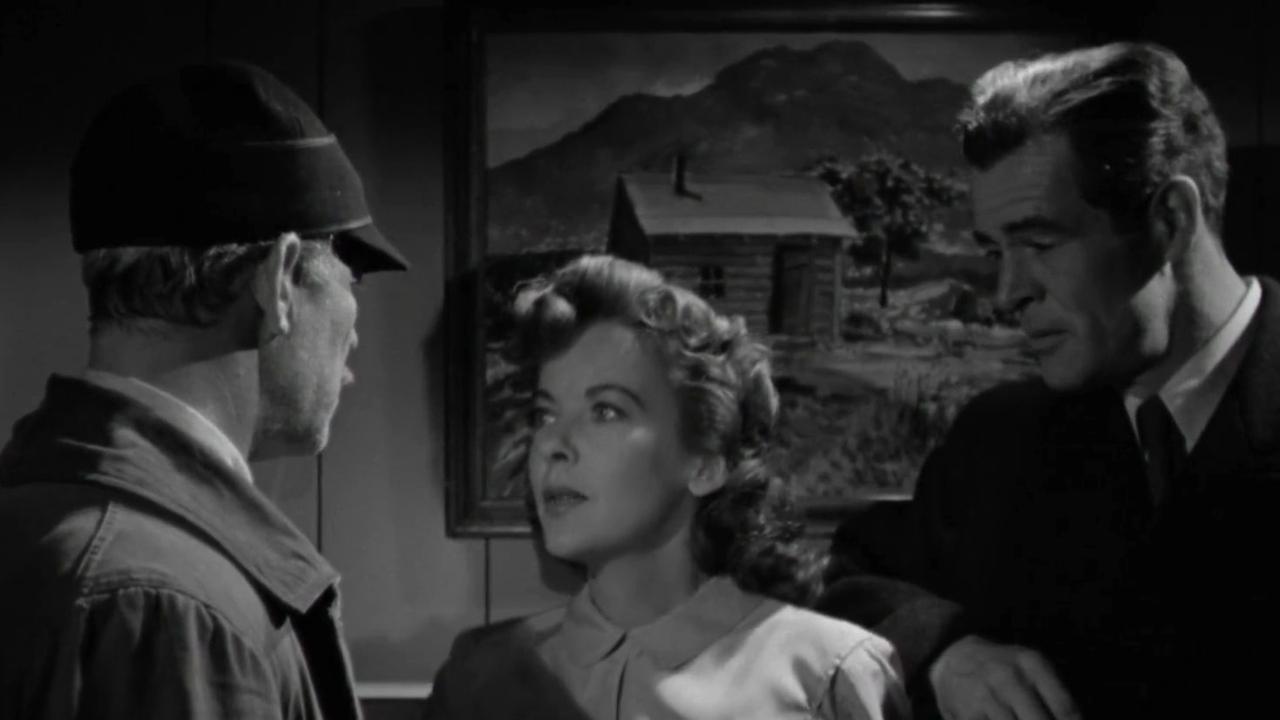
Ray and cinematographer George E. Diskant frame Wilson in the doorway of Mary Malden's farmhouse, the darkness of the rural night pressing in from behind him while the interior throws a low, even light across his face. Diskant eschews the hard-shadow chiaroscuro of the city sequences; here the light is diffuse, coming from practical sources within the room – a lamp, the faint glow of a fire – and it falls on Ryan's features without drama. The composition places Wilson neither inside nor outside the domestic space, and the camera holds the framing longer than comfort requires.
The scene externalises Wilson's defining crisis. The city trained him to enter rooms violently, with certainty of purpose; here he stands suspended, unsure whether he belongs in the space or what role he would occupy if he entered it fully. Mary, moving through the room with the unhurried confidence of someone who has never relied on sight to navigate it, does not acknowledge his hesitation. The frame argues, quietly, that the threshold Wilson cannot cross is not the farmhouse door but the distance between the man he has become and the man he might still be.
George E. Diskant's work on On Dangerous Ground is notable precisely for its willingness to operate in two registers and to make that division visible. The city sequences – shot largely on location and on RKO standing sets – use deep shadow, constricted frame widths, and hard directional lighting that reduces faces and alleys to the same tonal flatness: a world where everything has the same moral texture. When the film moves to the snow country, Diskant opens the lenses and turns toward available light and wide exterior compositions; the deep-focus work in the farmhouse interiors uses natural-source practicals to produce a warmer, less structured illumination. This is not merely atmospheric contrast. The visual shift enacts the film's central proposition – that Wilson's perception, like the city's lighting grid, has been organised to make moral complexity invisible. The snow's reflective brightness in the exterior sequences is almost oppressive in its clarity, a landscape that refuses the shadows Wilson has learned to operate within.
The most reliably curated presentation of the film, likely sourced from a clean archival print with accurate aspect ratio and contrast levels appropriate to Diskant's photography.
TCMBroadcast / StreamingTCM screens On Dangerous Ground periodically as part of its RKO and Nicholas Ray programming; check schedules, as availability in its streaming archive rotates.
Archive.orgFreeA public-domain version is available though print quality varies; adequate for a first viewing but not a reliable representation of the film's visual design.