Films People Pull a Fast One Night Beat Reading Room On TV Shop
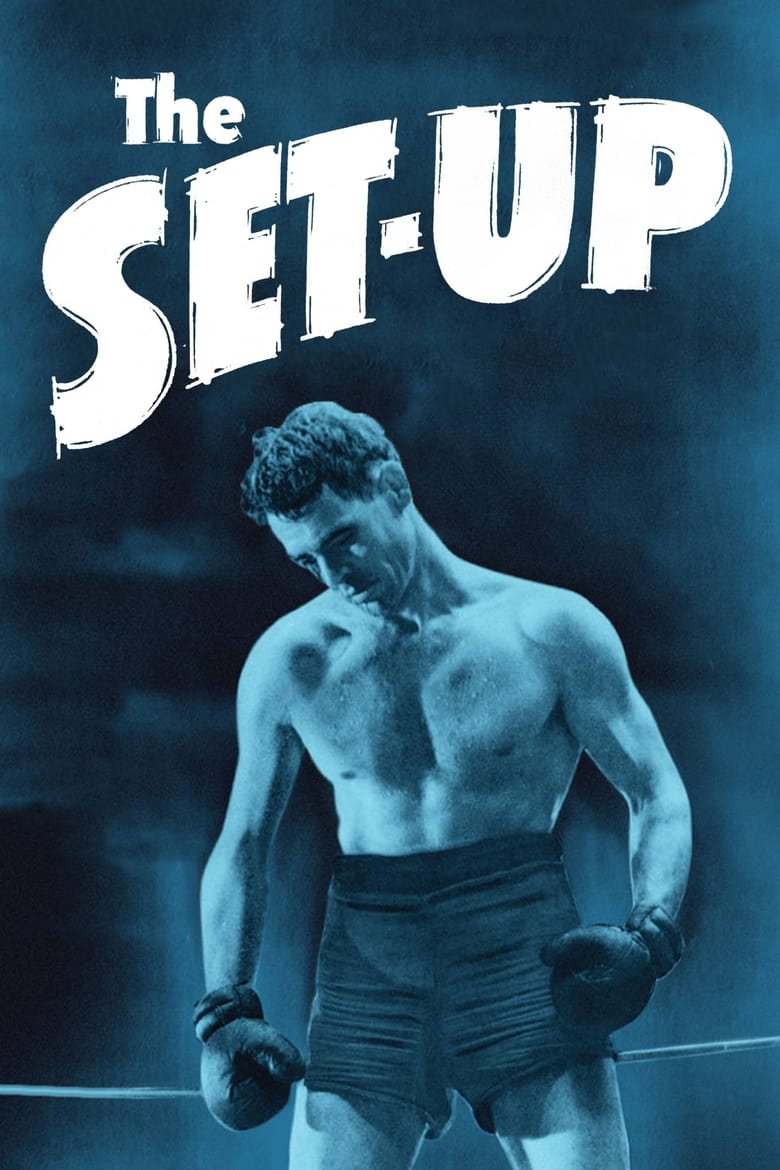
Set-Up 1949
1949 RKO Radio Pictures
★★★☆☆ Notable
Film Noir · 58 minutes · Black & White

Set-Up

Directed by Robert Wise
Year 1949
Runtime 58 min
Studio RKO Radio Pictures
TMDB 7.4 / 10
"A man with something to hide, and an inspector with the patience to wait."

In a quiet corner of London, Theo Gaunt – a respectable, middle-aged man played with careful reserve by Maurice Denham – finds himself drawn into a web of criminal obligation he cannot easily escape. When a killing occurs in his orbit, Inspector Jackson arrives to ask the kind of questions that assume guilt before evidence is gathered. The two men circle each other across a series of measured exchanges, each probing for the weakness in the other's position.

Nicole Romain, a French woman whose loyalties remain deliberately obscured, complicates the moral geometry of the investigation. Ray Underwood and the shadowy Ross represent the criminal element that has set the trap in the first place, and Arthur Payne – nervous, compromised – suggests that innocence in this world is less a condition than a performance. As Jackson tightens his inquiry, the lines between victim, witness, and accessory begin to dissolve.

Set-Up belongs to the tradition of the compact British procedural noir – tightly contained, psychologically alert, more interested in the architecture of guilt than in physical violence. Working within the economy of Merton Park Studios' Edgar Wallace series format, director Gerard Glaister constructs a film that uses brevity as a formal discipline, pressing its characters into corners from which there are few clean exits.
Classic Noir

Set-Up arrives as one of the later entries in Merton Park Studios' long-running cycle of Edgar Wallace adaptations – a series that, at its best, demonstrated how severe budgetary constraint could function as a stylistic asset rather than a liability. Gerard Glaister, working in a primarily television-oriented mode by this point, keeps his mise-en-scène functional and his running time honest. Maurice Denham, an actor whose face registers unease with unusual precision, carries the film through passages that a lesser performer would flatten into routine. What the film reveals about its era is instructive: by 1963, British noir had internalized enough of the American model to strip it down to essentials – the procedural exchange, the morally ambiguous witness, the institutional detective who operates just inside the law. There is no romanticism here, no femme fatale deployed for glamour alone. Nicole Romain is a complication, not a fantasy. The result is a film of modest scope and genuine professional competence, valuable precisely because it does not overreach.

– Classic Noir
3 ★★★☆☆ Notable
Credits

The Crew

DirectorRobert Wise
ScreenplayArt Cohn
CinematographyMilton Krasner
EditingRoland Gross
Art DirectionJack Okey
ProducerDore Schary
Performances

The Cast

Close Reading

The Signature Scene

Set-Up – scene
The Interview Room Jackson Lets the Silence Work

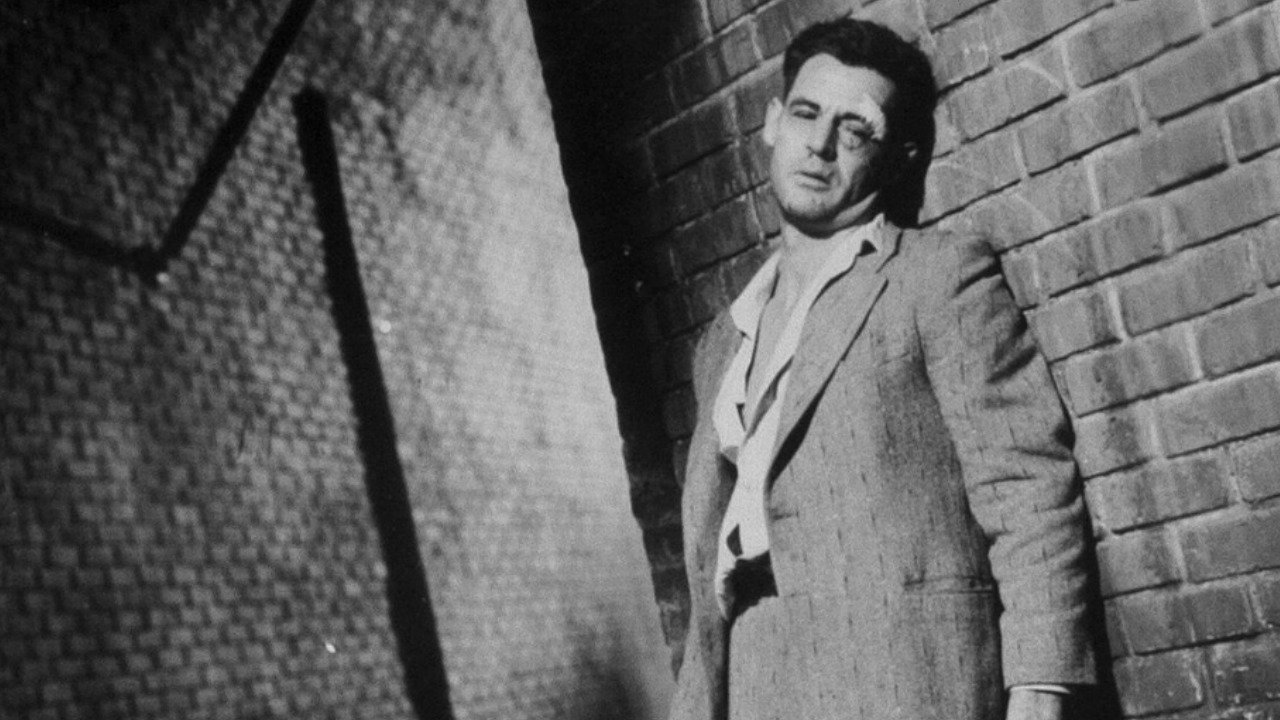
The camera holds on a medium two-shot as Inspector Jackson allows a long pause to accumulate between his question and any expectation of an answer. The light falls from a practical overhead source, casting the upper half of Denham's face into partial shadow while Jackson remains flatly, deliberately illuminated – a visual grammar that aligns institutional authority with clarity and the suspect's interiority with concealment. Bert Mason frames the scene with a minimum of cutting, letting the spatial relationship between the two men carry the tension that a more kinetic production would assign to editing.

The scene argues that in this kind of noir, the detective's primary instrument is not the search warrant but the willingness to wait. Gaunt's discomfort is not produced by accusation but by the refusal to be accused – by the open space Jackson creates and then declines to fill. It is a scene about the coercive power of silence, and it positions guilt less as a legal category than as an interior state that eventually defeats its own concealment.

Visual Language

The Cinematography

🎞️
Milton Krasner – Director of Photography

Cinematographer Bert Mason, working within the tight schedules and controlled environments of Merton Park's studio operations, develops a visual language built on economy and contrast rather than expressionist excess. His lighting setups favor hard, directional sources that define architectural space with minimal fill, keeping backgrounds legible without sacrificing shadow density. The studio interiors – offices, corridors, domestic rooms rendered with careful plainness – are photographed with lenses that hold depth without distortion, a choice that grounds the film's psychological tension in physical plausibility. Mason avoids the tilted angles and extreme close-ups that a less restrained approach might deploy, trusting instead that flat, direct compositions will register the small deteriorations of character the script demands. This restraint is a moral position as much as an aesthetic one: in a film about the slow exposure of concealment, the camera that refuses to editorialize is itself an instrument of pressure. Shadow work is precise, purposeful, and never decorative.

In the Catalogue

Themes & Motifs

Availability

Where to Watch

Also in the Directory

See Also