In a unnamed Central European city operating under the shadow of authoritarian order, Karl Nemesch (Conrad Nagel), a lawyer of diminishing principle, finds himself drawn into a conspiracy that implicates men he once trusted. When a political prisoner's fate becomes entangled with forged documents and a suppressed trial, Nemesch must decide how much of his former integrity he is willing to spend to survive. The city itself feels sealed – a place where institutions exist not to deliver justice but to ratify decisions already made in back rooms.
Joseph Schwartz (Fritz Kortner), a figure of ambiguous allegiance who may be informer, victim, or both, complicates Nemesch's attempt to navigate the case cleanly. Baron Arady (Reinhold Schünzel) moves through the film's margins with the practiced ease of a man who has outlasted several regimes by knowing which way the wind turns before others feel it. Around them, smaller men – Calomar Balog (Philip Van Zandt), Andreas Molnar (Lester Dorr) – are caught in mechanisms too large for them to understand or escape.
Vicious Circle belongs to the postwar cycle of noirs that locate their dread not in American urban crime but in the residue of European totalitarianism – films preoccupied with show trials, bureaucratic complicity, and the moral corrosion that follows collaboration. W. Lee Wilder works within tight budget constraints to construct a world where guilt is distributed rather than assigned, and where the legal apparatus on display is less a system of justice than a theater of predetermined outcomes.
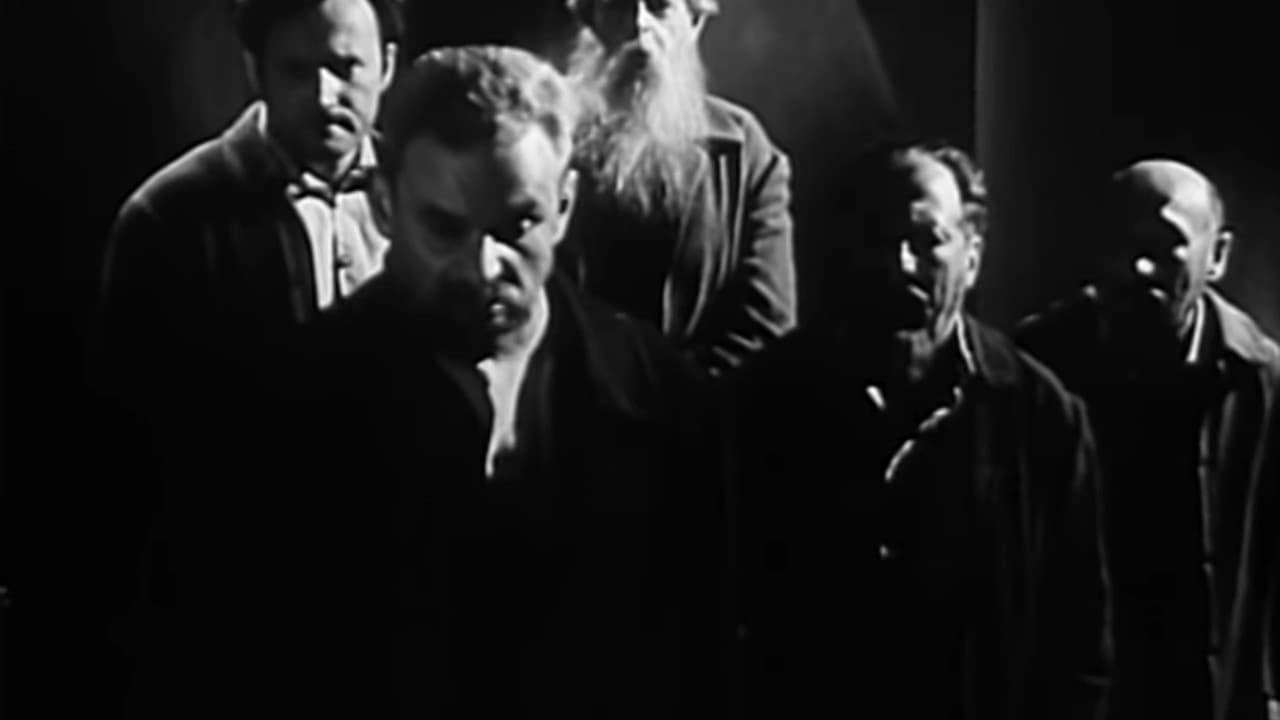
W. Lee Wilder's Vicious Circle occupies a minor but genuine position in postwar noir's engagement with European political trauma. Made in 1948, the year of the Berlin Blockade and accelerating Cold War tension, the film channels anxieties about show trials and state coercion into a genre framework that American audiences could receive without direct political confrontation. Fritz Kortner, himself an exile from Nazi Germany with direct experience of what such systems cost, lends Schwartz a weight that the screenplay alone does not entirely earn. The film is uneven – Nagel's Nemesch is too passively reactive for much of the running time, and the courtroom sequences strain the budget – but Wilder and cinematographer George Robinson manage passages of genuine atmospheric compression. The casting of European émigrés throughout gives the film a cultural specificity rare in low-budget American productions of the period. As a document of exile cinema within the noir tradition, Vicious Circle rewards the attention of scholars even where it frustrates general audiences.
– Classic Noir
Robinson frames the presiding judge (Edwin Maxwell) from a low angle, the bench rising above the accused like an architectural assertion of power. Light enters from a single lateral source, carving the room into distinct zones – the illuminated bench where authority sits, and the dim well where the accused and their counsel must stand and speak. The camera holds wide long enough to establish the spatial imbalance before cutting to close-ups that isolate each face in its own pocket of partial darkness, as though the courtroom itself has already determined who belongs to the light.
The scene crystallizes the film's central argument: that the law, in this world, is not an instrument of discovery but of confirmation. Nemesch's growing realization that his legal skill is irrelevant to the outcome is written not in dialogue but in the progressive constriction of his space within the frame. By the scene's end he stands at the edge of his own shot, nearly occluded – a visual statement about what happens to professional principle when institutions abandon their own premises.
George Robinson, whose career stretched across Universal horror and mid-range noir, brings a disciplined efficiency to Vicious Circle that makes the most of what were clearly constrained studio resources. Working predominantly on interior sets, Robinson relies on hard-source single lighting to create a world of strong contrast and compressed space, favoring setups where walls and ceilings press into frame to deny characters any sense of openness or escape. His lens choices run toward slightly longer focal lengths in the interrogation and courtroom scenes, flattening depth and making figures appear trapped within their surroundings rather than moving through them. Shadow work is deployed with specific moral logic: figures who hold institutional power are lit with more relief and definition, while those subject to the system are rendered in murkier half-tones that suggest their indeterminate status. It is cinematography that does not call attention to its own technique but quietly reinforces every thematic concern the narrative raises about visibility, exposure, and the cost of being seen.
Vicious Circle is likely in the public domain and available for free streaming at Archive.org, though print quality will vary.
TubiFreeTubi periodically carries low-budget postwar noirs of this period; availability should be confirmed before seeking.
Amazon Prime VideoSubscriptionMay appear through Prime's rotating catalogue of classic titles; verify current availability before seeking.