Films People Pull a Fast One Night Beat Reading Room On TV Shop
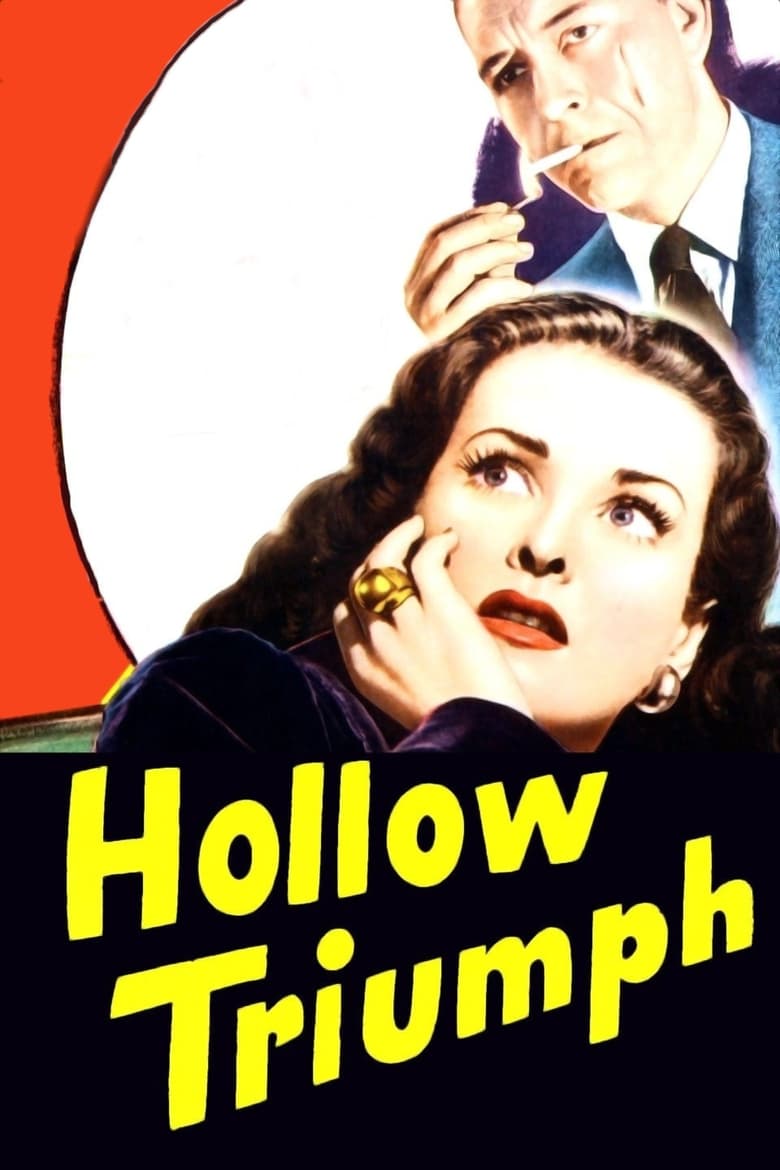
Hollow Triumph 1948
1948 Bryan Foy Productions
★★★☆☆ Notable
Film Noir · 83 minutes · Black & White

Hollow Triumph

Directed by Steve Sekely
Year 1948
Runtime 83 min
Studio Bryan Foy Productions
TMDB 6.6 / 10
"A man assumes another man's life and finds it fits no better than his own."

John Muller is a small-time criminal on the run from a gambling syndicate whose money he stole. Intelligent, calculating, and entirely without sentiment, he takes work as a file clerk at a psychiatric clinic, where he discovers that one of the staff physicians, Dr. Bartok, bears a striking physical resemblance to him. Evelyn Hahn, a world-weary woman employed at the same clinic, observes Muller's scheming with the detached recognition of someone who has long since stopped expecting anything from men.

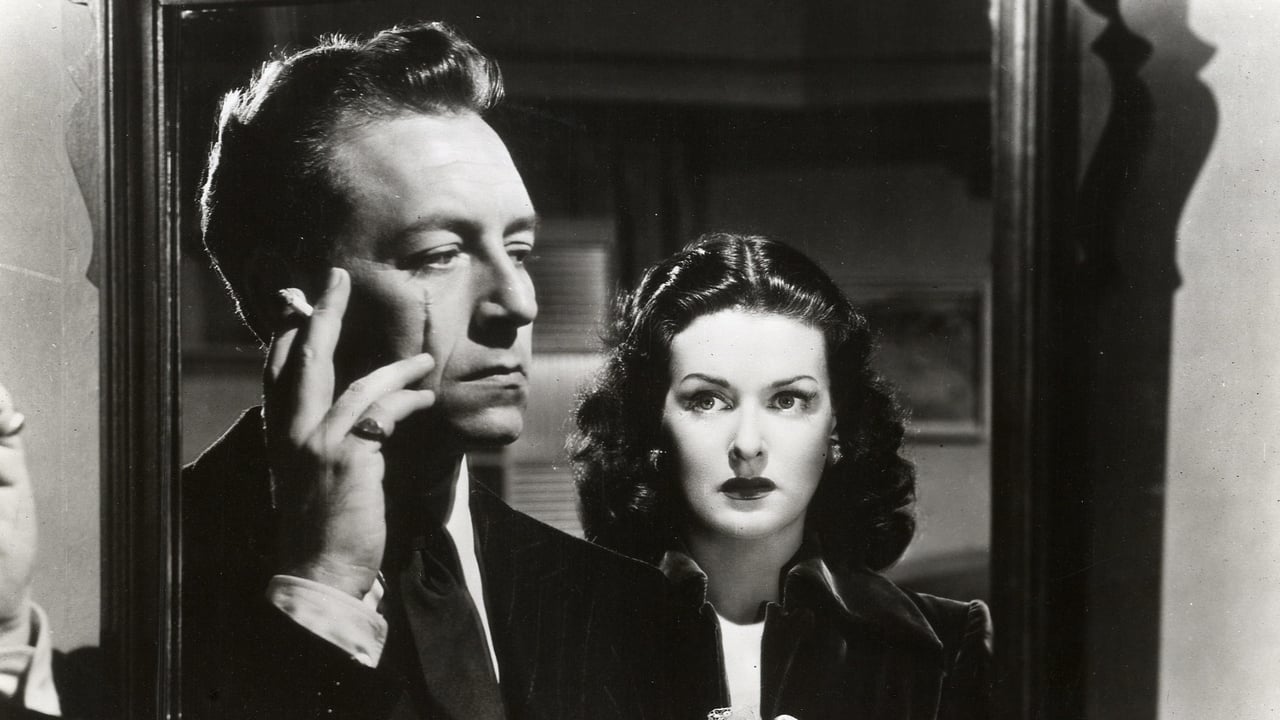
When Muller photographs the one distinguishing mark that separates his face from Bartok's – a scar on the doctor's cheek – he has it surgically replicated on himself and assumes the physician's identity, killing Bartok to seal the exchange. What he fails to account for is a clerical detail buried in a photograph: a flaw invisible to him but recorded on film. His relationship with Evelyn, never fully resolved, hovers at the edge of something real before the logic of his own deception forecloses it.

Hollow Triumph operates within the fatalist tradition of postwar American noir, treating identity not as something stolen or constructed but as a trap that closes the moment a man believes he has escaped it. The film belongs to a cycle of late-1940s noirs in which the crime is almost incidental and the punishment is existential rather than legal, arriving not through pursuit but through the simple, indifferent mechanics of chance.
Classic Noir

Hollow Triumph sits at an instructive angle to the mainstream of late-1940s noir. Paul Henreid, better known for Continental wartime roles, brings an unusual quality to Muller: not charm concealing menace, but cold intelligence operating in full view, with no charm required. The film's central conceit – a man who commits the perfect impersonation and is destroyed not by detection but by a random photographic error he never learns about – is among the bleaker structural arguments in the cycle. Steve Sekely's direction is functional rather than distinguished, but John Alton's cinematography elevates the material consistently, finding moral geometry in shadow ratios that the screenplay states only obliquely. Joan Bennett, in her fourth consecutive noir, contributes a performance of controlled fatalism that never tips into parody. What the film most clearly reveals about its era is a postwar suspicion that reinvention – the American promise – is not only fraudulent but self-sealing: the harder a man works to become someone else, the more precisely he reproduces the conditions of his own ruin.

– Classic Noir
3 ★★★☆☆ Notable
Credits

The Crew

DirectorSteve Sekely
ScreenplayDaniel Fuchs
CinematographyJohn Alton
MusicSol Kaplan
EditingFred Allen
Art DirectionEdward L. Ilou
ProducerPaul Henreid
Performances

The Cast

Close Reading

The Signature Scene

Hollow Triumph – scene
The Darkroom Revelation The Scar in the Negative

Alton lights the darkroom sequence with a narrow, sourceless red that falls across Muller's face at a low angle, leaving the upper half of the frame in near-total darkness. The developing photograph is centered in the composition, and the camera holds on it with the patience of a document being read rather than a discovery being staged. As the image resolves, the frame does not move; the information arrives in stillness.

The scene encodes the film's central argument in purely visual terms: the error that will undo Muller is not in the world he can observe and manipulate but in the photographic record, a technology of fixed truth immune to his intelligence. He has made himself into an image of another man, and it is an image that exposes him. The camera's stillness at this moment is not suspense – it is verdict.

Visual Language

The Cinematography

🎞️
John Alton – Director of Photography

John Alton's work on Hollow Triumph belongs to the compressed, high-contrast period that produced some of the most formally disciplined studio noir photography of the decade. Shooting largely on constructed sets for Bryan Foy Productions, Alton works within tight spatial constraints to manufacture depth through shadow layering rather than physical distance. His lighting setups favour hard single-source illumination placed low and to the side, carving faces into planes of light and dark that remove any ambiguity about moral standing. Lens choices tend toward the slightly longer end for interiors, flattening depth just enough to make rooms feel constricting without obvious distortion. The film's exteriors – night streets, clinic approaches – use wet pavement as a reflective ground plane, doubling light sources and giving the city a mirrored, recursive quality appropriate to a story about duplication and false surfaces. Alton's cinematography does not merely illustrate Muller's predicament; it argues that the world itself is constituted as a recording instrument, indifferent and exact.

In the Catalogue

Themes & Motifs

Availability

Where to Watch

Also in the Directory

See Also