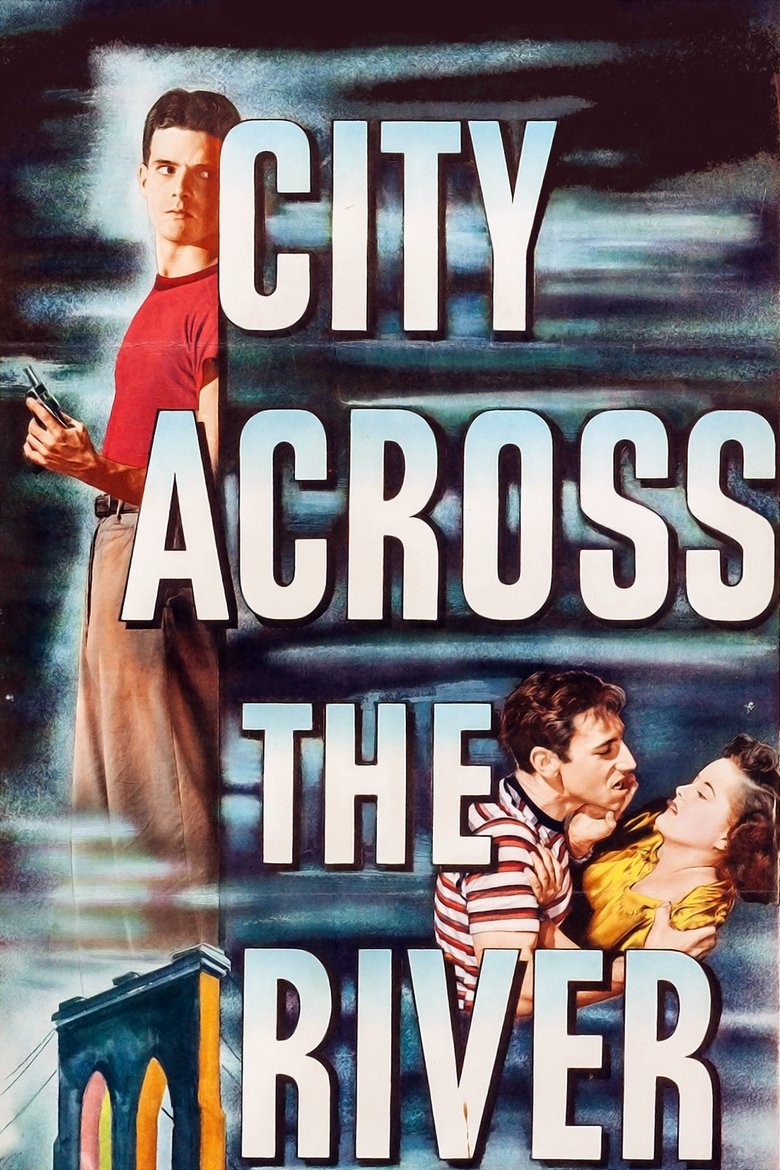
In the tenements of Brooklyn, seventeen-year-old Frankie Cusack drifts between two worlds: the cramped apartment where his mother Katie struggles to hold the family together under the indifferent eye of his stepfather Joe, and the streets where the Amboys, a local gang, offer the belonging that home withholds. When Frankie falls deeper into the Amboys' orbit, the film traces his gradual surrender to their code of loyalty, violence, and contempt for consequence. Stan Albert, a determined plainclothes detective, watches the gang's escalating conduct with a patience that is running out.
A reckless act of violence – a schoolteacher shot dead during a confrontation that spins beyond anyone's control – forces Frankie and those around him toward a reckoning none of them are equipped to face. Katie refuses to see her son clearly; Joe refuses to see him at all. Sue England's Betty and Barbara Whiting's Annie represent diverging futures Frankie might reach toward or abandon. Lieutenant Macon tightens the net while the gang's nominal leader Gaggsy Steens, played with coiled menace by Richard Benedict, maneuvers to protect himself at the expense of the younger boys he has cultivated.
City Across the River belongs to the cycle of postwar juvenile delinquency pictures that used noir's visual grammar to examine anxiety about American youth, urban poverty, and the institutions – family, school, law enforcement – that were supposed to prevent exactly this kind of catastrophe. The film does not sentimentalize its setting or its characters, and it refuses the easy resolution that the social-problem genre sometimes demanded. What lingers is not the crime but the accumulated weight of small failures that made the crime possible.
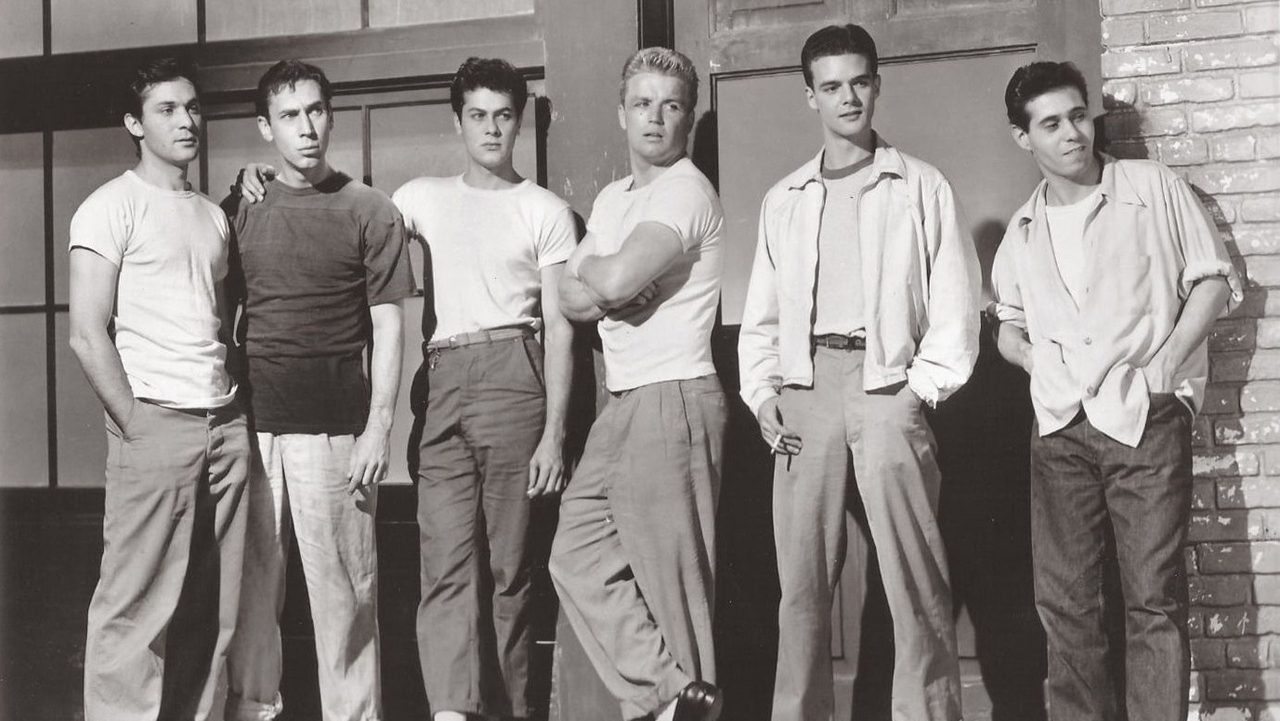
Maxwell Shane, best remembered for his two versions of the Cornell Woolrich nightmare Fear in the Night, brings a documentarian's eye to City Across the River that keeps it from softening into uplift. The film opens with a semi-documentary prologue – a device Universal International deployed repeatedly in this period – that roots the fiction in civic fact, and Shane never entirely abandons that register. Thelma Ritter, in an early screen role, is the film's moral center: her Katie Cusack is exhausted, partial, and genuinely loving in a way that makes her failure to save her son more painful than any courtroom verdict. Stephen McNally's detective operates on the margins, almost a procedural function rather than a protagonist. The film's real subject is the ecology of a neighborhood that produces violence without producing villains in any satisfying sense – a thesis that places it in productive tension with the harder-edged syndicate pictures of the same era and gives it a sociological weight that outlasts its period trappings.
– Classic Noir
Gertsman shoots the sequence in the harsh, shadowless glare of an overcast afternoon – a deliberate refusal of the expressionist darkness the genre usually reserves for violence. The camera holds at a distance that makes the figures look small against the institutional brick of the school wall, then cuts to a tight, almost clinical close-up of the weapon as it clears a jacket. There is no chiaroscuro to aestheticize the moment, no compositional drama to absorb the shock. The flatness of the light is the point.
The scene argues that the most consequential violence in the film is not Gothic or premeditated but accidental, banal, and irrevocable. By stripping away noir's usual atmospheric machinery, Shane and Gertsman implicate the ordinary daylight world – not the night, not the back alley – in what follows. The boys are not transformed by darkness into something other than themselves; they are exactly themselves, in full view, and that is what the film cannot forgive or explain away.
Maury Gertsman's work on City Across the River reflects a conscious tension between two modes: the location-shot quasi-documentary aesthetic that Universal International was cultivating in its crime pictures of this period, and the controlled studio lighting that noir convention demanded. Gertsman uses actual Brooklyn streets and stoops to establish environment, letting available geometry – fire escapes, tenement cornices, narrow alleys – do compositional work that a studio backlot could not replicate. Once the narrative moves indoors, the lighting becomes more deliberate: low-key setups that carve Katie Cusack's kitchen into zones of shadow and worn lamplight, suggesting confinement without resorting to the more theatrical deep-focus expressionism of the cycle's canonical examples. Gertsman's lens choices favor a slightly compressed middle distance that keeps characters in relation to their environment rather than isolated from it, reinforcing the film's sociological argument that no one here acts in a vacuum. The net effect is a visual language that feels observed rather than constructed.
Tubi has carried City Across the River in a serviceable public-domain print – the most consistently accessible free option for this title.
Archive.orgFreeA public-domain transfer is available for streaming and download; quality varies by upload but the film is complete.
TCMSubscriptionTCM periodically airs the film as part of its noir and social-problem programming blocks; check the schedule for upcoming broadcasts.