Films People Pull a Fast One Night Beat Reading Room On TV Shop
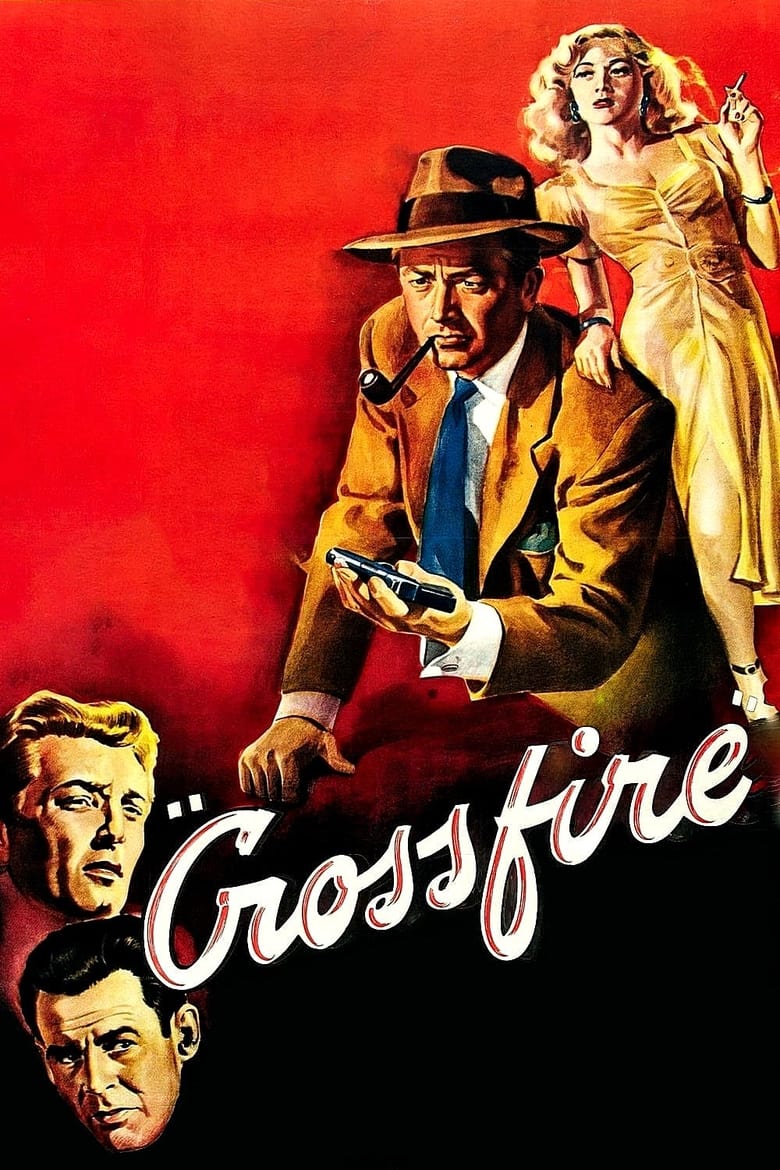
Crossfire 1947
1947 RKO Radio Pictures
★★★☆☆ Notable
Film Noir · 86 minutes · Black & White

Crossfire

Directed by Edward Dmytryk
Year 1947
Runtime 86 min
Studio RKO Radio Pictures
TMDB 6.7 / 10
"A soldier comes home from one war and walks into another."

In postwar Washington, D.C., a Jewish man named Samuels is found beaten to death in his apartment. Captain Finlay of the metropolitan police begins piecing together the night's events from a loose cluster of demobilized soldiers who were among the last to see Samuels alive. The men are restless, displaced, carrying the residue of combat into a civilian world that has no clear place for them. Sergeant Peter Keeley, calm and watchful, moves through the investigation as a reluctant intermediary between Finlay and his fellow soldiers.

Suspicion narrows on Montgomery, a volatile man whose contempt for Samuels surfaces with uncomfortable ease. The soldiers' accounts are fractured and contradictory, and Finlay must navigate a web of alibi, loyalty, and misdirection. On the margins of the case stands Ginny Tremayne, a hostess who provides one soldier with a fragile alibi, and Floyd, whose fear of implication keeps him in the shadows. Keeley, unwilling to let an innocent man take the fall, begins running his own parallel effort to expose the truth.

Crossfire uses a murder investigation to interrogate something more corrosive than crime: the antisemitic hatred that produced the killing. The film works squarely within the procedural framework of postwar noir while pressing against it, using the genre's architecture of guilt and concealment to externalize a social pathology rather than a personal one. It is a rare Hollywood film of its period that names its subject directly and refuses to soften the naming.
Classic Noir

Crossfire arrived in 1947 as one of two Hollywood films that year to address antisemitism head-on, months ahead of Gentleman's Agreement and with considerably less sentimentality. Adapted by John Paxton from Richard Brooks's novel The Brick Foxhole – which originally centered on a homophobic killing – the film transposes its target without losing the essential argument: that a certain kind of American violence is ideological, not incidental. Edward Dmytryk directs with the economy of a B-picture and the moral seriousness of a civic document. Robert Ryan's Montgomery is the film's most significant contribution to the genre: a man whose hatred is banal and self-certain, performed without theatrical menace, which makes him more unsettling than any number of coded villains. The procedural structure keeps the film honest, refusing to let its thesis become a speech. J. Roy Hunt's low-key photography reinforces the argument visually – this is not a world of exotic evil but of ordinary rooms and ordinary men. Crossfire was nominated for five Academy Awards and remains one of the period's most pointed uses of noir conventions in service of something outside the genre's usual moral inventory.

– Classic Noir
3 ★★★☆☆ Notable
Credits

The Crew

DirectorEdward Dmytryk
ScreenplayJohn Paxton
CinematographyJ. Roy Hunt
MusicRoy Webb
EditingHarry Gerstad
Art DirectionAlfred Herman
ProducerAdrian Scott
Performances

The Cast

Close Reading

The Signature Scene

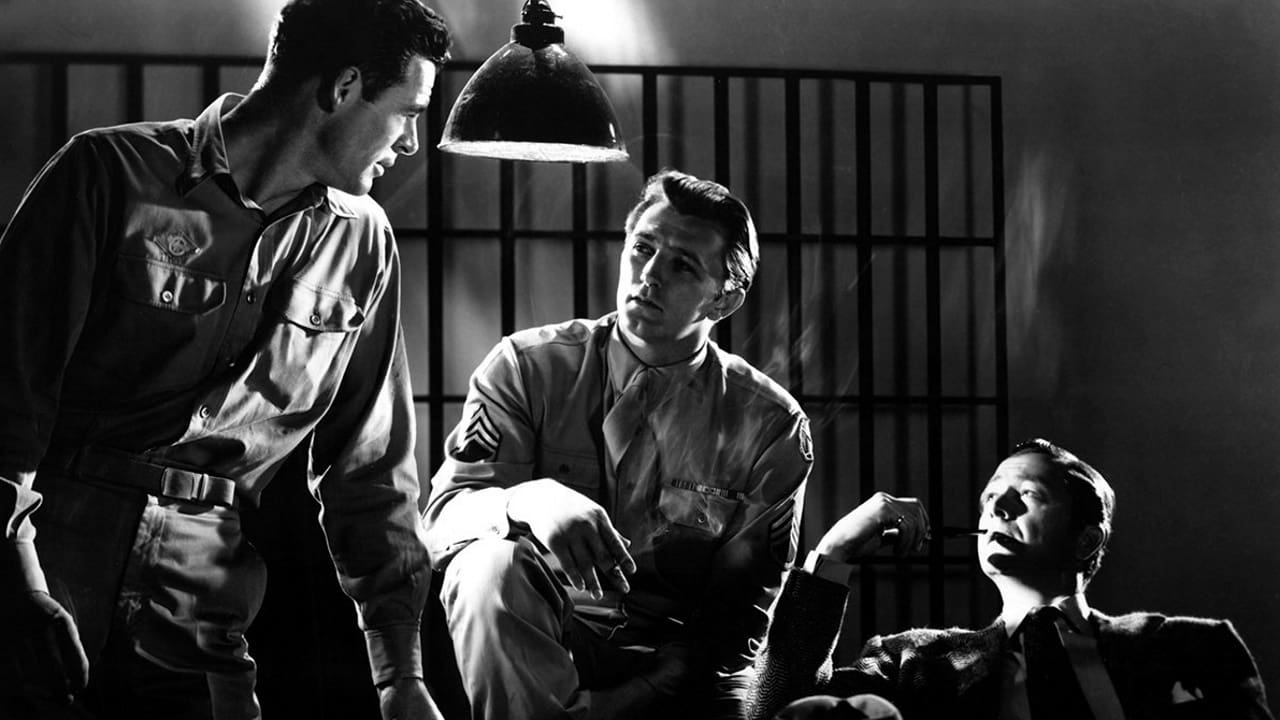
Crossfire – scene
The Hotel Corridor Montgomery Speaks Without Guilt

Dmytryk and Hunt frame Montgomery in a narrow corridor, the walls pressing close on either side, overhead light casting downward shadows that hollow out his face without fully obscuring it. There is no dramatic chiaroscuro here – no theatrical pools of darkness – only the flat, institutional light of a cheap residential hotel. The camera stays at a measured distance, observing rather than accusing, which gives Ryan's performance room to fill the frame on its own terms. The composition refuses to mark Montgomery as visually monstrous.

The choice is precise and purposeful. By refusing the camera the language of gothic menace – by making Montgomery look like any other tired soldier in any other hallway – the scene argues that this kind of hatred does not announce itself. It is housed in ordinary bodies and ordinary spaces. The scene's discomfort comes not from what the film shows but from what it withholds: the expected signal that we are looking at something aberrant. We are not.

Visual Language

The Cinematography

🎞️
J. Roy Hunt – Director of Photography

J. Roy Hunt, a veteran RKO cinematographer whose career stretched back to the silent era, shoots Crossfire with a deliberate restraint that serves the film's moral argument. Working almost entirely on studio interiors dressed to suggest the transient spaces of postwar urban life – hotel rooms, bars, police offices – Hunt avoids the operatic shadow patterns associated with classic noir expressionism. His lighting is low-key but functional, built from practical sources and modest fill, producing a texture that feels closer to documentary than to melodrama. This is a considered choice: the film's subject is not the exotic criminal underworld but the recognizable American interior. Wide-angle lenses keep figures in spatial relation to their environments, denying characters the isolation of a compressed telephoto frame. Shadows fall where they would fall naturally. The effect is a visual world that refuses to aestheticize its own darkness, reinforcing the screenplay's insistence that what the film depicts is not aberration but proximity.

In the Catalogue

Themes & Motifs

Availability

Where to Watch

Also in the Directory

See Also