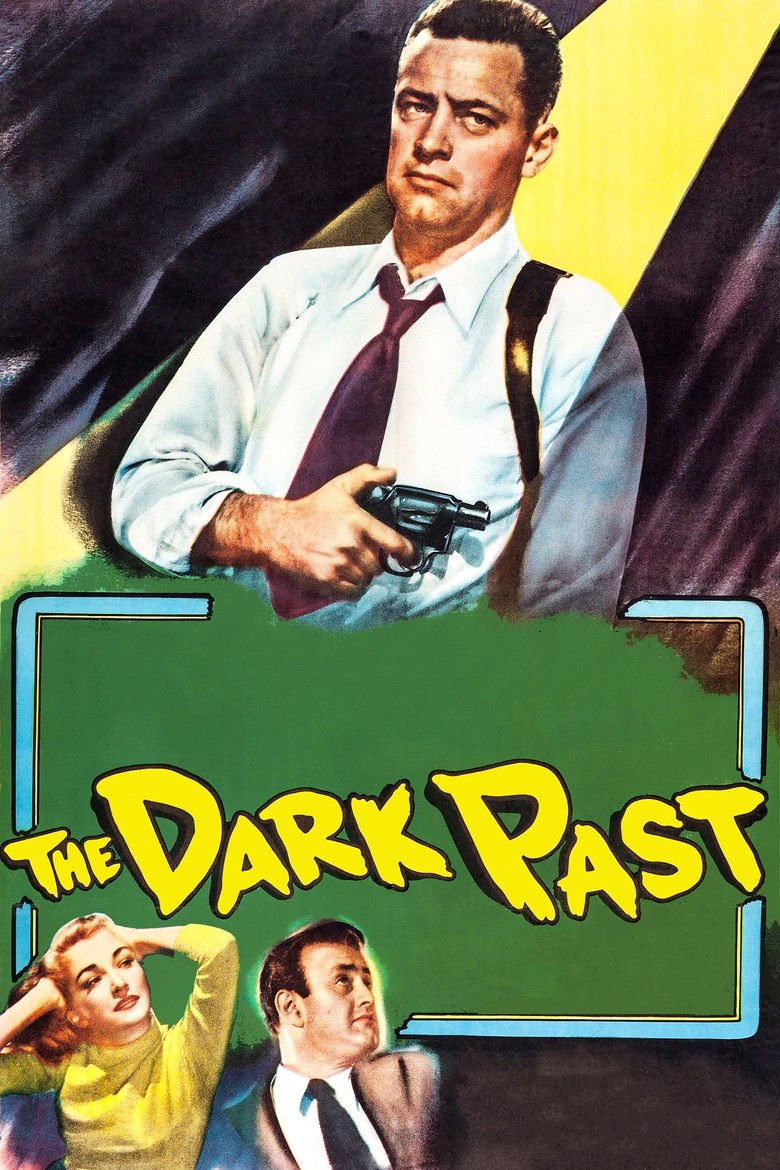
On a quiet lakeside evening, Dr. Andrew Collins, a criminal psychologist, finds his country retreat invaded by Al Walker, a volatile escaped convict, and a small gang of accomplices. Walker, volatile and armed, takes the household – including Collins's wife Ruth, a young colleague, and several guests – as unwilling leverage while he plots his next move. The standoff establishes the film's central geometry: a man of science facing a man of violence across a living room that becomes, in effect, a pressure chamber.
Collins, unwilling to wait passively for rescue, begins probing Walker's psychology, drawing out fragments of a recurring nightmare that has driven the convict toward self-destruction his entire adult life. Betty, Walker's loyal companion, watches this intellectual infiltration with growing unease, her allegiance caught between the man she loves and the dawning suspicion that the doctor may offer Walker something no getaway plan ever could. Meanwhile, the gang's internal tensions sharpen, and the hostages' survival tightens around the fragile rapport Collins is constructing.
Dark Past recasts the siege thriller as a case study in psychoanalytic method, positioning Freudian dream interpretation not as academic curiosity but as a practical instrument of survival. The film works within the postwar vogue for psychiatric drama while retaining the claustrophobic mechanics of classic noir, exploring whether understanding the origins of violence can interrupt its course – a question the genre rarely asked so directly.
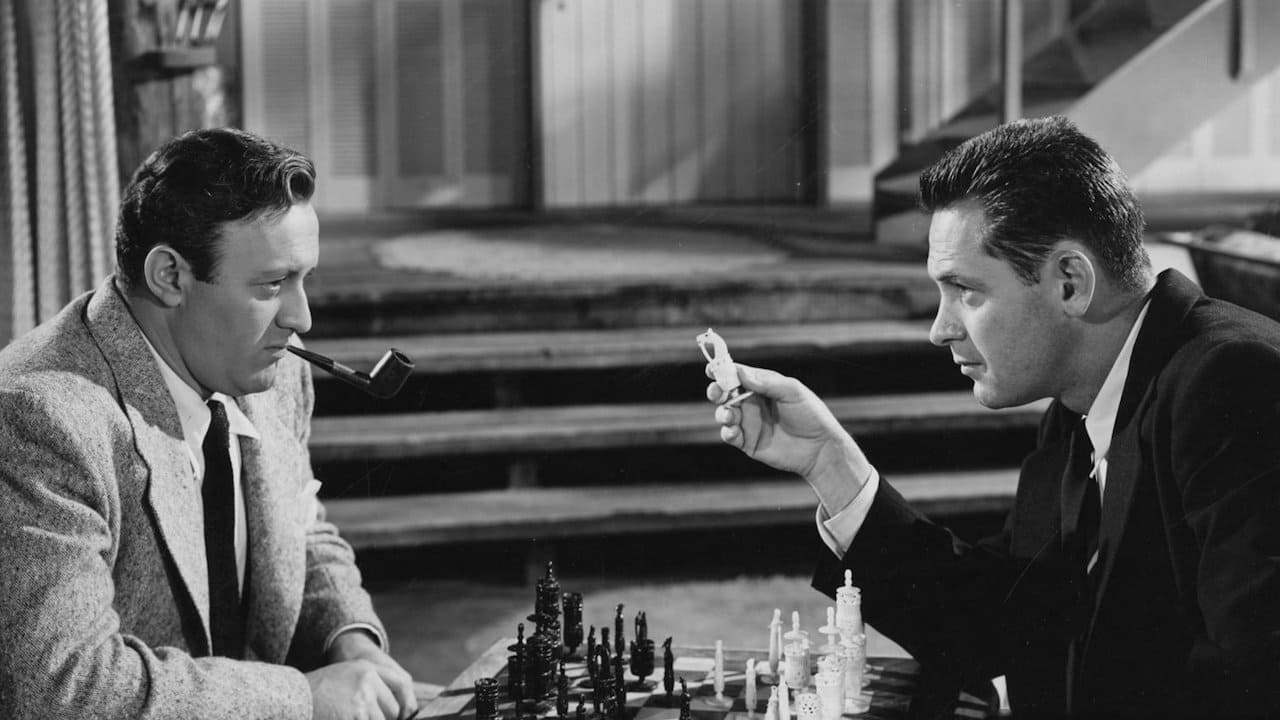
Dark Past occupies a specific, underexamined corner of late-1940s noir: the psychoanalytic thriller in which the couch displaces the gun as the primary site of confrontation. Rudolph Maté, who had distinguished himself as a cinematographer before turning director, brings a controlled visual economy to material that could easily collapse into staginess – the film is, after all, a remake of the 1939 stage-derived Blind Alley. William Holden, still two years away from Sunset Blvd., uses Al Walker to test a register of barely contained anguish that anticipates his more celebrated work. Lee J. Cobb, given a role requiring restraint rather than his usual physical authority, finds the quiet menace in Collins's clinical patience. The film's limitation is its schematic faith in the cure: the psychoanalytic resolution tidies what noir convention insists should remain irresolvable. That tension between genre pessimism and therapeutic optimism is precisely what makes Dark Past a revealing document of its postwar cultural moment.
– Classic Noir
Maté and cinematographer Joseph Walker render Walker's nightmare in high-contrast chiaroscuro, the frame bisected by long diagonal shadows thrown from a latticed window that suggest both imprisonment and psychological fracture. The camera holds Walker in tight medium shot as the dream imagery intrudes – superimposed figures moving through a bleached, geometrically distorted space that owes more to German Expressionist staging than to classical Hollywood continuity. Light arrives from a single hard source, leaving half of Holden's face in complete shadow, and the composition refuses to settle into stability, objects slightly misaligned with the logic of the waking room.
The sequence functions as the film's moral fulcrum. Walker's nightmare, once given visual form, ceases to be his private torment and becomes shared evidence – something Collins can read, name, and, he argues, disarm. The scene makes explicit the film's central proposition: that the unconscious, brought into light and language, loses its power over behavior. Whether the viewer accepts that proposition or regards it with the skepticism the noir tradition demands determines everything about how the film's resolution lands.
Joseph Walker, whose long Columbia tenure included work with Frank Capra on some of the studio's most celebrated productions, brings an unexpected austerity to Dark Past. Working almost entirely on studio sets, Walker uses tight, controlled lighting rigs to make the interior spaces feel genuinely enclosed rather than merely theatrical. He favors low key setups with hard-edged practical sources, allowing shadow to carry the film's moral ambiguity when the screenplay leans toward resolution. The lakeside exterior establishes an illusory openness that Walker immediately contracts once the gang enters; subsequent interiors grow progressively darker in key ratio as Walker's dream content approaches the surface. The dream sequence itself employs optical printing and deliberate depth distortion, techniques Walker had refined over decades, to externalise psychological states that a more conventional production would have conveyed through dialogue alone. Throughout, his lens choices favor moderate focal lengths that keep the ensemble in continuous spatial relation, reinforcing the siege's claustrophobic logic.
The most likely home for a clean transfer of this Columbia title; check current availability as the catalogue rotates seasonally.
TubiFreeTubi carries a number of Columbia noir titles from this period at no cost, though transfer quality varies; worth checking for immediate access.
Archive.orgFreePublic domain status is uncertain for this title, but Archive.org sometimes hosts prints of late-1940s Columbia releases; verify before relying on availability.