Films People Pull a Fast One Night Beat Reading Room On TV Shop
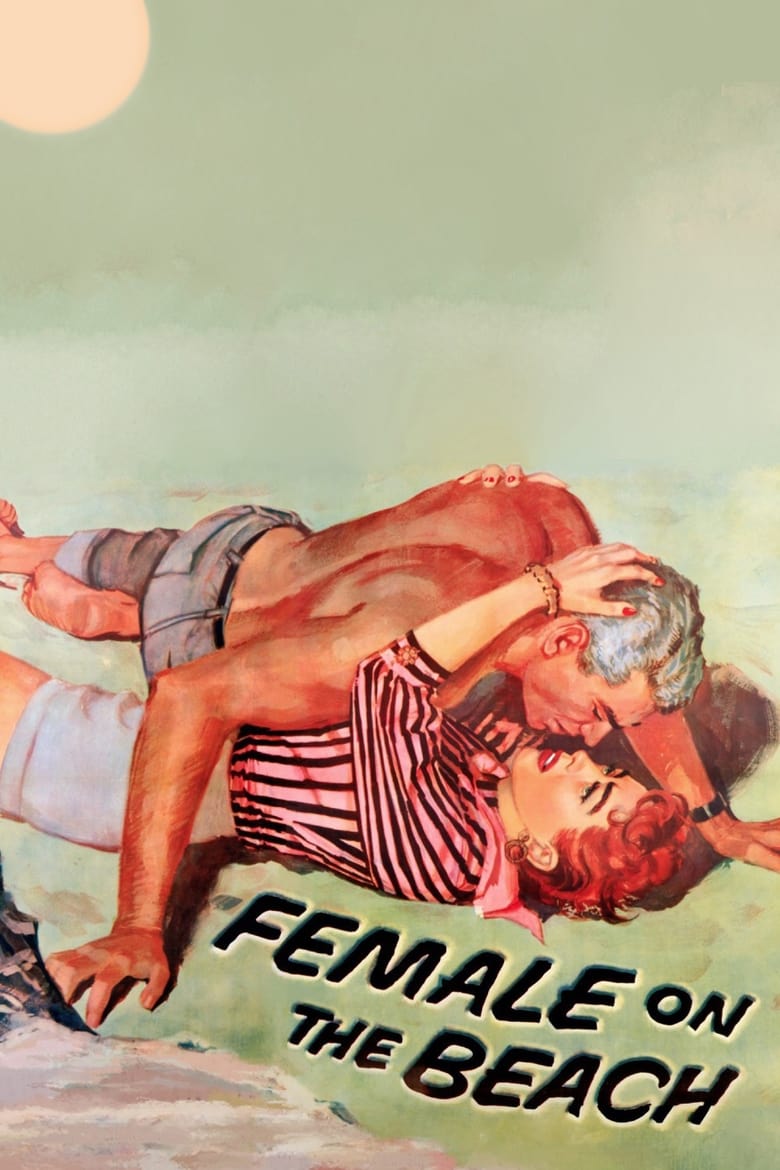
Female on the Beach 1955
1955 Universal International Pictures
★★★☆☆ Notable
Film Noir · 97 minutes · Black & White

Female on the Beach

Directed by Joseph Pevney
Year 1955
Runtime 97 min
Studio Universal International Pictures
TMDB 5.7 / 10
"A widow moves into a dead woman's beach house and finds the man next door harder to read than the tide."

Lynn Markham, a recently widowed woman of means, inherits a beachfront property in Malibu from an acquaintance who died there under ambiguous circumstances. She arrives to find the house still carrying the unease of its previous occupant and, just next door, Drummond Hall – a young, physically imposing drifter with an easy manner and no visible means of support. Hall makes his interest in Lynn plain almost immediately, and she responds with a wariness that does not entirely suppress her attraction.

Lynn learns that Drummond has been intimate with a circle of older, affluent women in the area – among them the brittle Eloise Crandall and the shrewdly watchful Queenie Sorenson, whose husband Osbert cultivates a benign exterior. The question of whether Drummond is a predator working a comfortable racket, a man genuinely drawn to Lynn, or something more dangerous becomes the film's central pressure point. Amy Rawlinson, a brash neighbor with no patience for illusion, pushes Lynn to see what she may prefer not to. Meanwhile, a police lieutenant named Galley circles the edges of the story, unconvinced that the previous woman's death was accidental.

Female on the Beach works the tension between sexual desire and self-preservation that runs through much of mid-decade American noir, placing a financially independent woman at its center and then testing how far that independence actually extends. The film belongs to a cycle of Universal International productions that used Crawford's star image – a woman who has survived – as raw material for stories about women who cannot quite trust their own judgment in the presence of a compelling man. The resolution arrives through violence and revelation, though the moral accounting remains characteristically uneven.
Classic Noir

Female on the Beach occupies a specific and underexamined niche: the woman-in-jeopardy noir built around a female star old enough to carry the weight of experience rather than innocence. Crawford at fifty brings a quality the script barely deserves – a disciplined containment that registers as both desire and suspicion simultaneously. Jeff Chandler's Drummond Hall is the film's structural weakness; the character requires ambiguity the performance does not fully sustain. What saves the picture is the ensemble around them. Jan Sterling's Amy is one of the sharper supporting performances in the cycle – world-weary without sentimentality, genuinely funny in a way that sharpens rather than deflects the menace. Cecil Kellaway and Natalie Schafer, playing the Sorensons, deliver the film's most unsettling dynamic: a couple whose cordiality masks something practiced and cold. Charles Lang's widescreen coastal photography gives the Malibu locations a bleached, exposed quality that works against the standard noir preference for shadow, producing an unease rooted not in darkness but in too much light.

– Classic Noir
3 ★★★☆☆ Notable
Credits

The Crew

DirectorJoseph Pevney
ScreenplayRobert Hill
CinematographyCharles Lang
MusicHeinz Roemheld
EditingRussell F. Schoengarth
Art DirectionAlexander Golitzen
CostumesSheila O'Brien
ProducerAlbert Zugsmith
Performances

The Cast

Close Reading

The Signature Scene

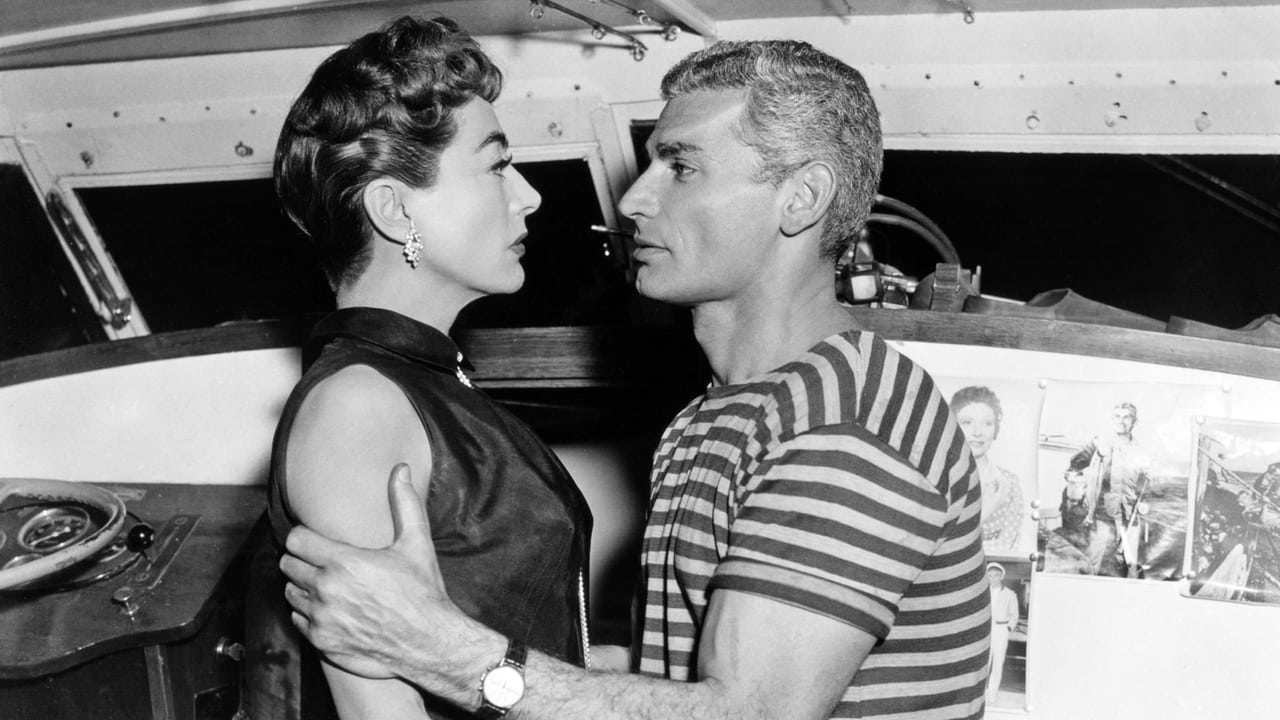
Female on the Beach – scene
The Beach House at Night Light Through the Sliding Glass

Lang frames Lynn alone in the modernist beach house interior, the sliding glass doors open behind her to the Pacific dark. The exterior light is flat and diffuse – what little moonlight exists does not romanticize; it simply reveals coastline as exposure. The camera holds at a medium distance, placing Crawford against the glass so that the boundary between interior and exterior dissolves. The composition refuses the reassurance of deep focus interiors typical of domestic noir; the background is simply void, and she stands at its edge.

The scene crystallizes the film's central argument about vulnerability: Lynn's wealth and independence have delivered her not to safety but to a threshold between the controlled and the uncontrolled. The open door is not an invitation she issued – it is a condition of the house she inherited, the life she stepped into. Drummond's approach from the dark exterior a moment later transforms what might have been atmospheric staging into a formal statement about how desire arrives from the direction you were already looking.

Visual Language

The Cinematography

🎞️
Charles Lang – Director of Photography

Charles Lang, one of the most technically accomplished cinematographers working in Hollywood at mid-century, shoots Female on the Beach in widescreen on the Universal lot and on location along the Malibu coast, and the interplay between those two registers is where the film's visual intelligence lives. The beach exteriors are photographed in hard, midday-adjacent light that eliminates the shadow architecture noir conventionally depends upon – Lang's strategy is to produce discomfort through overexposure rather than obscurity, so that Crawford's Lynn seems watched rather than hidden. The interior compositions are tighter, using shallow focal planes to isolate characters within domestic space that should feel secure but does not. Kellaway's Osbert is frequently framed with other figures partially occluding him, a small persistent device that keeps his affability slightly off-register. The film does not have the visual ambition of Lang's later widescreen work, but it demonstrates a disciplined understanding that the moral anxiety of the story requires light, not darkness, as its primary instrument.

In the Catalogue

Themes & Motifs

Availability

Where to Watch

Also in the Directory

See Also