In postwar southern France, Michael Blake, an American former paratrooper played by Glenn Ford, stumbles upon a medieval reliquary glove of immense religious and monetary value hidden inside a rural chapel. His wartime knowledge of the object – and a moment of opportunistic theft – sets him on a collision course with Count Paul Rona, a ruthless and well-connected European schemer who has been hunting the glove for his own purposes. Blake is a man without clear allegiances, drifting through a continent still bearing the scars of occupation, and the glove becomes the object around which his buried instincts for survival reassert themselves.
Christine Kenneth, a young woman with her own complicated ties to the region, enters Blake's orbit and complicates what might otherwise have been a clean retrieval operation. Meanwhile Father Goron, a quietly determined priest, represents the legitimate custodians of the relic and introduces a moral counterweight to the competing criminal and mercenary interests. Rona's pursuit intensifies, and the film's geography – sun-drenched Provençal villages, shadowed churches, narrow hill-town streets – becomes a landscape of concealment and exposure in equal measure, with trust in short supply among all parties.
The Green Glove belongs to a strand of postwar noir that relocates American genre conventions to European terrain, using the physical and psychological displacement of its protagonist to interrogate what remains of personal integrity after years of war and self-interest. The film is less concerned with the mechanics of crime than with the question of whether a man who has already compromised himself once will choose differently when the moment demands it.
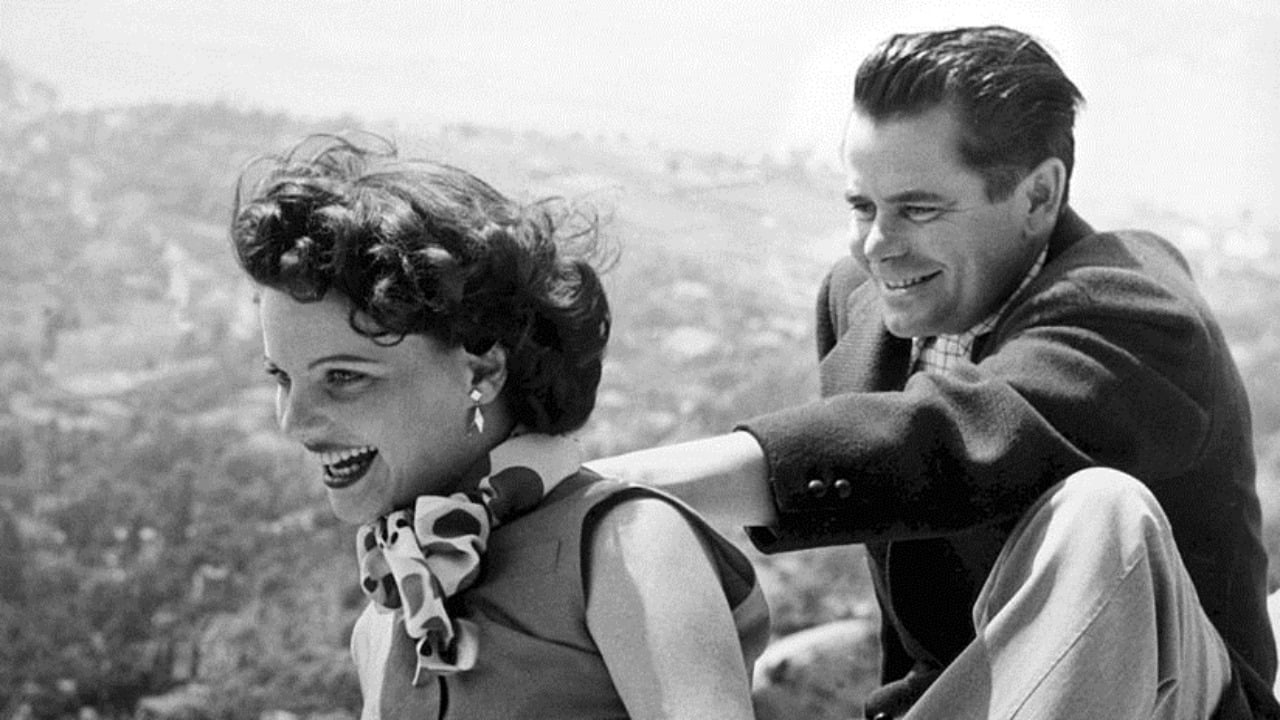
The Green Glove occupies an instructive position on the margins of the American noir cycle – produced in France for UGC Films with Hollywood talent, it neither fully belongs to the domestic postwar tradition nor to the European art cinema developing around it. Rudolph Maté, himself a former cinematographer of considerable distinction, brings compositional intelligence to the material even when the script withholds equivalent depth. Glenn Ford plays his characteristic version of the morally uncertain everyman, a figure recognisable from The Big Heat released the following year, though here operating without that film's structural pressure. What distinguishes the picture is its setting: Claude Renoir's photography turns the Provençal landscape into something genuinely ambiguous, neither picturesque nor menacing but suspended between the two. Cedric Hardwicke lends the proceedings a gravity they do not always earn on their own terms. The film ultimately reveals more about the anxieties of American cultural projection into postwar Europe – the dollar, the drifter, the moral blank slate – than about religious relic theft, which is precisely where its interest lies for the genre historian.
– Classic Noir
Blake enters the darkened chapel alone, and Renoir's camera holds at a low angle that emphasises the vaulted stonework pressing down on the frame. The available light – filtered through narrow clerestory windows – falls in a single diagonal shaft across the altar, leaving the surrounding space in deep shadow. The glove itself, when it comes into frame, is lit with a precision that makes it look simultaneously sacred and absurdly small, the object of so much dangerous attention reduced to a domestic scale. The composition isolates Blake in the lower third of the frame, the architecture dwarfing him, the light seemingly indifferent to his presence.
The scene does the film's central argumentative work: Blake is not a man confronting temptation so much as a man rediscovering a capacity for it he had not thought to examine. The religious space is neither exalted nor ironised; it simply refuses to endorse what he is about to do, and Maté allows that refusal to register in the silence of the editing before Blake reaches out. The moral weight is carried entirely by what the frame withholds – reaction, justification, consequence – rather than anything the script provides.
Claude Renoir – grandson of the painter, nephew of Jean, and a cinematographer whose career ranged from French poetic realism to Hollywood co-productions – brings a distinctly European eye to material that could easily have been shot with routine noir efficiency. Working on location across southern France, Renoir resists the high-contrast expressionism of the American studio tradition in favour of a more modulated approach: shadows fall with geographic logic rather than moral emphasis, and the sunlit exteriors are lit to produce discomfort rather than warmth, the brightness itself becoming a form of exposure. Interior sequences in chapels and country houses use practical architectural light as a starting point, supplementing selectively rather than overpowering. The lens choices favour middle distances that keep characters embedded in their environments rather than isolated from them, reinforcing the film's central concern with displacement. Where studio-based noir uses darkness to signal corruption, Renoir's work here suggests that the postwar European landscape has internalised its own darkness and no longer requires it to be painted on.
Tubi has carried this title in a watchable transfer and remains the most readily accessible free option for North American viewers, though availability should be confirmed.
Archive.orgFreeA public domain print has circulated via the Internet Archive; quality varies but the full film is typically accessible without registration.
Amazon Prime VideoRentalRental or purchase through Prime Video marketplace sellers occasionally offers a cleaner transfer than free public domain sources; availability fluctuates.