Films People Pull a Fast One Night Beat Reading Room On TV Shop
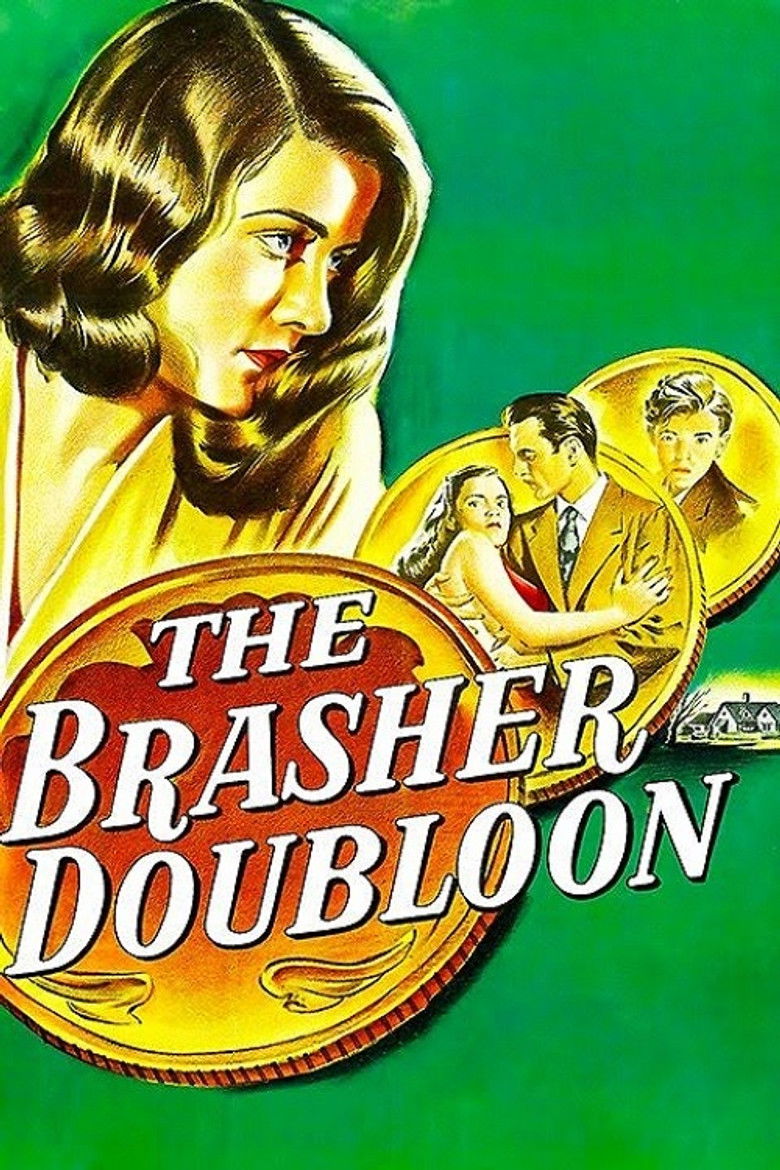
High Window 1947
1947 20th Century Fox
★★★☆☆ Notable
Film Noir · 72 minutes · Black & White

High Window

Directed by John Brahm
Year 1947
Runtime 72 min
Studio 20th Century Fox
TMDB 5.9 / 10
"A dead woman's secret passes through too many hands before the right ones close around it."

Private detective Philip Marlowe is hired by the imperious, wheelchair-bound Mrs. Murdock to recover a rare gold coin stolen, she claims, by her daughter-in-law. The assignment brings Marlowe into the orbit of Merle Davis, the timid, haunted secretary who lives under Mrs. Murdock's roof and seems to exist in a permanent state of suppressed dread. From the first interview, it is clear that the coin is a pretext and that something darker lies beneath the surface of this Pasadena household.

The investigation pulls Marlowe toward a blackmailer named Vannier, who holds leverage over the Murdock family through a photograph connected to an old, possibly violent death. As Marlowe presses further, the loyalties of every figure in the case shift or prove false: Leslie Murdock is weak where he should be resolute, Mrs. Murdock is calculating where she presents herself as aggrieved, and Merle's fragility begins to look less like innocence than the residue of something she witnessed and cannot name.

Adapted from Raymond Chandler's novel The High Window, the film belongs to the cycle of Chandler adaptations that occupied Hollywood in the mid-1940s, a cycle defined less by fidelity to plot than by an atmosphere of moral exhaustion and institutional failure. Marlowe moves through a world in which wealth insulates guilt and the vulnerable absorb punishment intended for others, a pattern the film traces with more consistency than its modest budget might suggest.
Classic Noir

High Window occupies a secondary tier in the Chandler film cycle, ranking behind Dmytryk's Murder, My Sweet and Hawks's The Big Sleep yet sustaining its own quiet argument. John Brahm, a director more associated with Victorian-inflected horror, brings to the Pasadena setting an unexpectedly claustrophobic register: the Murdock house functions less as a location than as a psychological enclosure. George Montgomery lacks Bogart's laconic authority, but his flatness is not entirely a liability – it keeps Marlowe at a functional remove from the corruption surrounding him, which is roughly where Chandler's prose positions the character. The film's real distinction is Florence Bates as Mrs. Murdock, a performance of controlled malice that consistently outweighs its surrounding material. For a studio picture running under 75 minutes, High Window handles the machinery of Chandler's plot with reasonable economy, and its treatment of Merle Davis as a victim of sustained psychological coercion anticipates concerns the broader genre rarely paused to examine.

– Classic Noir
3 ★★★☆☆ Notable
Credits

The Crew

DirectorJohn Brahm
ScreenplayDorothy Bennett
CinematographyLloyd Ahern Sr.
MusicDavid Buttolph
EditingHarry Reynolds
Art DirectionRichard Irvine
ProducerRobert Bassler
Performances

The Cast

Close Reading

The Signature Scene

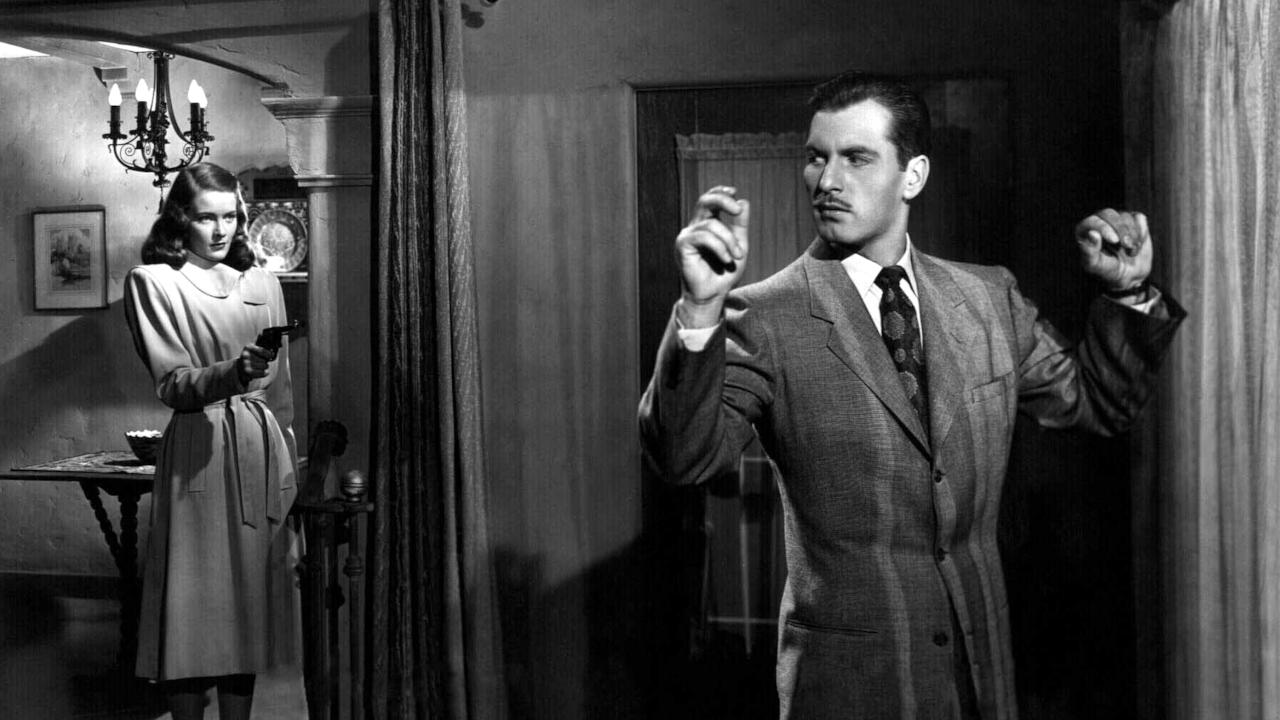
High Window – scene
Vannier's Apartment The Photograph Changes Hands

Lloyd Ahern frames the scene with Vannier positioned against a window, the exterior light cutting across him in a single hard bar that leaves half his face in shadow and half unnaturally exposed. The camera holds at a middle distance, refusing to move in during the confrontation, so that Marlowe and Vannier occupy the same plane of focus and neither figure dominates the composition. Props – the photograph itself, a glass, the geometry of the furniture – create subdivisions within the frame that keep the eye restless without resorting to expressionist distortion.

The scene's function is to place the photograph, and therefore Merle's past, in the center of the film's moral argument. Vannier is not an exceptional villain; he is an opportunist who understands that the wealthy protect themselves at the expense of those below them. His death, when it comes, settles nothing, because the photograph was never the source of the corruption, only its instrument – a distinction the film insists on without stating it directly.

Visual Language

The Cinematography

🎞️
Lloyd Ahern Sr. – Director of Photography

Lloyd Ahern Sr. works within the constraints of a modest 20th Century Fox B-unit production with enough discipline to keep the film visually coherent. His approach to the Murdock interiors relies on deep shadow and carefully placed practical sources – lamps and window light – that define the house as a space where illumination is always partial and controlled, mirroring the household's management of information. He avoids the extreme canted angles associated with the more expressionist end of the noir cycle, preferring a grounded lens that makes the corruption feel residential rather than theatrical. Exterior sequences in Pasadena and the surrounding hills are handled with less distinction, and the shift between location and studio is occasionally visible, but Ahern uses the contrast productively: the outdoor world is flat and indifferent, the interior world specifically menacing. Shadow work on Florence Bates in the early exposition scenes is particularly deliberate, the light consistently withholding her full face in a way that functions as visual characterization before the screenplay makes her motives explicit.

In the Catalogue

Themes & Motifs

Availability

Where to Watch

Also in the Directory

See Also