Films People Pull a Fast One Night Beat Reading Room On TV Shop
Love from a Stranger 1937
1937 Trafalgar Film Productions Ltd.
★★★☆☆ Notable
Film Noir · 86 minutes · Black & White

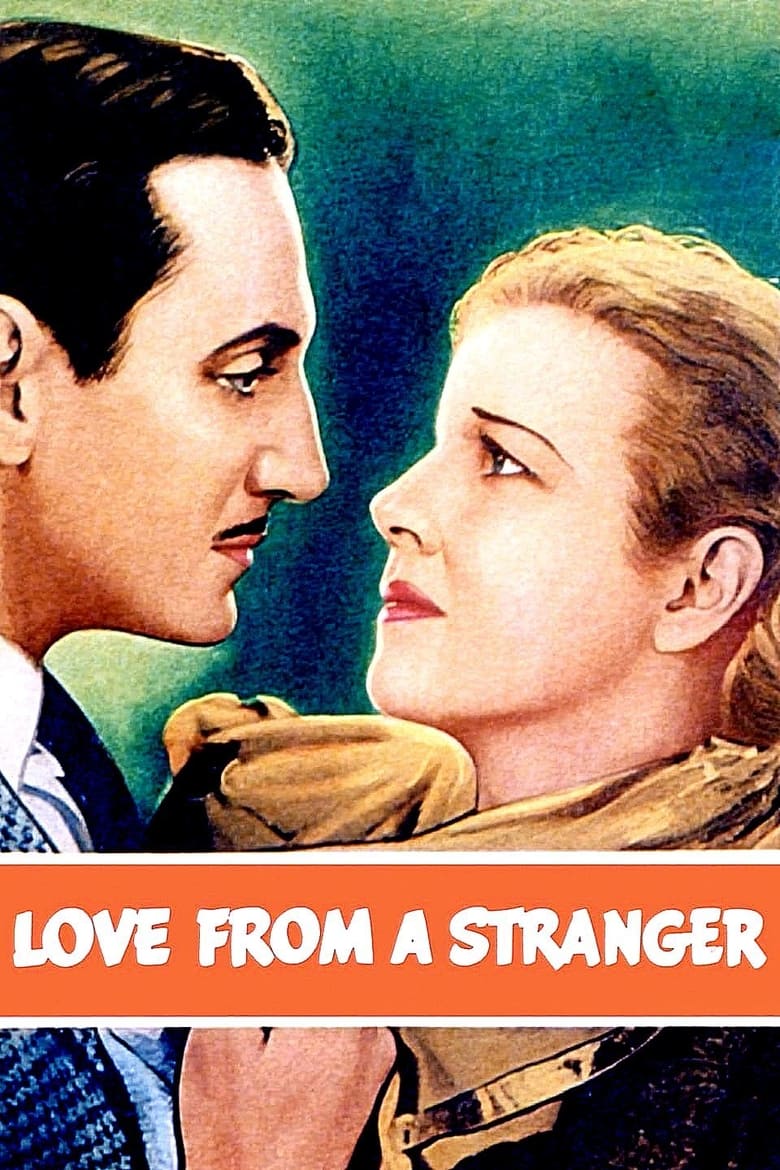
Love from a Stranger

Directed by Rowland V. Lee
Year 1937
Runtime 86 min
Studio Trafalgar Film Productions Ltd.
TMDB 6.3 / 10
"A windfall introduces the wrong man, and a country house becomes a trap with curtains drawn."

Carol Howard, a London secretary, wins a substantial sum in the lottery and promptly breaks off her engagement to the dependable Ronald Bruce. On a Continental holiday she meets Gerald Lovell, a charming and apparently well-situated stranger, and within weeks the two are married and installed in a secluded English country house. Carol's friend Kate and her aunt Lou watch the courtship with varying degrees of unease, but Gerald's magnetism overrides their reservations.

Once the honeymoon dissolves into domestic routine, small inconsistencies in Gerald's past begin to surface. His explanations are plausible but never quite complete, and the household staff – particularly the watchful Emmy and the skittish Hobson – register a tension they cannot name. Carol starts to notice that Gerald's interest in her health, her medical history, and the terms of her new will exceeds ordinary concern. The arrival of the elderly Dr. Gribble deepens the atmosphere of foreboding without resolving it.

Adapted from Agatha Christie's story 'Philomel Cottage,' the film belongs to the pre-Code-adjacent tradition of the domestic thriller in which the home, ostensibly a refuge, functions as the primary site of danger. It positions itself at the intersection of the gothic woman's picture and early British noir, anticipating the suspicion-within-marriage cycle that would gather force in Hollywood through the following decade. Basil Rathbone's performance keeps the film's moral question open longer than the plot strictly requires.
Classic Noir

Love from a Stranger occupies an instructive position at the edges of the noir canon – British in production, Continental in setting, and American in its borrowed anxiety about romantic self-deception. Rowland V. Lee handles the material with economy rather than invention, and the film's lasting interest lies less in directorial signature than in what it reveals about the genre's prehistory. Rathbone, two years before he would be fixed forever as Sherlock Holmes, uses his physical precision to suggest menace through stillness rather than action: Gerald Lovell is dangerous precisely because he performs calm so convincingly. Ann Harding, by contrast, has the harder task – embodying intelligent, independent womanhood while dramatizing the erosion of that independence under romantic pressure. The film participates in a recurring noir argument: that financial freedom in women does not protect against psychological capture. The Christie source material provides the architecture, but the film's period anxiety about what marriage conceals is its own.

– Classic Noir
3 ★★★☆☆ Notable
Credits

The Crew

DirectorRowland V. Lee
ScreenplayFrances Marion
CinematographyPhilip Tannura
MusicBenjamin Britten
ProducerMax Schach
Performances

The Cast

Close Reading

The Signature Scene

Love from a Stranger – scene
The Drawing Room, Evening Gerald by the Fire

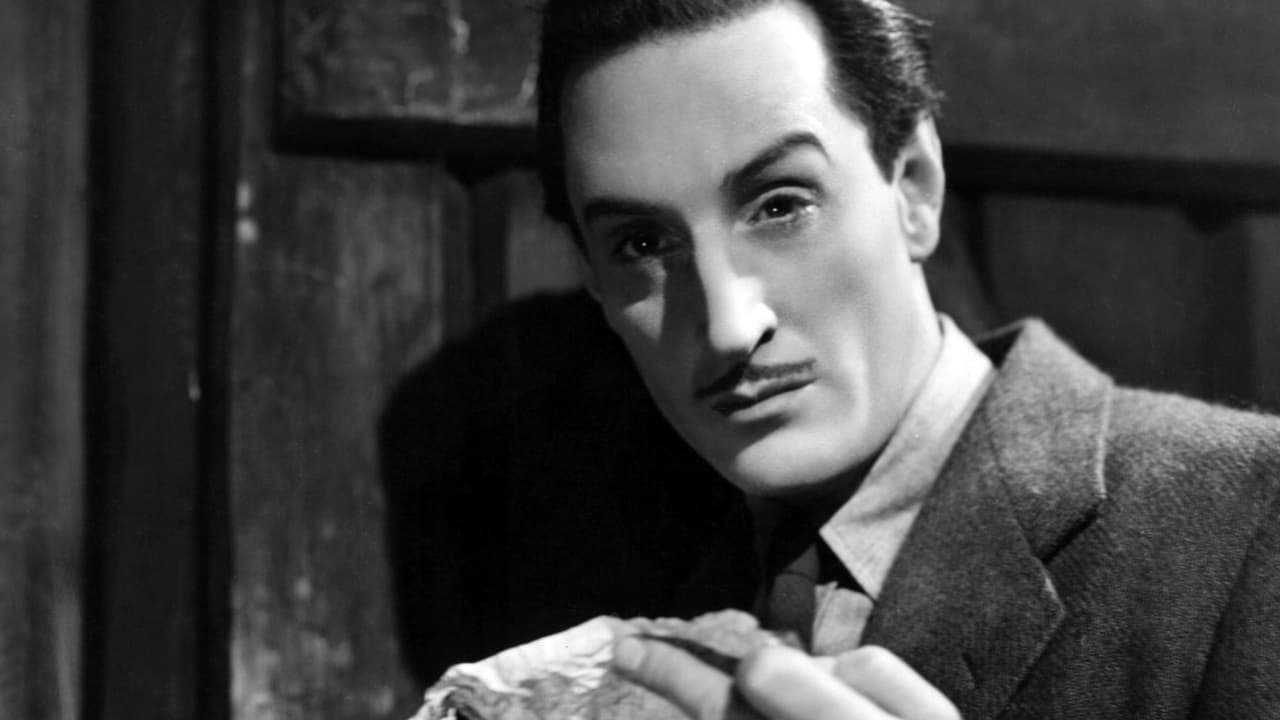
Philip Tannura places Rathbone in three-quarter profile, the firelight catching the left side of his face and leaving the right in soft shadow. Carol enters the frame from behind him, slightly out of focus, and the depth of field collapses the distance between them into something claustrophobic. The camera does not move; Gerald does not move. The composition holds the two figures in an asymmetry that the dialogue cannot resolve – she approaches the fire, he controls it.

The scene distills the film's central argument in spatial terms: Carol has moved into a frame she did not build and cannot read. Gerald's stillness is not repose but governance. The firelight, a conventional emblem of domesticity, is here the property of the wrong person in the room, and the camera's refusal to release either figure from the same tight composition makes their mutual entrapment – one willing, one not – the film's plainest statement.

Visual Language

The Cinematography

🎞️
Philip Tannura – Director of Photography

Cinematographer Philip Tannura, working in the studio conditions of British quota production, achieves more tonal range than the budget might suggest. His lighting scheme for the country house sequences relies on practical sources – fireplaces, table lamps, a single overhead in the kitchen – augmented by hard side-lighting that carves Rathbone's features into something architectural. The exterior shots are few and functional; Tannura's real work is interior, building a grammar of enclosed spaces in which ceilings are visible and walls press. Wide lenses are used sparingly; the domestic scenes favor a slightly compressed middle focal length that flattens the relationship between foreground figures and background detail, creating a visual unease that mirrors Carol's inability to read depth in her husband's behavior. Shadow is deployed not as expressionist ornament but as a marker of information asymmetry – Gerald is lit when he chooses to be seen, darkened when the film needs the audience to remember that Carol cannot see all of him.

In the Catalogue

Themes & Motifs

Availability

Where to Watch

Also in the Directory

See Also