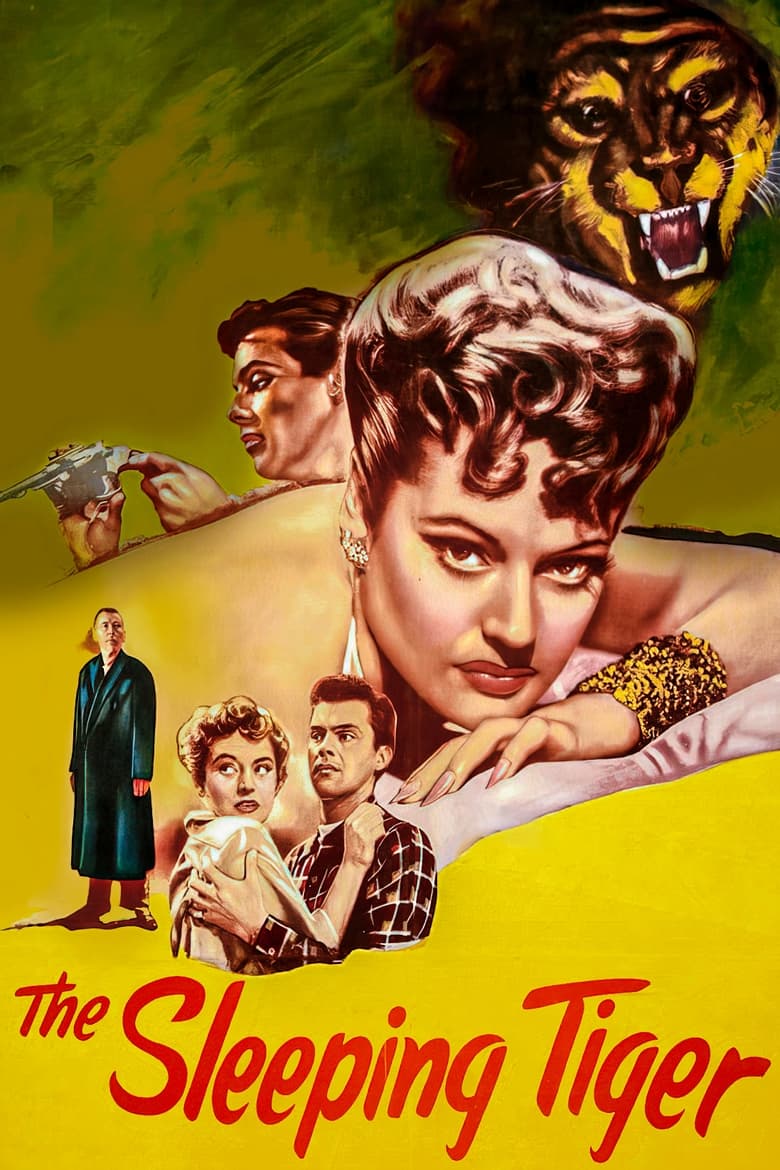
In postwar London, psychiatrist Dr. Clive Esmond intercepts Frank Clemmons, a young American drifter who attempts to rob him at gunpoint. Rather than surrender the man to the police, Esmond proposes an unconventional arrangement: Frank will live in the Esmond household as a voluntary subject of psychoanalytic rehabilitation. The doctor is a man of professional conviction and domestic certainty, both of which are about to be tested. His wife Glenda, composed and discontent in equal measure, watches the new arrival enter her ordered life with the stillness of someone who has been waiting for precisely this disruption.
Frank Clemmons is not merely a case study. He is volatile, perceptive, and drawn immediately into the emotional gravity of Glenda's unhappiness. What begins as therapeutic proximity curdles into desire, and what begins as desire accelerates toward something neither character can control or reverse. Dr. Esmond, absorbed in his professional certainty, is the last to recognize what is forming around him. Inspector Simmons, circling the household with the patience of a man who expects the worst of human nature, represents the institutional world that will not indefinitely look away.
The Sleeping Tiger occupies the intersection of domestic noir and psychological melodrama, a space British cinema of the 1950s inhabited with particular unease. Directed by Joseph Losey – working in England under a pseudonym to evade the blacklist – the film uses the conventions of the genre to examine power, desire, and the fragility of rational men who believe they can contain irrational forces. The outcome is neither comfortable nor arbitrary, and the film's final movement carries the weight of a system reasserting itself over those who stepped outside its boundaries.
The Sleeping Tiger arrives at an interesting angle within British noir. Losey, directing under the name Victor Hanbury to circumvent the Hollywood blacklist, brings an outsider's precision to English domestic spaces, using the Esmond household not as a haven but as a pressure chamber. The film is most persuasive when it treats the psychiatrist's professional confidence as a form of blindness – Clive Esmond believes in systems of human correction while failing to read the most immediate human evidence before him. Alexis Smith gives Glenda a self-possession that is neither sympathetic nor contemptible, a careful calibration that lifts her beyond the standard femme fatale. Dirk Bogarde, still consolidating the range he would later deploy in darker material, plays Frank's volatility with physical immediacy. The film's weakness is structural: the melodramatic resolution strains against the cooler, more analytical tone Losey establishes in the first two acts. Nonetheless, as an artifact of its political and cultural moment – a blacklisted American director reworking American genre conventions on British soil – it carries a weight that purely aesthetic assessment would undervalue.
– Classic Noir
Harry Waxman frames Glenda in the doorway of her husband's study, the light from within cutting a hard rectangle against the darker hall behind her. She is neither fully inside nor fully outside the room – the composition holds her suspended in the division between domestic order and whatever lies beyond it. Waxman lets the shadow fall across half her face, not as a dramatic flourish but as a precise statement of her situation: she is a woman in partial light, visible and withheld in the same moment. The camera does not move toward her. It waits.
The stillness of the shot is its argument. Glenda is the most observant intelligence in the film, and Losey gives her this moment of pure looking without dialogue or reaction to soften it. What the scene establishes is not desire but calculation – she is measuring something, or has already measured it and reached a conclusion the audience is not yet permitted to share. The threshold is not incidental to the composition; it is the film's central image made literal, a married woman standing at the edge of a decision the film will spend its remaining time enacting.
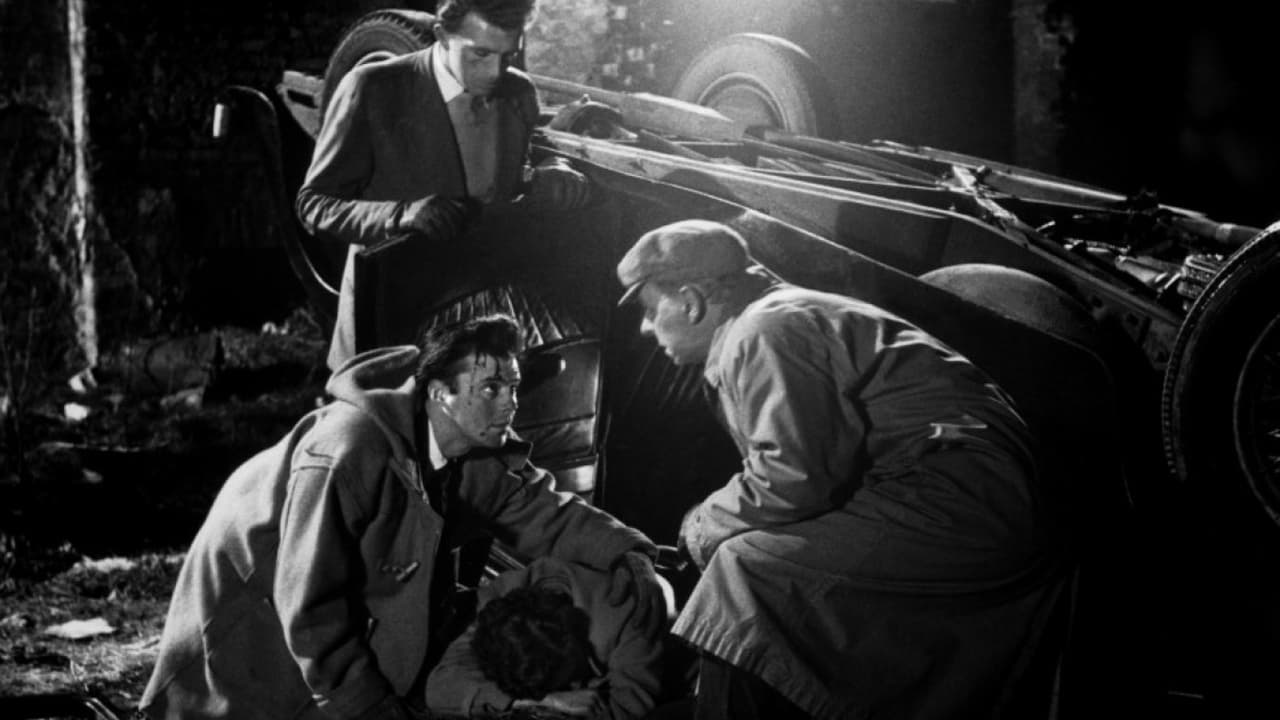
Harry Waxman's cinematography on The Sleeping Tiger works through restraint rather than expressionist excess, which suits Losey's clinical dramatic register. Waxman, a British DP with strong studio-trained instincts, keeps the lighting in the Esmond interiors credibly domestic while allowing single-source setups to isolate characters within rooms that should accommodate them. The shadow work is less architectural than psychological – darkness accumulates around characters in proportion to their self-deception rather than their guilt. Where American noir of the period frequently exteriorized moral disorder through location shooting and available-light textures, Waxman works predominantly in controlled studio conditions, using that control to make the Esmond house feel increasingly enclosed as the narrative tightens. Lens choices remain conservative, with medium-range focal lengths that refuse the distortion of wide-angle expressionism and thereby make the film's eruptions feel more genuinely disruptive when they arrive. The visual language insists, until late in the film, that everything is still in order.
MUBI has programmed Losey's British-period work with some regularity; check current availability as the catalogue rotates.
Archive.orgFreePublic domain prints of this title have circulated online; quality varies and viewers should verify the source before screening.
TubiFreeClassic British noir titles from this era appear intermittently on Tubi; availability is not guaranteed and should be confirmed at time of viewing.