Films People Pull a Fast One Night Beat Reading Room On TV Shop
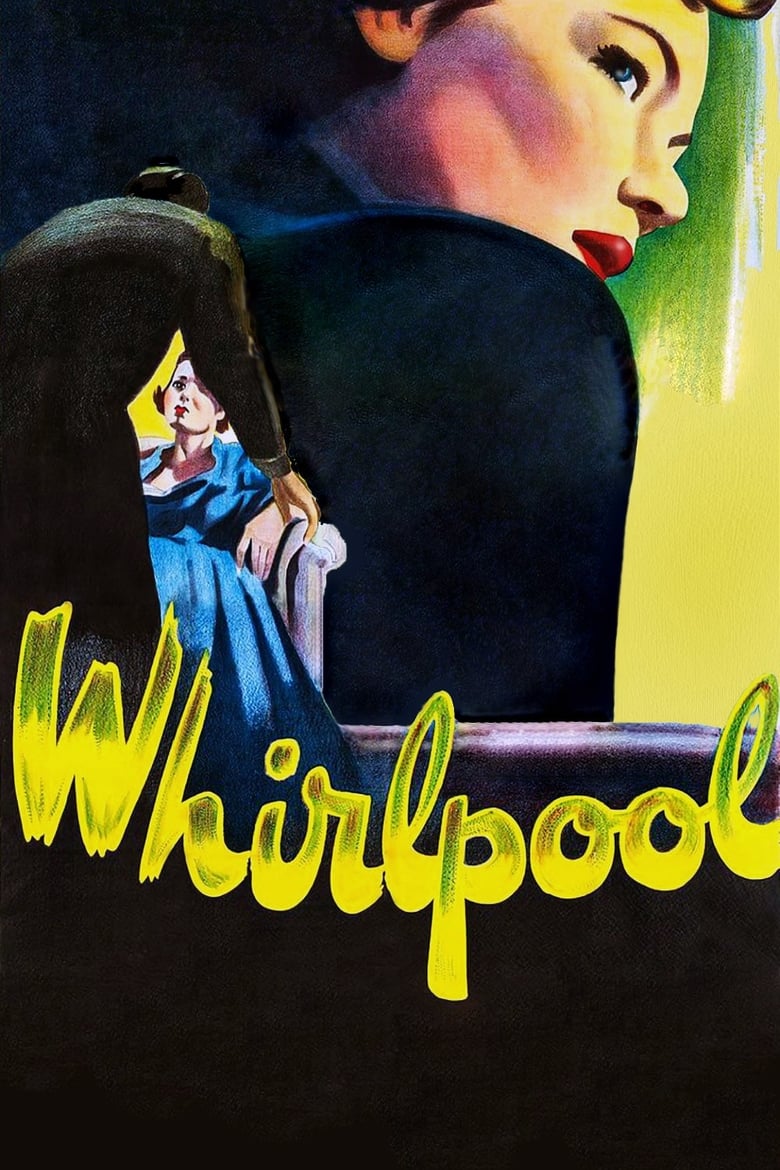
Whirlpool 1950
1950 20th Century Fox
★★★☆☆ Notable
Film Noir · 98 minutes · Black & White

Whirlpool

Directed by Otto Preminger
Year 1950
Runtime 98 min
Studio 20th Century Fox
TMDB 6.5 / 10
"A woman's mind is the crime scene, and someone else holds the key."

Ann Sutton, wife of a prominent Los Angeles psychiatrist, is caught shoplifting a piece of jewelry she cannot pay for and does not remember taking. Before the incident can surface and destroy her husband's reputation, she is approached by David Korvo, a suave and persuasive hypnotherapist who moves in wealthy social circles, claims to know her secret, and offers his services as a kind of rescue. Ann, already prone to anxiety and trapped in a marriage that measures her against her husband's clinical competence, accepts.

Korvo's interest in Ann is not charitable. He is under investigation by Lieutenant Colton, a methodical detective who suspects the hypnotherapist of involvement in the death of a former patient, Theresa Randolph, a wealthy woman whose estate has since been transferred under suspicious circumstances. Korvo manipulates Ann into providing him with an alibi, and eventually, through hypnosis, into becoming an instrument of his design, moving through events she will later have no clear memory of and cannot account for to the police or to her husband.

Whirlpool works in the territory where psychological drama and noir overlap: the complicit innocent, the professional who cannot see what is plainest about his own household, the predator who operates through charm rather than force. Preminger frames this as a study in vulnerability and control, and the film's central question is less whether Korvo will be exposed than how much of Ann will remain once the exposure comes.
Classic Noir

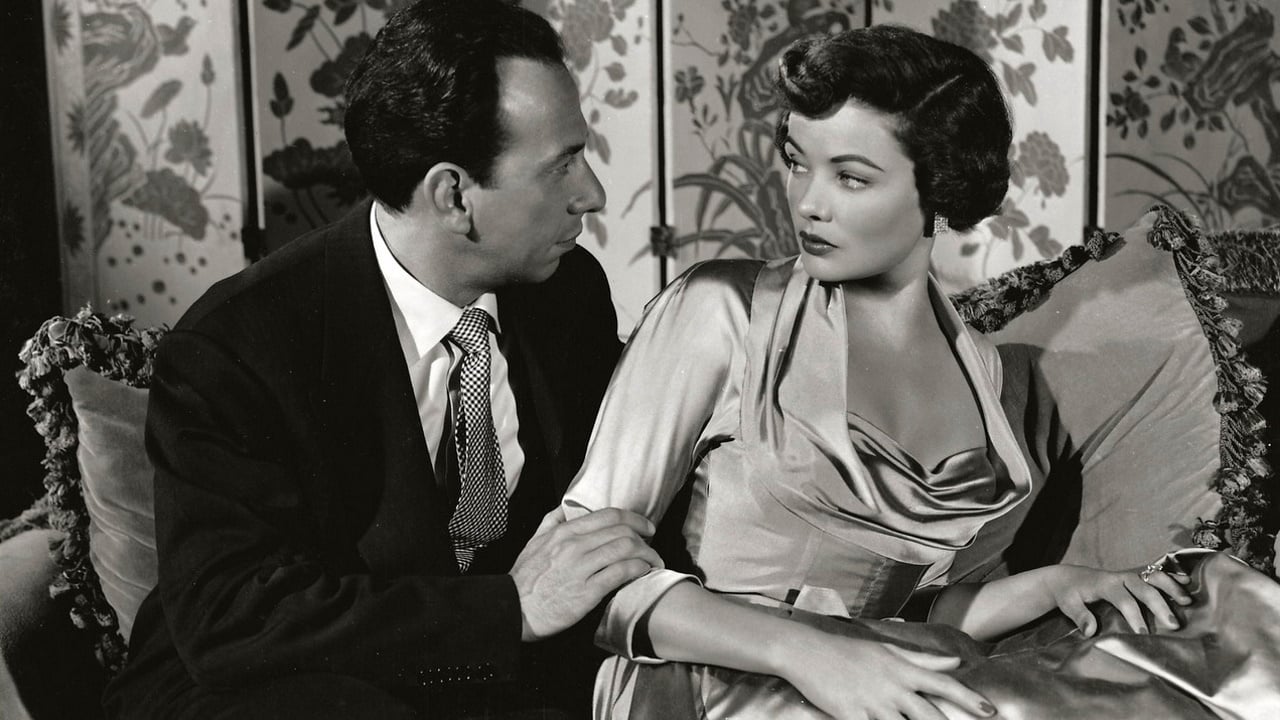
Whirlpool occupies a specific and underexamined position in the Preminger canon, arriving between the moral severity of Laura and the courtroom rigors of Anatomy of a Murder, and sharing with both a fascination with performance – professional, social, and psychological. The film's concern with hypnosis is less a thriller gimmick than a structuring metaphor for the condition of women within postwar domestic arrangements: Ann Sutton is manipulated precisely because she is already conditioned to defer, already practiced at suppressing evidence of her own distress. José Ferrer's Korvo is the genre's confidence man in a new register, operating not through guns or blackmail but through the language of healing. Richard Conte's psychiatrist husband is the more unsettling figure – credentialed, decent in his intentions, and entirely blind to what his marriage has cost his wife. The film does not fully resolve this critique, and its final act concedes too much to conventional reassurance, but Preminger's control of tone and Miller's restrained visual precision keep it from collapsing into mere melodrama.

– Classic Noir
3 ★★★☆☆ Notable
Credits

The Crew

DirectorOtto Preminger
ScreenplayBen Hecht
CinematographyArthur C. Miller
MusicDavid Raksin
EditingLouis R. Loeffler
Art DirectionLeland Fuller
CostumesCharles LeMaire
ProducerOtto Preminger
Performances

The Cast

Close Reading

The Signature Scene

Whirlpool – scene
The Museum at Night Sleepwalking Through the Frame

Ann moves through the darkened galleries of a private residence rendered with the stillness of a museum, the camera tracking at a measured distance that neither closes nor retreats. Arthur C. Miller lights the space in deep pools, isolating objects – a glass surface, a doorframe, a woman's pale dress – against shadow that has no clear source. The composition keeps Ann small within the architecture, figures of authority and wealth arranged around her as fixed geometry while she drifts between them.

The scene's formal detachment mirrors Ann's psychological condition precisely: she is present but not fully there, visible but not witnessing herself. Preminger does not underscore this with expressionist distortion; instead, the camera's controlled remove becomes the grammar of dissociation. What the scene argues, quietly and without sentiment, is that the difference between hypnotic compulsion and social compliance may be one of degree rather than kind.

Visual Language

The Cinematography

🎞️
Arthur C. Miller – Director of Photography

Arthur C. Miller, who had shot How Green Was My Valley and The Song of Bernadette for John Ford, brings a more interior discipline to Whirlpool than his reputation for classical luminosity might suggest. Working largely on studio sets designed to evoke the upper registers of Los Angeles wealth, Miller uses high-key light in the domestic spaces not as comfort but as exposure – surfaces that should signal security instead read as surveilled. His shadow work is reserved for scenes of psychological pressure rather than physical menace, so that darkness arrives as a condition of the mind rather than of the street. Miller avoids the canted angles and expressionist distortion common to noir of the period; his framings are composed and level, which gives the film's moments of psychological rupture their particular unease. The lens choices favor a middle focal length that keeps characters readable without flattering them, and the camera's relationship to Gene Tierney is consistently one of watchful distance, observing rather than protecting.

In the Catalogue

Themes & Motifs

Availability

Where to Watch

Also in the Directory

See Also