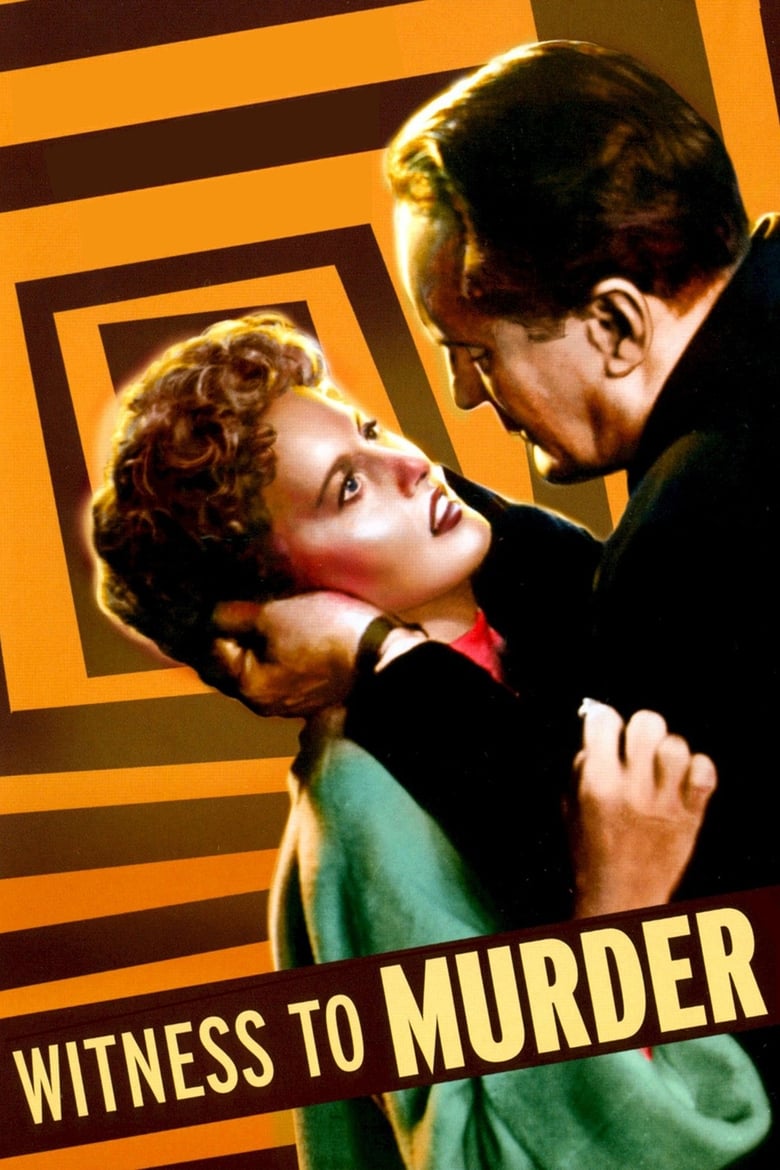
Late one night in a Los Angeles apartment building, Cheryl Draper wakes to witness, through an open window across the courtyard, a man strangling a woman. By the time police arrive, the body has vanished and the suspect – a cultivated, German-born intellectual named Albert Richter – presents himself as entirely above suspicion. The responding detective, Lt. Lawrence Mathews, finds no evidence and no corpse, and Cheryl is left with nothing but her own certainty.
Richter proves to be a resourceful adversary. Charming in public, methodical in private, he moves to discredit Cheryl systematically – feeding doubts about her stability to the police and engineering circumstances that make her appear emotionally unstable. Mathews, caught between procedural skepticism and a growing personal concern for Cheryl, occupies an uncomfortable middle ground, while Richter tightens his strategy with the cold patience of someone who has outmaneuvered scrutiny before.
Witness to Murder belongs to the postwar cycle of films in which women who see the truth are institutionally disbelieved, their perception treated as pathology rather than evidence. The film works the familiar wrong-witness structure – adjacent to but distinct from the wrong-man variant – with a particular interest in how authority validates or erases female testimony, a tension that gives the thriller its undertow beyond the mechanics of its plot.
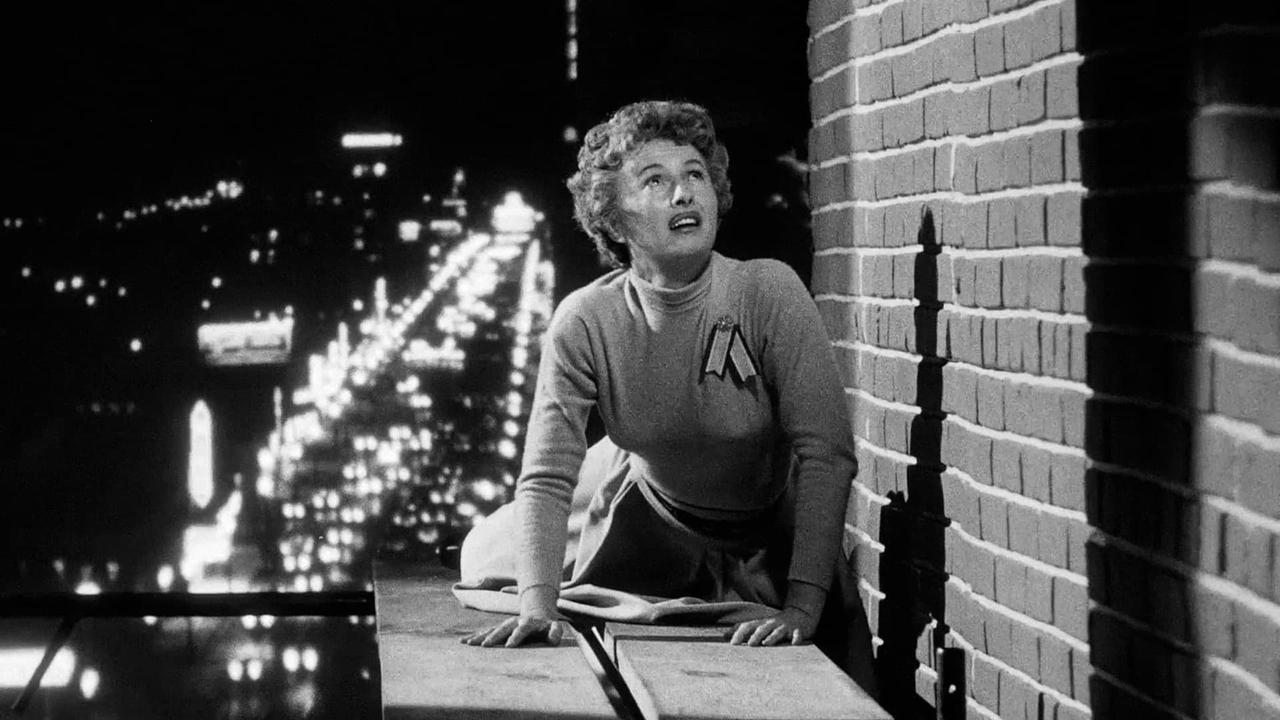
Witness to Murder is a film that functions more cleanly as a document of its anxieties than as a fully resolved thriller. Barbara Stanwyck holds the picture steady through considerable implausibility, bringing to Cheryl Draper the same controlled urgency she brought to more celebrated roles, though the screenplay does not always deserve her precision. George Sanders is well cast as Richter – the character's Nazi past is gestured at rather than examined, which is both a narrative economy and a missed opportunity. The film's real distinction lies in its willingness to interrogate institutional male authority: the police are not corrupt here, merely indifferent to a woman's account until the evidence becomes impossible to ignore. That indifference, more than Richter's menace, is the film's genuine subject. At 83 minutes it does not overstay its welcome, and in John Alton's hands even its studio-bound interiors carry the compressed unease that distinguishes competent noir from the merely commercial.
– Classic Noir
Alton shoots the ward with an institutional flatness that is itself a form of menace – overhead fluorescents replace the deep-shadow work of the film's earlier sequences, and the deliberate removal of noir's characteristic chiaroscuro signals that Cheryl has passed into a space where darkness offers no cover and no concealment. The frame is wide enough to isolate her among other patients, the geometry of the room pressing her toward the center without centering her with any authority.
The scene argues that visibility can be its own trap. In the shadowed courtyard she was a witness; here, fully lit and fully observed, she becomes a subject of diagnosis rather than credibility. Richter never appears in this space, yet his influence saturates it – the ward is the material consequence of his campaign, and Alton's lighting choices make the connection between institutional exposure and psychological violence impossible to miss.
John Alton, who had already distinguished himself on T-Men, Raw Deal, and The Big Combo, brings to Witness to Murder a restrained but purposeful visual strategy. Working within the constraints of a modest independent production, Alton uses high-contrast interior lighting to demarcate Cheryl's psychological states: the apartment sequences rely on deep blacks and single-source practicals that give her isolation a physical texture, while the police station scenes flatten into institutional grey that drains her testimony of drama before anyone has spoken a word of skepticism. His handling of the courtyard – the site of the original witness – favors oblique angles and compressed depth, making the view across to Richter's window feel both intimate and irresolvable. Alton understood that noir's moral logic lives in the quality of light as much as in the screenplay, and even when the script settles for convention, his compositions sustain the film's argument that what a woman sees and what institutions are prepared to acknowledge are not the same thing.
Witness to Murder has circulated on Tubi as a public-domain title; the print quality varies but it remains the most accessible free option.
Archive.orgFreeA public-domain transfer is available for streaming or download, useful for close analysis despite inconsistent source quality.
Amazon Prime VideoSubscription or RentalAvailability fluctuates on Prime; check for third-party channel add-ons offering classic noir libraries that may carry a cleaner transfer.