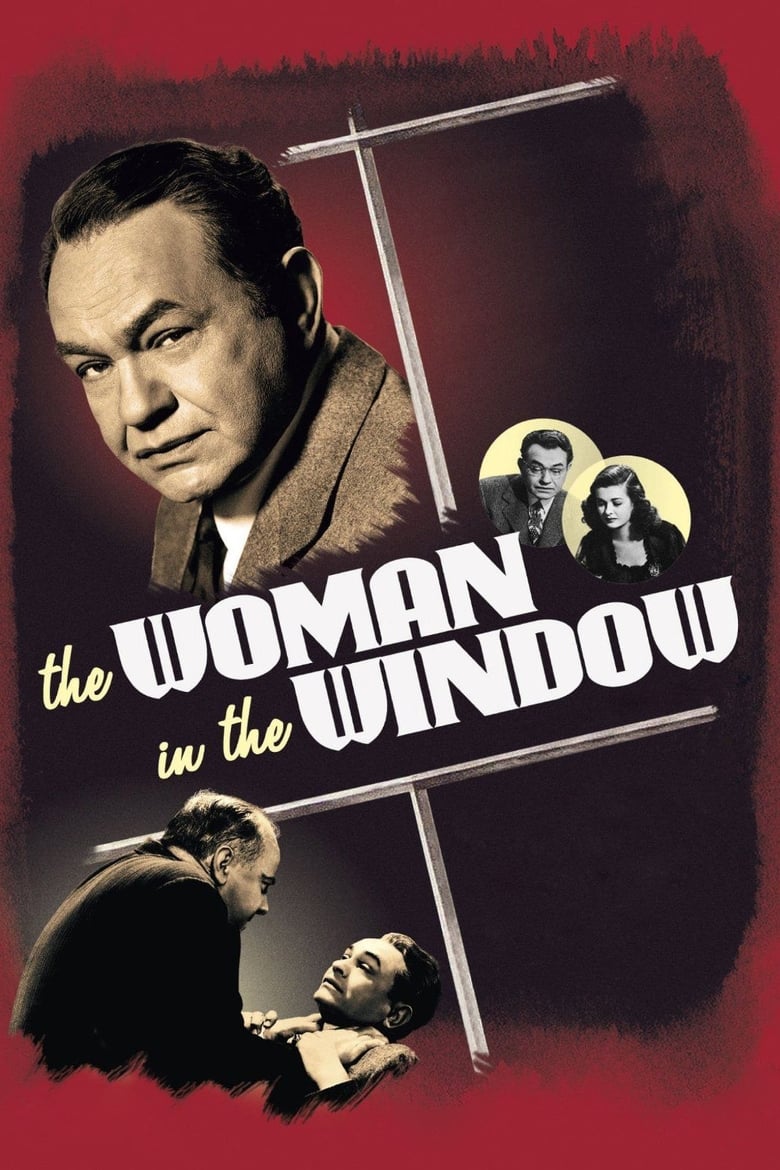
Richard Wanley is a mild-mannered criminology professor in New York City, a man of routine and modest comfort whose wife and children have left for the summer. On the eve of their departure he pauses before a portrait in a gallery window – a painting of a beautiful woman – and remarks on it to his companions, the district attorney Frank Lalor and his physician friend Dr. Barkstane. That same evening, alone and slightly adrift, Wanley encounters the woman from the portrait, Alice Reed, who approaches him with disarming ease. What follows is not seduction so much as drift: two people sharing a drink, then her apartment, until a man named Claude Mazard arrives and, in the violent struggle that follows, Wanley kills him in what appears to be self-defense.
Rather than report the killing, Wanley and Alice agree to conceal it – disposing of the body and constructing silence around the event. The investigation falls, with dark irony, to Wanley's own friend Lalor, whose procedural progress Wanley must monitor from the inside without betraying himself. Complicating the arrangement is Heidt, Mazard's bodyguard, who has pieced together enough of the truth to begin blackmailing Alice. Wanley, already operating at the outer limit of his nerve, is drawn further into complicity: he must now consider whether another death might be the only exit from the first.
Woman in the Window belongs to the cycle of mid-1940s noirs in which ordinary, professional men – not criminals by nature or necessity – are undone by a single evening's lapse in judgment. The film's interest lies less in suspense mechanics than in the quiet portrait of a man watching his own self-image dissolve. Fritz Lang constructs the story as a trap whose walls tighten by inches, and the film's controversial resolution has divided critics ever since its release, raising questions about the genre's relationship to moral consequence and audience comfort that remain unresolved.
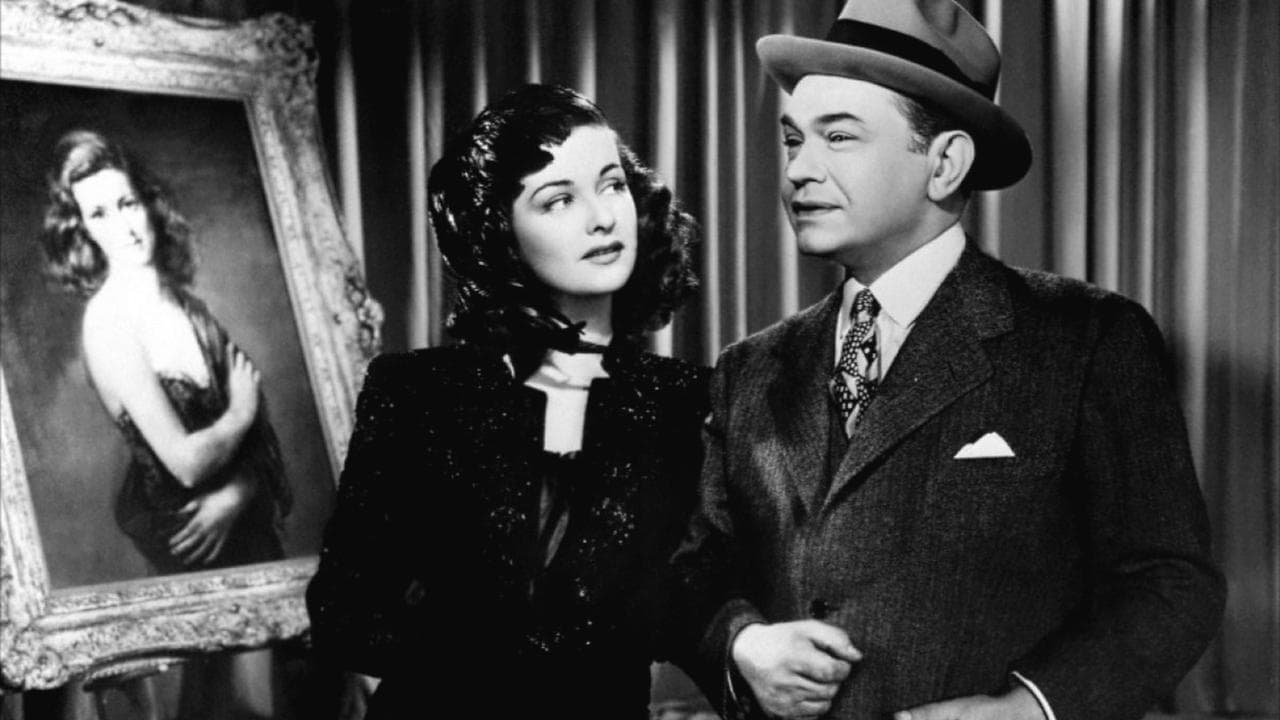
Woman in the Window occupies an instructive position in Fritz Lang's American period: it is a film that works methodically within genre conventions while quietly interrogating the assumptions beneath them. Edward G. Robinson's performance as Wanley is among his most carefully calibrated – the character is not weak exactly, but calibrated to a life that has never tested him, and Robinson communicates that vacancy with precision. The film's central argument concerns the permeability of the respectable self: how little distance separates the criminology professor from the man concealing a body. Lang, working with cinematographer Milton Krasner, keeps the visual register consistently unsettled – domestic spaces rendered slightly wrong, the city outside functioning as pressure rather than backdrop. The ending remains a serious critical problem, one that either reveals the genre's anxieties about its own logic or retreats from them, depending on how generously one reads Lang's intent. Either way, the film earns its place in the canon as a precise, somewhat cold study in masculine vulnerability and the cost of a single unexamined evening.
– Classic Noir
Lang and Krasner compose the scene around the body of Claude Mazard with the same clinical attention the film has given to Wanley's face throughout. The light falls from a single practical source, casting long shadows across the apartment floor and leaving the edges of the frame in genuine darkness rather than decorative darkness. The camera stays at mid-distance, refusing the close-up that might invite identification or release. Robinson and Joan Bennett face each other across the body – the blocking insisting on the geometry of entrapment before either character speaks a word of it.
What the scene establishes is the film's central moral architecture: two people who are not, by any prior evidence, criminals, now engaged in a precise domestic negotiation about how to erase a man from the record. There is no hysteria, no obvious remorse – only the methodical logic of people who have decided survival outranks confession. The scene argues that the will to self-preservation is not an aberration but a baseline, and that respectability is the first casualty once that will is activated.
Milton Krasner's cinematography on Woman in the Window operates in the tradition of controlled studio noir: RKO-adjacent in its use of deep shadow, but calibrated to Lang's preference for geometric precision over atmospheric excess. Krasner works primarily with artificial light in ways that expose rather than glamorize – key lights positioned to carve Robinson's face into planes of doubt, fill light withheld in Alice's apartment to keep moral context ambiguous. The studio interiors are dressed to read as real space but framed to feel slightly enclosed, a consistent reminder that Wanley has moved from one controlled environment into another, tighter one. There is little location work; the city exists largely as night-glimpsed exteriors and the occasional street lamp casting a single cone of witness. Krasner's lens choices favor a moderate depth of field that keeps backgrounds legible but secondary, forcing the eye back to faces – to the micro-expressions of men and women calculating their next move. The visual language never becomes expressionistic in the European sense, but the moral logic of the story is inseparable from the way light is consistently denied.
Criterion's presentation includes contextual framing within their Fritz Lang programming and is likely the highest-quality transfer currently available for streaming.
TubiFreeAvailable as a public domain title; video quality varies, but it is the most accessible no-cost option for first-time viewers.
Archive.orgFreeMultiple transfers exist in the public domain archive – quality is inconsistent and should be verified before use in any critical or educational context.