Films People Pull a Fast One Night Beat Reading Room On TV Shop
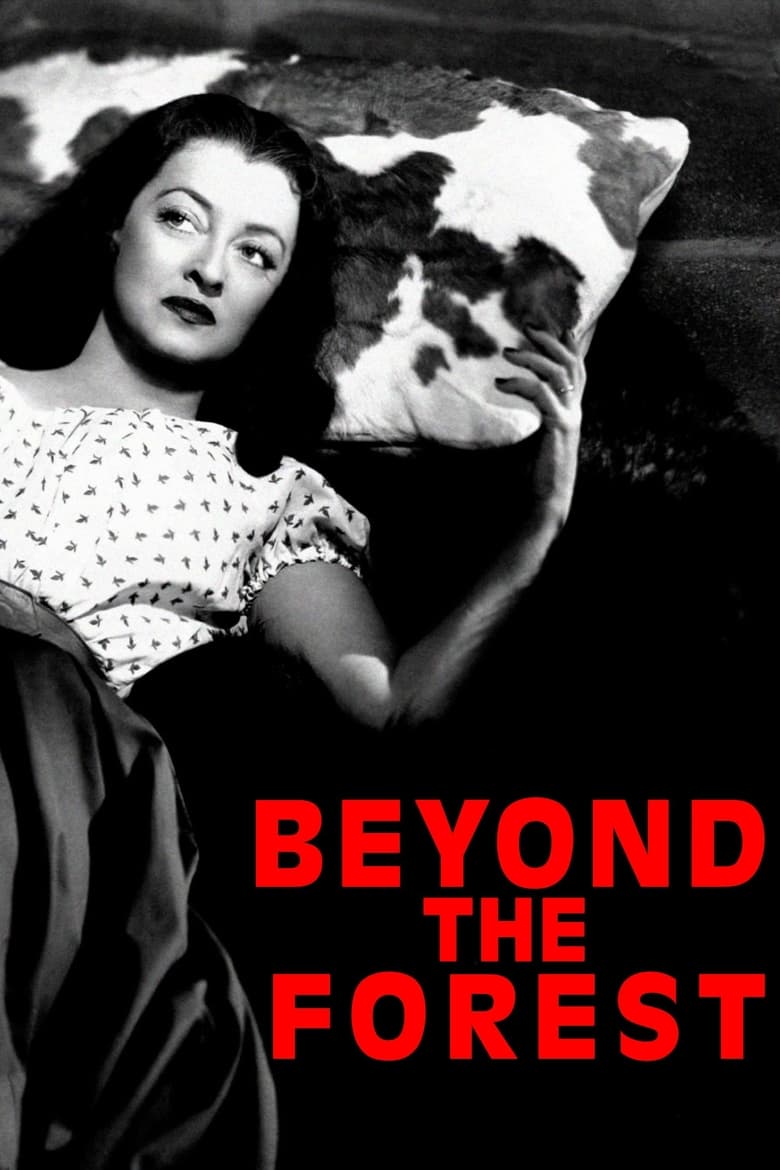
Beyond the Forest 1949
1949 Warner Bros. Pictures
★★★☆☆ Notable
Film Noir · 97 minutes · Black & White

Beyond the Forest

Directed by King Vidor
Year 1949
Runtime 97 min
Studio Warner Bros. Pictures
TMDB 6.7 / 10
"A woman who wants too much finds the town she despises will be the last thing she ever sees."

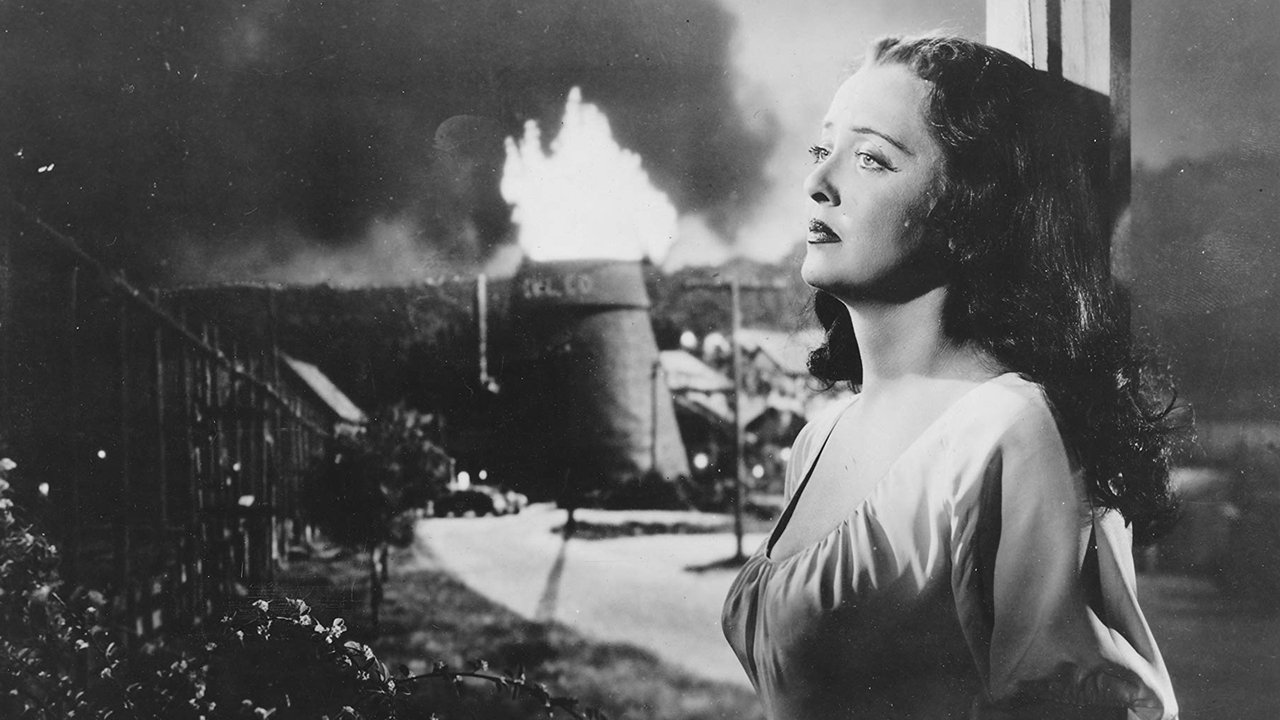
Rosa Moline (Bette Davis) is a restless, contemptuous woman trapped in Loyalton, a small Wisconsin mill town she regards with undisguised loathing. Married to the decent, patient Dr. Louis Moline (Joseph Cotten), she has no interest in his patients, his quiet life, or the modest comforts he provides. Her attention is fixed entirely on Neil Latimer (David Brian), a wealthy Chicago industrialist who visits the region and represents everything Loyalton is not: money, movement, escape.

When Rosa becomes pregnant, she sees the child not as a life but as an anchor, and takes deliberate steps to end the pregnancy. Her calculated ruthlessness extends further when Moose (Minor Watson), a local hunter who witnessed an earlier crime, threatens her security. The film deepens into something darker than mere adultery or ambition – Rosa's transgressions accumulate until she has implicated herself in murder, and her husband's continued loyalty becomes its own quiet indictment of her. Latimer, meanwhile, proves far less willing to be the instrument of her liberation than she imagined.

Beyond the Forest operates at the extreme edge of the femme fatale tradition, pushing the figure of the destructive woman beyond seduction into something closer to pathology. Where most noir places its dangerous women in urban shadows, King Vidor locates Rosa in daylight and domestic space, making her hunger visible and her destruction methodical. The film's willingness to render its protagonist wholly unsympathetic, without flinching or offering redemption, gives it a severity that sets it apart from more compromised treatments of similar material.
Classic Noir

Beyond the Forest arrives at an awkward moment in both Bette Davis's career and the noir cycle itself, and that friction is part of what makes it worth serious attention. The film is neither a comfortable melodrama nor a tidy crime picture; it borrows from both without fully committing to either, and that instability is largely the point. Davis, in her final Warner Bros. film, plays Rosa Moline with a ferocity that tips repeatedly into self-parody – and yet the excess is not simply camp. It reflects a genuine argument the film is making about female desire as something the culture around Rosa has no language to accommodate except destruction. King Vidor, whose work moved restlessly between genres, directs with a coldness that refuses Rosa the audience's sympathy while refusing equally to moralize cheaply about her. The result is a film that discomforts rather than satisfies, and whose reputation as a curio of excess undersells what it actually achieves: a portrait of entrapment so airless it becomes its own punishment.

– Classic Noir
3 ★★★☆☆ Notable
Credits

The Crew

DirectorKing Vidor
ScreenplayLenore J. Coffee
CinematographyRobert Burks
MusicMax Steiner
EditingRudi Fehr
Art DirectionRobert M. Haas
CostumesEdith Head
ProducerHenry Blanke
Performances

The Cast

Close Reading

The Signature Scene

Beyond the Forest – scene
The Railroad Tracks Rosa Walks Toward the Whistle

Robert Burks frames Rosa in a long shot against the flat Wisconsin terrain, the railroad tracks receding into a vanishing point that reduces her figure to a small, determined silhouette. The light is harsh and directionless – no shadows to hide in, no architecture to frame her against. As she moves forward, Burks holds the wide composition rather than cutting to her face, denying the audience the emotional intimacy Davis's close-ups elsewhere command. The effect is geographic as much as dramatic: the landscape itself appears indifferent, the tracks offering not escape but geometry.

The scene condenses the film's central argument into a single sustained image. Rosa has spent the entire picture fighting against containment, and here she is finally moving, finally unimpeded – and the frame shows it to be meaningless motion. The destination she has sacrificed everything to reach is not visible. What the camera records instead is the effort itself, stripped of glamour, exposed against empty land. It is the noir spiral rendered not as urban descent but as horizontal futility.

Visual Language

The Cinematography

🎞️
Robert Burks – Director of Photography

Robert Burks, who would go on to define the visual grammar of Hitchcock's middle period, brings to Beyond the Forest a precisely controlled unease that works against the film's melodramatic impulses rather than amplifying them. Shooting on a combination of Warner Bros. studio sets and limited location work, Burks resists the expressionist shadow patterns that characterize much urban noir of the period. Instead he favors a harder, flatter light for interior scenes that makes Loyalton feel exposed rather than threatening – there is nowhere to hide in this world, and that quality serves Rosa's claustrophobia more accurately than darkness would. When shadows do appear, they tend to fall on the wrong surfaces, cutting across domestic objects rather than faces, suggesting a moral disorder that has seeped into the environment. Burks uses depth of field to keep Louis Moline perpetually visible in the background of frames Rosa occupies, a compositional choice that externalizes the marriage's suffocating dynamic without a word of dialogue.

In the Catalogue

Themes & Motifs

Availability

Where to Watch

Also in the Directory

See Also