Films People Pull a Fast One Night Beat Reading Room On TV Shop
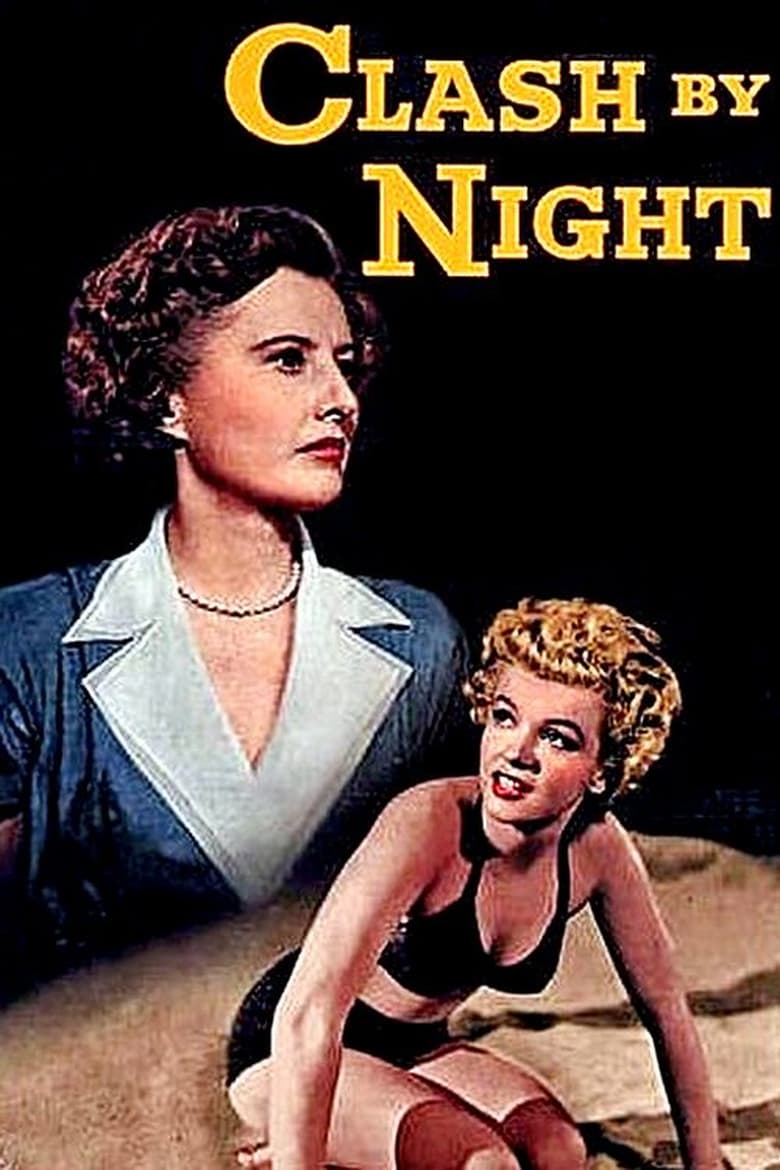
Clash by Night 1952
1952 Wald/Krasna Productions
★★★☆☆ Notable
Film Noir · 105 minutes · Black & White

Clash by Night

Directed by Fritz Lang
Year 1952
Runtime 105 min
Studio Wald/Krasna Productions
TMDB 6.7 / 10
"A woman returns home knowing exactly what she left behind – and reaches for it anyway."

Mae Doyle returns to the Monterey fishing village she fled years ago, worn down by a life that never delivered what she chased. She moves back in with her brother Joe and his girlfriend Peggy, and soon accepts a marriage proposal from Jerry D'Amato, a decent, uncomplicated fisherman who offers stability over excitement. Mae marries him without pretending to be in love, and for a time the arrangement holds.

The arrival of Earl Pfeiffer, Jerry's coarser, more volatile friend, disrupts the household equilibrium. Earl sees Mae clearly – not with admiration but with recognition, as someone who shares his contempt for easy contentment. The mutual pull between them has less to do with desire than with a shared restlessness that domesticity cannot suppress. Mae knows what an affair with Earl will cost, and moves toward it with the precision of someone completing an inevitable calculation.

Adapted from Clifford Odets's 1941 stage play, the film sits at the intersection of domestic melodrama and noir, using the canneries and fog-bound coastline of Monterey as both location and moral backdrop. Where many noir narratives hinge on criminal plots, this one derives its tension from psychology and social entrapment – the way class, gender, and longing conspire to narrow the choices available to its characters.
Classic Noir

Clash by Night occupies a specific and underexamined position in Lang's American work – neither the paranoid proceduralism of his crime films nor the expressionist dread of his German period, but a character study in which the noir framework applies pressure to domestic life rather than criminal enterprise. Barbara Stanwyck plays Mae with an economy that refuses sentimentality; she conveys years of accumulation in a posture, a pause, a way of not looking at someone. Robert Ryan, as Earl, brings the same coiled tension he carried through most of his postwar work, though here it is directed inward as much as outward. What the film reveals about its era is the degree to which postwar American optimism was sustained only by collective agreement to suppress the evidence against it. Odets's source material was already a decade old by the time of production, but Lang and screenwriter Alfred Hayes update it without softening it. Nicholas Musuraca's photography keeps the Monterey locations grounded in texture rather than glamour, and the result is a film that earns its bleak honesty without dramatic exaggeration.

– Classic Noir
3 ★★★☆☆ Notable
Credits

The Crew

DirectorFritz Lang
ScreenplayAlfred Hayes
CinematographyNicholas Musuraca
MusicRoy Webb
EditingGeorge Amy
Art DirectionAlbert S. D'Agostino
ProducerHarriet Parsons
Performances

The Cast

Close Reading

The Signature Scene

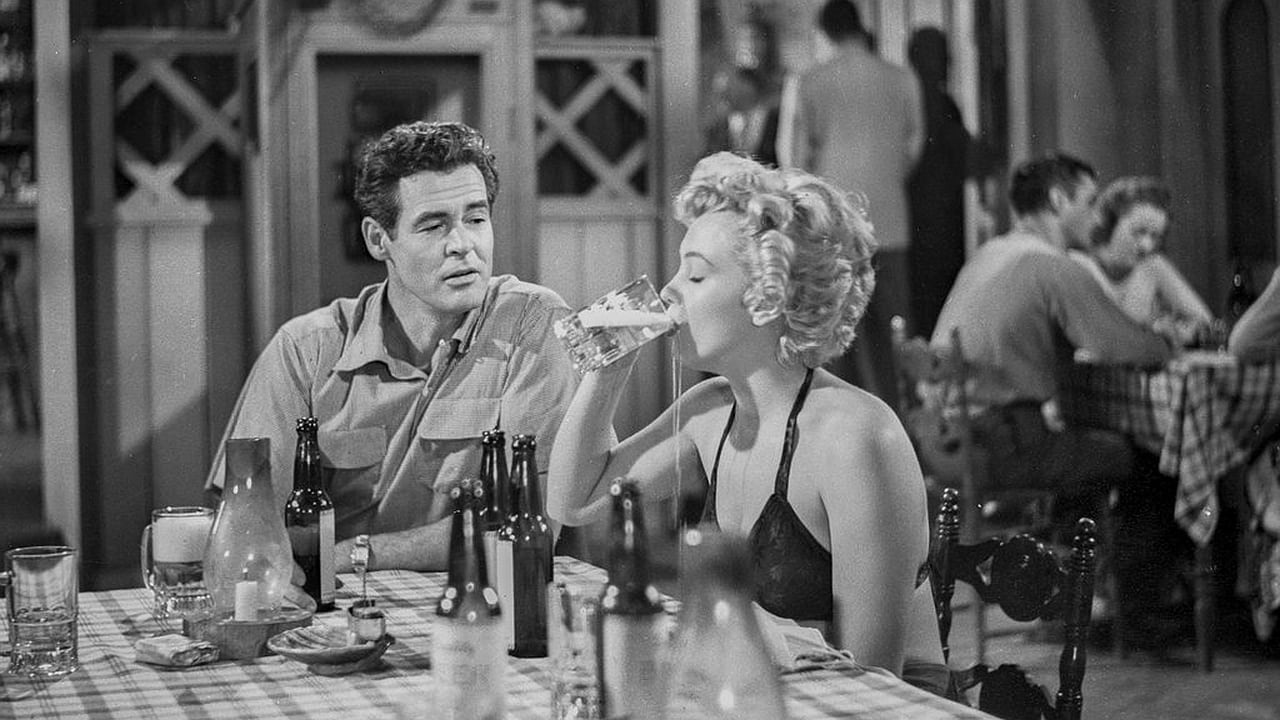
Clash by Night – scene
The Projection Booth Two People, No Escape

Jerry manages a small movie theatre, and Lang stages the confrontation between Mae and Earl in the projection booth with deliberate spatial constriction. The booth is narrow, lit primarily by the spill from the projector beam – a hard, directional light that cuts across faces and leaves the peripheral space in deep shadow. Musuraca frames the two figures so the machinery occupies as much of the screen as the actors, the projector running its own narrative behind them while they negotiate theirs. The light flickers, introducing an involuntary instability to the image.

The scene functions as an enclosure – physical, moral, psychological. There is nowhere to move in the frame without moving toward the other person. Lang uses the booth's cramped geometry to make explicit what the rest of the film keeps implicit: that Mae and Earl are not drawn together by attraction alone but by a shared recognition that they cannot tolerate what their lives have become. The flickering projection light suggests both the illusion of cinema and the illusion of the futures each of them was sold.

Visual Language

The Cinematography

🎞️
Nicholas Musuraca – Director of Photography

Nicholas Musuraca, whose work on Out of the Past remains a benchmark for noir shadow composition, approaches Clash by Night with a restrained register suited to Lang's less expressionist intentions here. Shooting on location in Monterey as well as in the RKO studio, Musuraca maintains continuity between the two environments by subordinating the location footage to a consistent tonal grammar – overcast coastal light treated as ambient low-key illumination rather than naturalistic brightness. In interior sequences, he favors practical-source motivation, letting lamps and the theatre projector establish directionality before augmenting with fill. The effect is a world without neutral zones: every space has a shadow side. Lens choices favor normal to slightly long focal lengths, keeping characters embedded in their environments rather than isolated from them, which reinforces the film's argument that these people are products of their circumstances as much as their dispositions. The photography never aestheticizes misery; it simply refuses to pretend the light falls evenly.

In the Catalogue

Themes & Motifs

Availability

Where to Watch

Also in the Directory

See Also