Films People Pull a Fast One Night Beat Reading Room On TV Shop
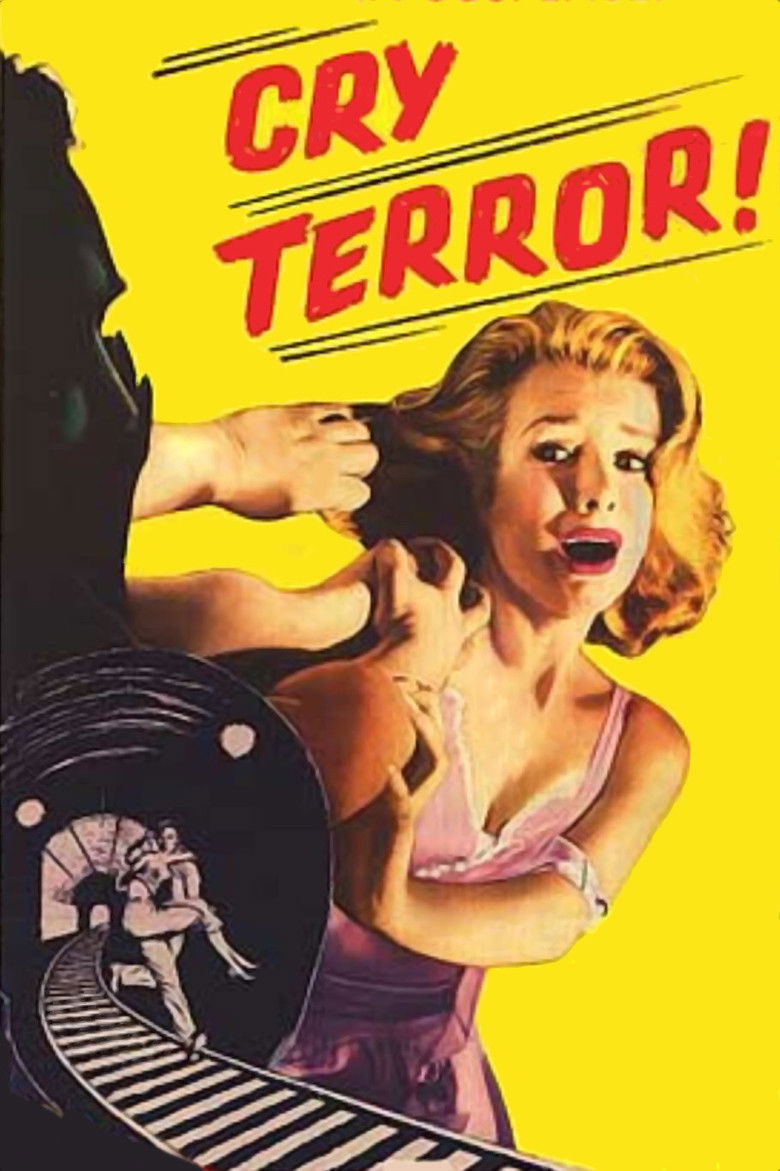
Cry Terror 1958
1958 Andrew L. Stone Productions
★★★☆☆ Notable
Film Noir · 96 minutes · Black & White

Cry Terror

Directed by Andrew L. Stone
Year 1958
Runtime 96 min
Studio Andrew L. Stone Productions
TMDB 6.5 / 10
"A man's past is someone else's weapon."

Jim Molner (James Mason), a mild-mannered electronics technician in New York City, is pulled into a criminal scheme when Paul Hoplin (Rod Steiger), a former acquaintance from his Army days, exploits Jim's specialized knowledge to plant bombs aboard commercial aircraft. Hoplin, volatile and calculating in equal measure, has constructed an extortion plan targeting an airline, and he needs Jim's technical expertise to make the threat credible. When Hoplin abducts Joan Molner (Inger Stevens) and their young daughter Patty (Terry Ann Ross), Jim has no room to refuse.

With his family held by Hoplin's associates – the brutal Steve (Neville Brand) and the morally adrift Eileen Kelly (Angie Dickinson) – Jim is forced to cooperate while FBI Agent Charles Pope (Jack Kruschen) closes in from outside. The film traces the slow erosion of Jim's options as Hoplin's plan advances and the hostage situation grows increasingly unstable. Steiger plays Hoplin as a man whose menace is inseparable from his neediness, making him unpredictable rather than simply dangerous, and the dynamic between captor and captive acquires a psychological texture that goes beyond standard thriller mechanics.

Cry Terror belongs to the procedural strand of late-cycle noir, concerned less with moral ambiguity than with the mechanics of coercion and the limits of institutional protection. Shot largely on location in New York, it draws on the documentary realism that had been filtering into American crime cinema since the late 1940s, using the city's actual spaces – transit corridors, hotel rooms, ordinary domestic interiors – to ground the terror in the recognizable and the mundane.
Classic Noir

Cry Terror arrives in 1958 at a moment when American noir was consolidating rather than innovating, and Andrew L. Stone's film is most usefully understood as a technically accomplished entry in the procedural mode rather than a work that extends the genre's psychological reach. What it offers is precision: a credible mechanics of extortion, a set of performances calibrated to the film's controlled register, and a documentary visual approach that keeps the threat from inflating into melodrama. Steiger is the film's most interesting element, bringing to Hoplin a quality of wounded aggression that complicates the villain function without sentimentalizing it. Mason anchors the ordinary-man-under-duress scenario with his characteristic economy. Angie Dickinson, in a supporting role that the script underuses, suggests a moral complexity her scenes cannot quite accommodate. The film's significance lies partly in what it reflects about postwar American anxiety – the vulnerability of civilian infrastructure, the ease with which expertise becomes coercible – themes that would deepen in Cold War cinema through the following decade.

– Classic Noir
3 ★★★☆☆ Notable
Credits

The Crew

DirectorAndrew L. Stone
CinematographyWalter Strenge
MusicHoward Jackson
EditingVirginia L. Stone
CostumesBernard
ProducerAndrew L. Stone
Performances

The Cast

Close Reading

The Signature Scene

Cry Terror – scene
The Hotel Room Vigil Light Through a Drawn Shade

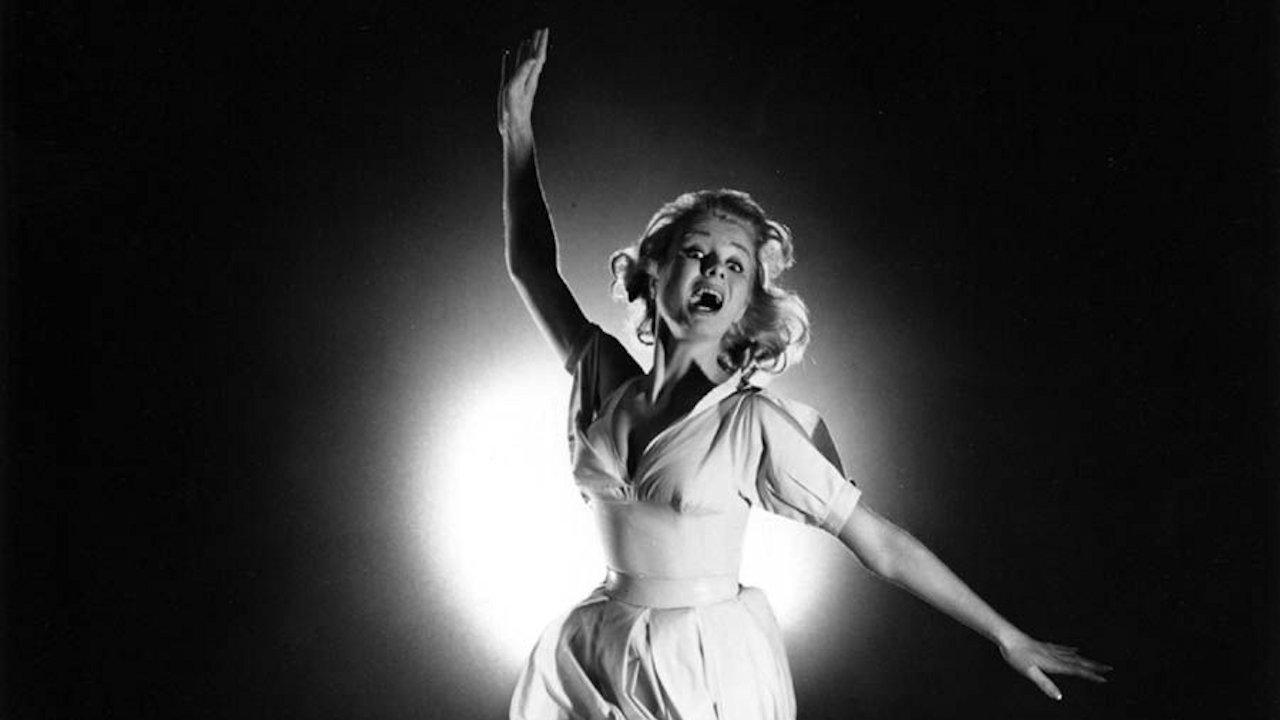
Walter Strenge's camera holds on Joan Molner from a low angle as she sits against a wall in a bare hotel room, the only light entering through a venetian blind that throws horizontal bars across her face and torso. The frame is uncluttered – a bed edge, a floor, a woman reduced to geometry. Strenge does not move the camera. The stillness is the point: the composition communicates confinement not through action but through the refusal of it, the light itself becoming a kind of restraint.

The scene distills the film's central argument about domestic vulnerability. Joan is not a femme fatale or an agent of her own destruction – she is a wife and mother caught inside a schema she did not author and cannot exit. The barred light functions as a visual statement about the porousness of ordinary life, how quickly the familiar spaces of home and routine can be reconfigured as sites of captivity. Inger Stevens plays the scene without excess, and the restraint matches Strenge's compositional austerity.

Visual Language

The Cinematography

🎞️
Walter Strenge – Director of Photography

Walter Strenge's cinematography on Cry Terror is the work of a technician who understood that location shooting in the late 1950s was not simply an aesthetic choice but a moral one – a commitment to the idea that real spaces carry a weight that studio approximations cannot manufacture. Strenge uses available architectural light wherever it serves, supplementing it with a hard-key setup that produces dense, directional shadows rather than the diffuse noir chiaroscuro of an earlier era. The lens work favors moderate wide angles that allow peripheral space to read as threat, keeping the frame open enough to suggest that danger can enter from any direction. In the hotel interiors, shadow falls with precision: faces are half-lit, walls press in. On location in New York, Strenge shoots the city's transit infrastructure with a near-documentary plainness that strips away glamour and replaces it with the texture of a system that could be used against itself. The visual language throughout serves the film's argument that modernity is itself a vulnerability.

In the Catalogue

Themes & Motifs

Availability

Where to Watch

Also in the Directory

See Also