Gunther Wyckoff, a young man with a history of violence and a recent escape from a psychiatric facility, arrives by bus in a mid-sized city with a single purpose: to find the psychiatrist, Dr. Faron, who committed him. When a patrolman attempts to detain him, Wyckoff shoots the officer and retreats into a nearby television bar called The Oasis, taking the patrons and staff hostage. Outside, Detective Henry Keiver coordinates a police response while the city's newly installed television cameras – trained on the standoff – begin broadcasting the crisis live.
Inside The Oasis, the hostages reveal themselves as a cross-section of mid-century American anxiety: Freddy, a hard-drinking woman with nowhere better to be; Earl, a man carrying the weight of a failing marriage; Skip, young and volatile; and Helen, whose calm masks something more complicated. Wyckoff is not a conventional screen villain – he is damaged, controlled, and in possession of a grievance that carries a kind of terrible logic. As negotiations stall outside, the relationships among the trapped patrons shift, and the presence of the television broadcast introduces a new and unsettling element: the spectacle of catastrophe as public entertainment.
Dial 1119 belongs to a cycle of early-1950s noir that relocated the genre's moral pressure from shadowed streets to contained, claustrophobic spaces. The hostage situation functions less as a thriller mechanism than as a pressure chamber, forcing characters to confront what they are avoiding in their ordinary lives. The film draws on postwar anxieties about violence, psychological damage, and the emerging mass media landscape in ways that give its modest runtime an unusual density of implication.
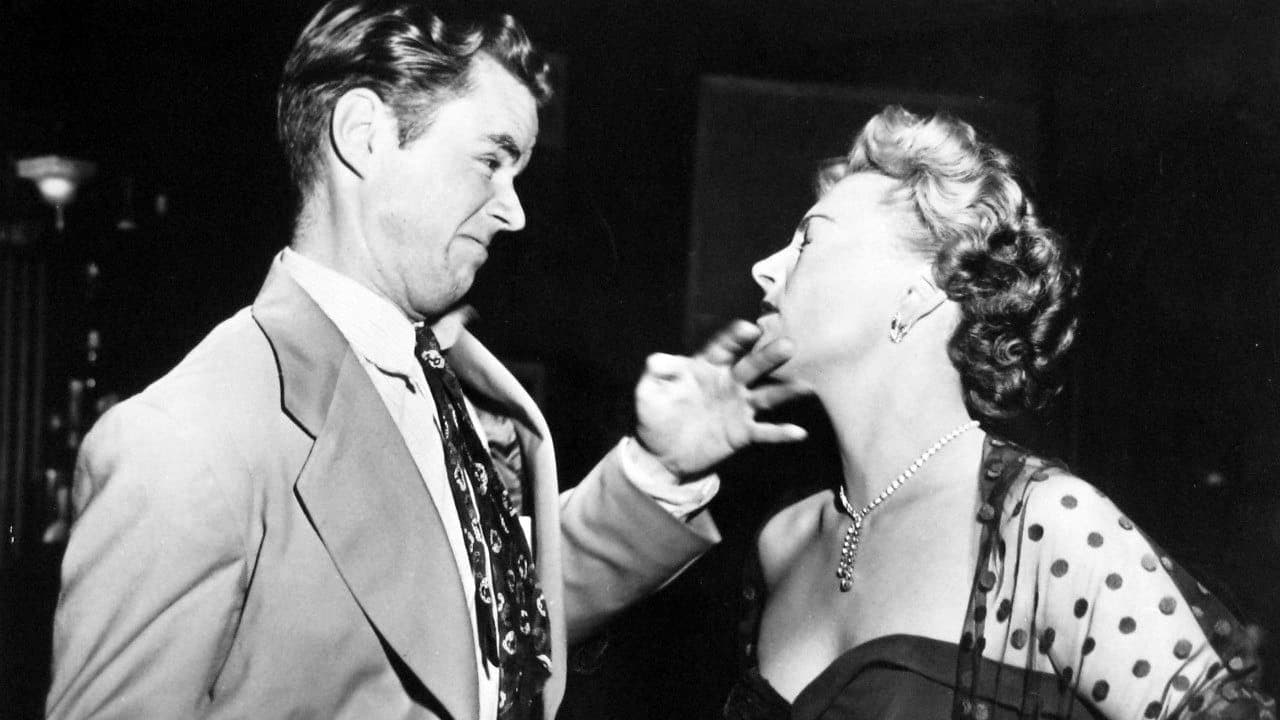
Dial 1119 is a minor but genuinely curious entry in MGM's fitful engagement with noir, made at a studio more comfortable with gloss than shadow. Gerald Mayer, working from a screenplay by John Monks Jr., keeps the action almost entirely inside one location, and the discipline serves the material. What distinguishes the film is its early, unsettled awareness of television as a force that transforms crisis into spectacle – the bar's television set, broadcasting the very standoff in which the patrons are trapped, is an image that lands harder now than it likely did in 1950. Marshall Thompson plays Wyckoff with restraint rather than menace, which is the correct choice; the film is more interested in what produced him than in what he does. Sam Levene brings texture to the psychiatrist's guilt, and the ensemble of hostages functions as a compressed social portrait. Paul Vogel's cinematography keeps the studio interiors from feeling entirely sealed. The film does not fully resolve its ambitions, but its central conceit – that the camera itself is complicit – is worth the seventy-five minutes it asks.
– Classic Noir
Vogel frames Wyckoff in the middle distance, the television screen glowing at the edge of the shot so that both the captor and his own broadcast image occupy the same rectangle of space. The bar's practical lighting – neon tubes, backlit bottles – casts horizontal bands across faces without fully illuminating them, leaving each character in a kind of partial exposure. The camera holds rather than cuts, letting the discomfort accumulate in real time. When Wyckoff turns to look at the screen, the film briefly rhymes his face with its own transmission, a quiet doubling that the editing does not underline.
The scene makes the film's central argument almost without dialogue: the act of watching transforms the event being watched, and everyone inside The Oasis – hostages, captor, and the television audience beyond the glass – is now performing. Wyckoff's violence is real, but it has also become content. The moment locates the film's genuine unease, which is not about one damaged man with a gun but about the infrastructure that surrounds him, records him, and in some sense requires him.
Paul Vogel, a reliable MGM contract cinematographer who would shoot tougher material before the decade was out, works within the constraints of a studio-built interior to generate authentic spatial pressure in Dial 1119. Rather than rely on the extreme low angles and deep shadow that define the noir canon, Vogel uses a flatter, more observational approach: the bar is lit to feel functional rather than expressionist, which makes the violence feel less operatic and more abrupt. He favors medium shots that keep multiple characters in frame simultaneously, reinforcing the ensemble logic of the hostage situation. The television screen, a practical light source within the set, is used with intelligence – its bluish, diffuse glow distinguishes certain moments from the warmer bar lighting, marking a shift in register from the personal to the public. Location shooting is absent; the film is entirely studio-bound, and Vogel uses that containment deliberately, building a sense of a world reduced to one room from which there is no exit.
TCM holds a deep catalogue of MGM-era noir and airs Dial 1119 periodically; the broadcast print is typically the best available presentation of the film.
TubiFree (Ad-Supported)Tubi has carried the film as part of its classic noir rotation; confirm current availability before viewing as catalogue shifts.
Archive.orgFreeA public domain or unlicensed copy may be available on Archive.org, though print quality is not guaranteed and may vary significantly.