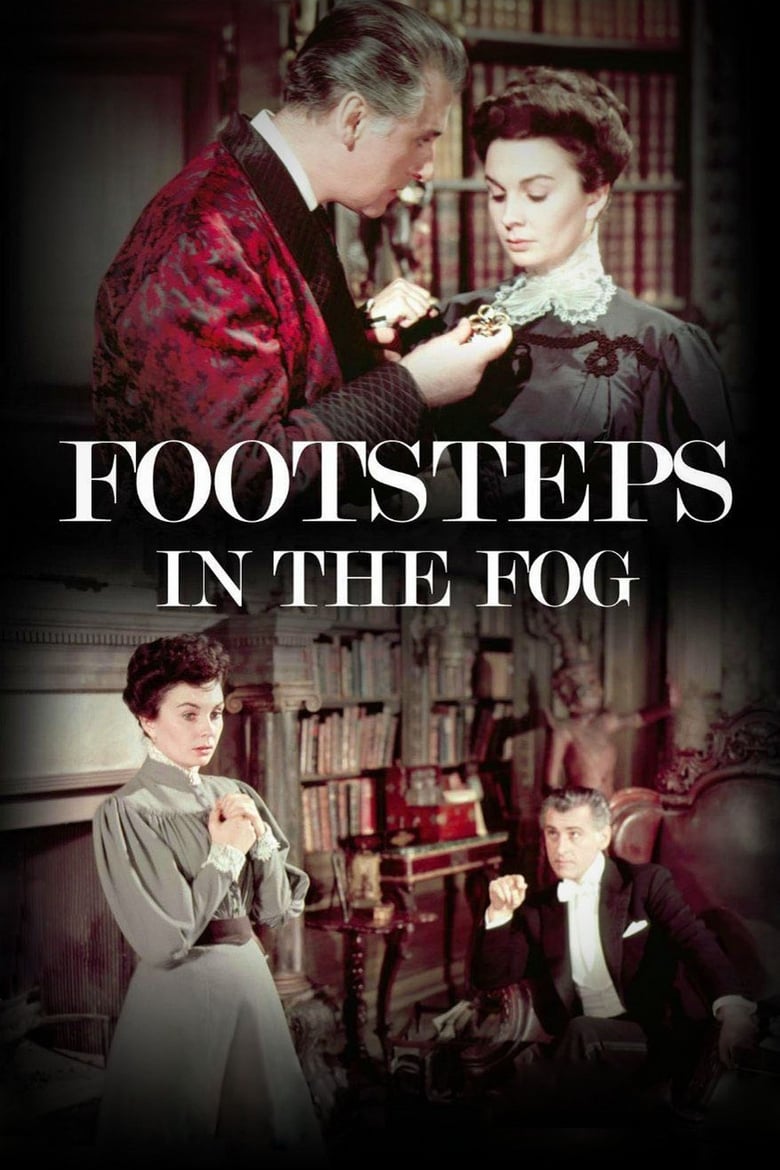
In late Victorian London, Stephen Lowry is a prosperous and outwardly respectable widower whose wife has just died under circumstances he alone understands. When Lily Watkins, a parlour maid in his household, makes clear that she witnessed enough to suspect him of poisoning his wife, Lowry does not panic – he calculates. Rather than dismiss her or flee, he promotes her, installing her as housekeeper and drawing her into a position of material dependence that he intends to make permanent.
The arrangement quickly reveals its own instabilities. Lily is not the passive instrument Lowry imagines; she is shrewd, acquisitive, and increasingly confident in the leverage she holds. As Lowry courts Elizabeth Travers, the daughter of a solicitor whose good opinion he needs, Lily's demands escalate and her hold over him tightens. A second death follows, and then the question is no longer whether Lowry can contain the situation but whether Lily has become something more dangerous than a blackmailer – a co-conspirator with ambitions of her own.
Footsteps in the Fog belongs to a strand of British noir that locates its moral corruption not in the underworld but in the respectable interior – the well-appointed drawing room, the household staff hierarchy, the social machinery of Victorian propriety. The film's central irony, that murder enables a man to rise while blackmail enables a woman to pursue the same goal by other means, gives it a hard edge that distinguishes it from period melodrama and aligns it with the genre's broader interest in the uses and abuses of power.
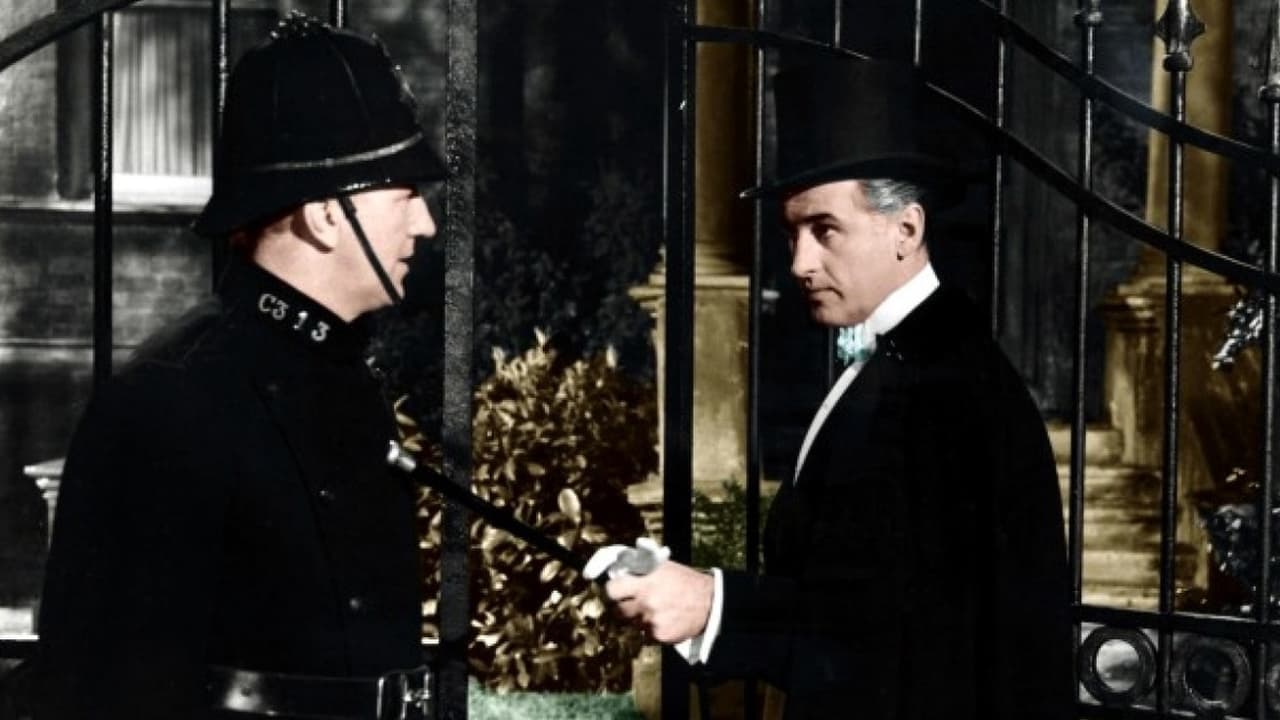
Footsteps in the Fog occupies an interesting position in British noir of the mid-1950s: it is a Hollywood co-production dressed in Victorian clothes, and the tension between those two identities is productive. Stewart Granger, cast against his usual heroic type, brings a cold economy to Lowry that suits the period setting and keeps the film from drifting into Gothic excess. Jean Simmons, working opposite her real-life husband at the time, is the more compelling presence – her Lily is calculating without being cartoonish, ambitious without the film condescending to her ambition. Director Arthur Lubin is not a stylist of the first order, but he manages the confined interiors with discipline, and Benjamin Frankel's score sustains unease without overstatement. The film's most durable contribution is structural: it refuses to settle the question of who is predator and who is prey, allowing the power dynamic to shift credibly across its ninety minutes. For a genre defined by the instability of moral position, that refusal is exactly right.
– Classic Noir
Christopher Challis frames the exchange on the narrow back staircase in a pair of over-the-shoulder shots that keep both figures partially in shadow, neither granted the full legibility that the drawing room affords the household's principal characters. The light source is low and lateral, most likely a practical lantern augmented off-camera, casting Lily's face in half-relief so that her expression reads as composed without fully declaring itself. Granger's Lowry stands one step above her – a spatial fact the blocking refuses to let the audience forget – yet the composition consistently cuts back to Simmons at an angle that levels the eyeline.
What the scene argues, through staging rather than dialogue, is that the staircase is not merely a location but a diagram of the film's central tension. Lowry's elevation is architectural; Lily's is willed. The moment he accepts her revised terms, the geometry quietly inverts, and Challis registers this with a final close-up on Lily's hands – still, folded, patient – that carries more weight than any confrontational glare. The film's thesis about ambition and its instruments is legible here without annotation.
Christopher Challis, working primarily on studio-built sets at Shepperton that reconstruct a fog-bound Victorian London, employs a restrained deep-focus approach that keeps domestic interiors morally legible without over-signposting them. His lighting design favours practicals – gas lamps, firelight, candelabra – as apparent sources, with studio fills kept low enough to preserve shadow density in corners and along walls. This is not the aggressively stylised noir chiaroscuro of American B-pictures; it is something more controlled and finally more unsettling, because the shadows appear as the natural consequence of the period's available light rather than as expressionist commentary. Challis varies his lens choices between interiors and the rare exterior sequence: medium focal lengths in confined spaces to avoid distortion while maintaining a slight sense of pressure, and slightly longer lenses for the street and garden scenes, which flatten depth and make London's atmosphere feel airless rather than expansive. The result is a visual language in which propriety and menace occupy exactly the same light.
Tubi has carried this title in the United States and represents the most accessible free option for most viewers, though transfer quality should be verified before settling in.
Amazon Prime VideoRentalA rental or purchase option is typically available here and tends to offer a cleaner print than some of the free streaming alternatives.
Archive.orgFreeA public domain version may be available on Archive.org; quality varies and the provenance of the source print is uncertain, but it serves for reference viewing.