Tom Quinn is a struggling dancer scraping by in a cheap rooming house with his wife Ann. One sleepless night, irritated by a neighbor's cat, he hurls his shoes out the window into the alley below. The next morning, those same shoes are found at the scene of a murder, and Tom – unable to account for the gap in his night – is arrested, tried, and sentenced to death for a killing he insists he did not commit.
Ann refuses to accept the verdict. Working alongside Police Inspector Clint Judd, who harbors an unspoken attachment to her, she begins piecing together an alternative account of the night in question. The investigation turns on a cache of stolen money, a shadowy figure named Kosloff, and a trail of circumstantial details that slowly reorient suspicion. Judd's dual role – official investigator and man privately in love with the condemned man's wife – introduces a current of self-interest beneath his apparent helpfulness.
Adapted from Cornell Woolrich's pulp source material, the film works the Wrong Man framework with the economy of a Monogram production: tight runtime, no wasted scenes, and a narrative logic that depends less on action than on the grinding procedural pressure of bureaucratic time running out. The shadow of the execution date gives the film its tension, and the final revelation is constructed to implicate the very machinery of justice in the near-destruction of an ordinary life.
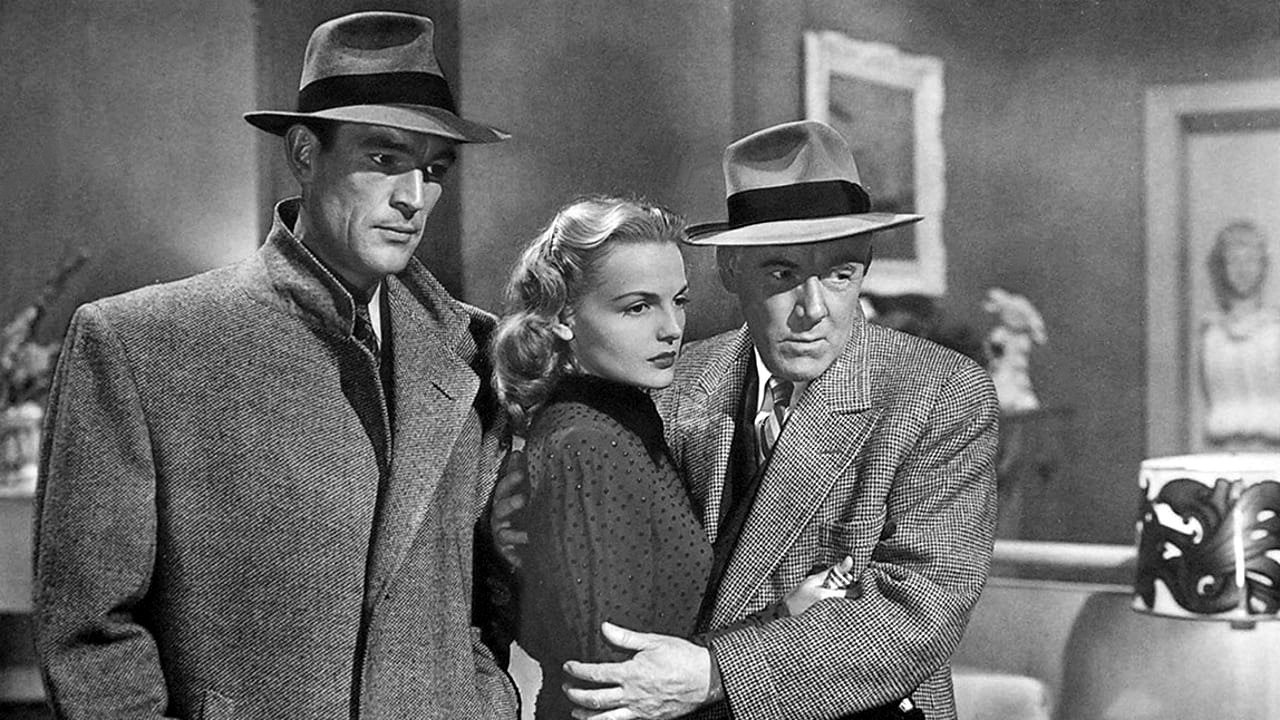
William Nigh's film occupies the lower strata of the noir cycle – Monogram budgets, a journeyman director, a cast without marquee names – yet it earns its place in the genre through fidelity to Woolrich's central obsession: the terror of contingency. The wrong shoes thrown from the wrong window at the wrong moment. That the plot hinges on so arbitrary an act is not a weakness but the point. What the film understands, more clearly than many better-funded productions, is that the legal system in noir is not corrupt so much as indifferent – a machine that processes guilt with the same bureaucratic neutrality it would process innocence if given the chance. Regis Toomey gives Judd a careful ambiguity; the inspector is neither villain nor hero but something more unsettling: a man doing his job while quietly arranging events to suit his desire. At seventy minutes, the film has no room for sentiment, and that compression is its discipline.
– Classic Noir
Stengler lights the interrogation scene with a single dominant source from above and slightly to one side, casting the table – and the pair of battered dance shoes laid upon it as evidence – in a hard pool of light while the surrounding room recedes into flat grey. Tom sits across from the shoes as though facing an accusation more eloquent than anything the detectives have said. The frame holds him in medium shot, the shoes in the foreground slightly out of focus, so the eye moves between the man and the objects that have condemned him without the film making the interpretive choice for the viewer.
The scene crystallizes the film's argument about evidence and identity. The shoes belong to Tom; they are his, incontestably. And yet their presence at a murder scene means nothing about what Tom did or did not do – only about where objects traveled in the dark. Nigh lets the silence in the room carry the weight: Tom cannot explain the shoes any more than he can explain the gap in consciousness that the prosecution has filled with murder. The scene establishes that in this world, possession is guilt, and innocence requires a narrative no ordinary man has prepared.
Mack Stengler, a Monogram regular who shot quickly and without excess, works within the studio's constraints to produce images that function within genre convention without transcending it. The lighting throughout favors hard practical sources – overhead bulbs, desk lamps, the ambient glow of street-level windows – which keeps the visual grammar consistent with the film's working-class settings. Studio interiors dominate; there is little location work, and Stengler compensates with shadow geometry on flat walls, using venetian blind patterns and window-bar shadows to impose confinement on rooms that would otherwise read as neutral. The camera rarely moves, favoring static medium shots that keep characters at a reportorial distance, which suits a story about institutional process rather than individual passion. Where emotion does enter – Ann's growing desperation, Judd's constrained longing – Stengler tightens to close-up without softening the key light, a choice that refuses to sentimentalize what the story asks us to feel.
The film is in the public domain and available in a serviceable full-length upload; quality varies by source but multiple versions are accessible at no cost.
TubiFreeTubi has carried this title among its classic noir public domain holdings; check current availability as catalogues rotate.
Amazon Prime VideoSubscriptionAvailable through Prime's classic film library on a rotating basis; streaming quality is generally preferable to Archive.org uploads.