Films People Pull a Fast One Night Beat Reading Room On TV Shop
Illegal Entry 1949
1949 Universal International Pictures
★★★☆☆ Notable
Film Noir · 84 minutes · Black & White

Illegal Entry

Directed by Frederick de Cordova
Year 1949
Runtime 84 min
Studio Universal International Pictures
TMDB 5.8 / 10
"A smuggler's conscience is the most dangerous contraband of all."

In postwar America, federal immigration agent Bert Powers (Howard Duff) goes undercover to infiltrate a smuggling ring moving illegal aliens across the Mexican border. His assignment places him inside the operation of Zack Richards (Paul Stewart), a cold-eyed syndicate middleman who profits from human desperation. Powers adopts a criminal cover identity, working his way into the confidence of Richards's crew while his superiors, led by Chief Agent Dan Collins (George Brent), monitor the operation from a careful distance.

The mission grows complicated when Powers encounters Anna Duvak O'Neill (Märta Torén), a European woman caught in the machinery of the ring – neither fully victim nor willing participant. Her ambiguous loyalties force Powers to question how deeply he can commit to his cover without losing the moral bearings that distinguish him from the men he is hunting. Meanwhile, Richards's enforcer Dutch Lempo (Richard Rober) and the skittish courier Joe Bottsy (Joseph Vitale) tighten the pressure on everyone near the operation, and the line between infiltration and complicity begins to blur.

Illegal Entry belongs to the cycle of semi-documentary crime pictures that Universal International produced in the late 1940s, films that borrowed the procedural authority of the newsreel while quietly exploiting the moral ambiguities of the noir tradition. The immigration underworld it depicts was a genuine postwar anxiety – displaced persons, porous borders, and the human cost of bureaucratic limbo – and the film uses that topical material to frame a story about identity, loyalty, and the price an agent pays when his assumed self starts to feel more real than the one he left behind.
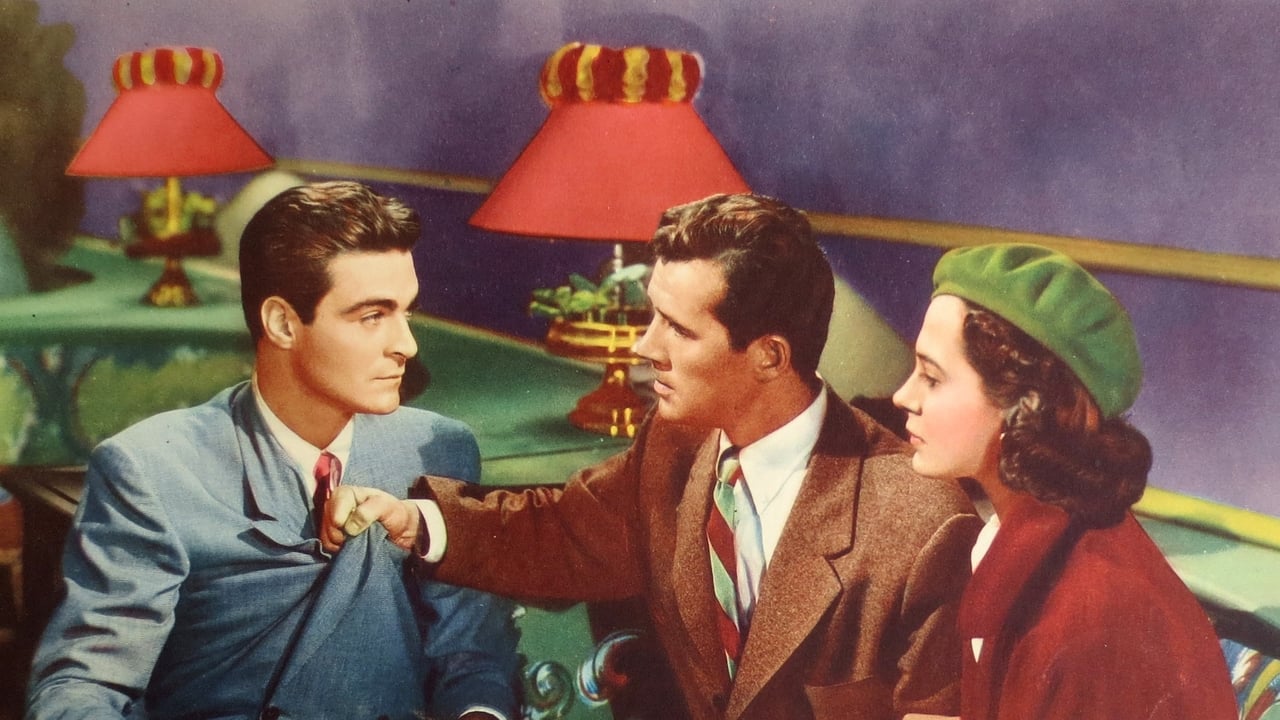
Classic Noir

Illegal Entry sits at the intersection of two postwar cycles: the semi-documentary procedural, energized by the success of The Naked City and Call Northside 777, and the syndicate picture that would dominate crime cinema into the 1950s. Frederick de Cordova directs without flourish, which is both the film's limitation and its period virtue – the restraint keeps the documentary texture intact. Howard Duff brings a workingman's wariness to Powers, a protagonist whose competence never hardens into heroism. Märta Torén, the Swedish actress Universal was briefly promoting as an international commodity, carries an enigmatic weight that the script does not fully account for, but her presence complicates what might otherwise be a straightforward procedural. Paul Stewart, a reliable index of menace throughout this era, makes Richards feel like a genuinely bureaucratic evil – a man who manages suffering the way another man might manage inventory. The film does not achieve the psychological density of the best noir, but it documents, with some fidelity, the anxieties of a nation renegotiating its borders and its conscience in the aftermath of global war.

– Classic Noir
3 ★★★☆☆ Notable
Credits

The Crew

DirectorFrederick de Cordova
ScreenplayJoel Malone
CinematographyWilliam H. Daniels
EditingEdward Curtiss
Art DirectionRichard H. Riedel
CostumesYvonne Wood
ProducerJules Schermer
Performances

The Cast

Close Reading

The Signature Scene

Illegal Entry – scene
The Border Crossing Darkness at the Fence Line

William H. Daniels photographs the nighttime border sequence with a rigorous economy of light: a thin horizontal band of illumination marks the ground, leaving the figures above the waist in graduated shadow. The camera holds at a medium distance, refusing to dramatize the crossing with movement, so the procession of bodies reads as something closer to documentary fact than cinematic spectacle. Daniels uses the flat darkness of the location against itself – the absence of fill light makes the terrain feel genuinely lawless, a space outside jurisdiction.

What the scene argues, visually and structurally, is that the machinery of exploitation operates in plain sight once you know where to look. Powers watches from a position that is neither safe nor morally neutral – he is complicit in the crossing by witnessing it and doing nothing to stop it yet. The frame holds him at the same depth as the people being moved, denying him the elevated perspective of the righteous investigator, and that compositional choice is the most honest thing the film does.

Visual Language

The Cinematography

🎞️
William H. Daniels – Director of Photography

William H. Daniels, one of Hollywood's most technically accomplished cinematographers – responsible for the look of Greed, Anna Christie, and The Naked City – brings to Illegal Entry a disciplined pragmatism suited to the film's semi-documentary ambitions. Working within Universal International's mid-budget constraints, Daniels favors available-light logic even on studio-controlled setups: interiors are underlit by 1940s standards, with hard sources raking across faces from steep angles that carve out shadow rather than fill it. His location sequences along the border and the docks benefit from his experience on The Naked City (1948), where he and director Jules Dassin had established a grammar for shooting real geography with a fictional urgency. Here, the wide shots of borderland terrain are photographed with a slightly longer lens than standard, compressing the distance between pursuers and pursued and flattening the landscape into something that looks deliberately inhospitable. The effect reinforces the film's moral argument: this is a world where depth – of character, of motive, of safety – is consistently denied.

In the Catalogue

Themes & Motifs

Availability

Where to Watch

Also in the Directory

See Also