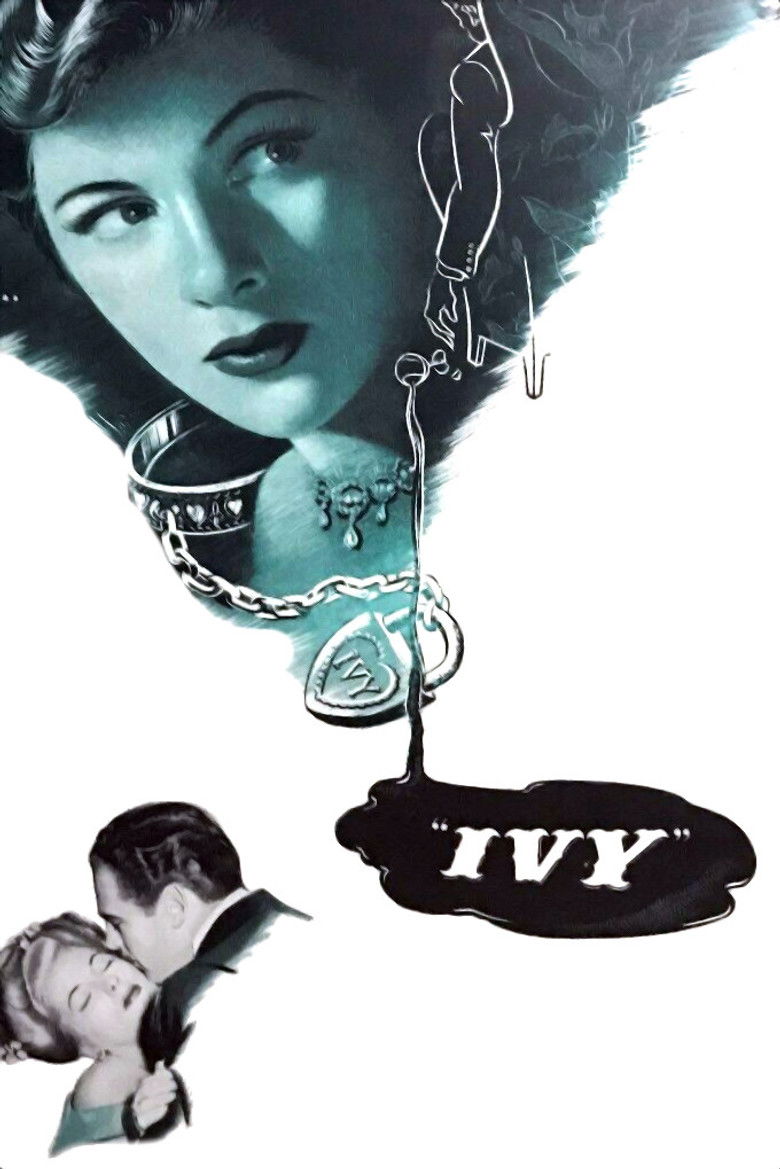
In Edwardian London, Ivy Lexton (Joan Fontaine) is a woman of surface charm and subterranean calculation. Unhappily married to the weak-willed Jervis Lexton (Richard Ney) and conducting an affair with Dr. Roger Gretorex (Patric Knowles), she fixes her ambitions on the wealthy Miles Rushworth (Herbert Marshall), whose money and social standing represent the life she has decided she deserves. Ivy moves through drawing rooms and garden parties with the practiced ease of someone who has long understood that beauty is a form of currency.
When Jervis becomes an obstacle to her designs on Rushworth, Ivy arranges for her husband to be poisoned, and the circumstances fall in a way that places Gretorex – the discarded lover – under suspicion. Inspector Orpington (Cedric Hardwicke) pursues the case with methodical patience, assembling evidence against the wrong man while Ivy continues her ascent. The film's tension derives not from whether a crime was committed but from whether justice, operating through institutional procedure rather than dramatic revelation, can reach a woman this composed.
Ivy belongs to a strand of noir built around the female predator rather than the male protagonist undone by one – a lineage that includes Leave Her to Heaven and The Strange Woman. Where those films tend toward psychological excess, Sam Wood's picture keeps its villainy close and cold. The Gothic trappings of the period setting – gaslit interiors, fog-bound streets, the formal rituals of Edwardian propriety – function as moral camouflage, and the film uses them with some precision.
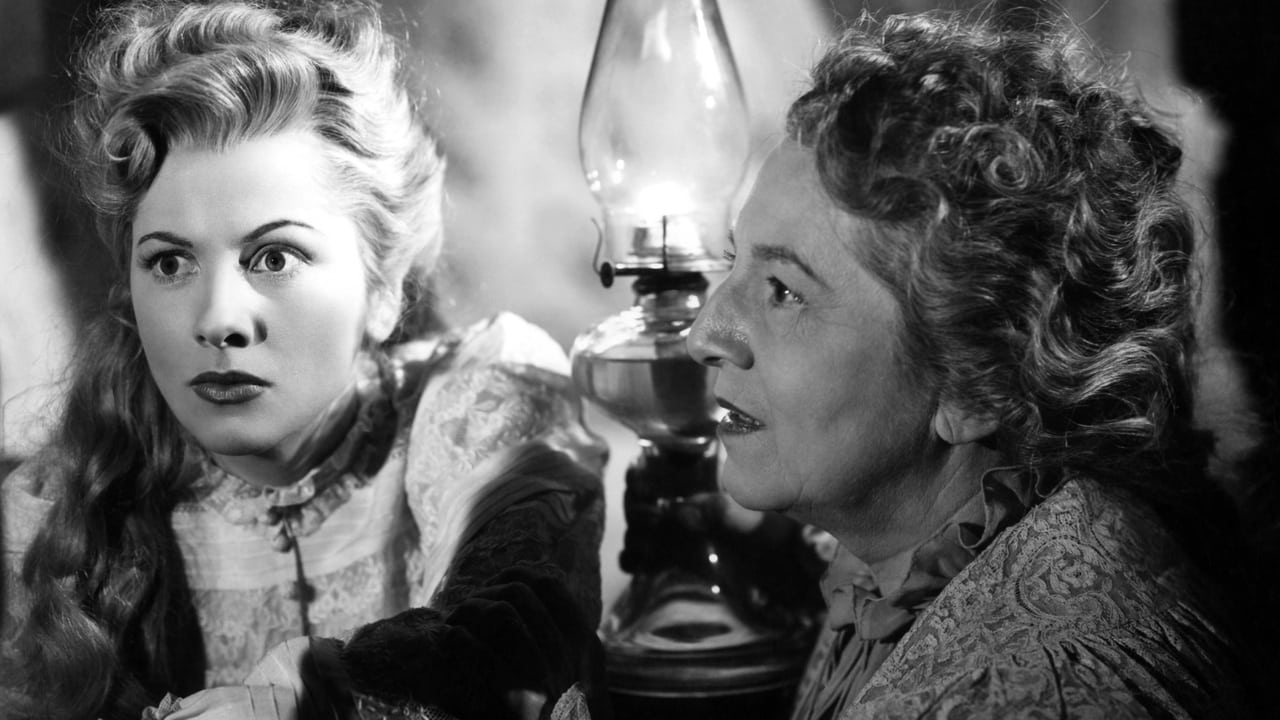
Ivy occupies an instructive position on the margins of classical noir: a period piece that imports the genre's central anxieties into an Edwardian frame, thereby making them historical and somehow more legible. Joan Fontaine plays entirely against the vulnerability she projected in Rebecca and Suspicion, and the calculation she brings to Ivy Lexton is the performance's primary instrument – there is almost no interiority on display, which is itself the argument. Sam Wood directs without particular distinction, but he does not obstruct the material. What the film earns is a kind of structural honesty: it refuses to soften Ivy or to locate a sympathetic aperture through which the audience might excuse her. Cedric Hardwicke's inspector is the procedural conscience of the film, and his scenes carry a dry moral weight that the more melodramatic passages cannot quite match. As a study in female agency turned entirely toward self-destruction through the pursuit of security, Ivy remains a minor but coherent entry in the genre's examination of social aspiration as pathology.
– Classic Noir
Russell Metty frames Ivy at the top of a grand staircase as word reaches her from below. The camera holds at a slight low angle, placing Fontaine against an upper wall that offers no detail, no warmth – only an undifferentiated surface. Light arrives from a source off-left, catching one side of her face and leaving the other in shadow with a precision that reads less as atmospheric ornament than as diagram. Her stillness within the frame reads as control, and Metty does not move the camera to accommodate any conventional emotional signal.
The scene works because it refuses to editorialize. There is no swelling in Amfitheatrof's score at this moment, no cut to reaction, no softening of the composition. What Ivy reveals here is not guilt but a recalibration – the quiet reorientation of a person who has always treated consequence as a variable to be managed. The visual logic of the shot insists that the danger in this woman is not passion but arithmetic.
Russell Metty's work on Ivy represents a controlled application of noir visual grammar to a period production that might easily have defaulted to warm-toned prestige photography. Metty shoots almost entirely on constructed studio sets, which allows him precise command of light sources – he uses single-point key lights to model faces with a hardness that contradicts the Edwardian decor, and his shadow work on walls and floors creates geometric forms that impose on the social surfaces of the film a sense of underlying structure, even predetermination. Wide-angle lenses are used sparingly but deliberately in interior scenes to elongate spaces and increase the psychological distance between characters who are nominally intimate. The fog-exterior sequences, brief as they are, function as thematic punctuation – opacity as environment, atmosphere as obstacle. Throughout, Metty's lighting choices serve the film's central moral argument: that Ivy Lexton exists most fully in the space between visible surface and concealed intention, and that the camera's job is to make that space felt without resolving it.
TCM holds this title in regular rotation and its streaming tier offers the most reliably clean print currently available.
TubiFree (Ad-Supported)Tubi periodically carries Ivy; picture quality varies but it remains the most accessible no-cost option for casual viewing.
Archive.orgFreeA public domain version is available through the Internet Archive, though sourced from older transfers – acceptable for research purposes.