Films People Pull a Fast One Night Beat Reading Room On TV Shop
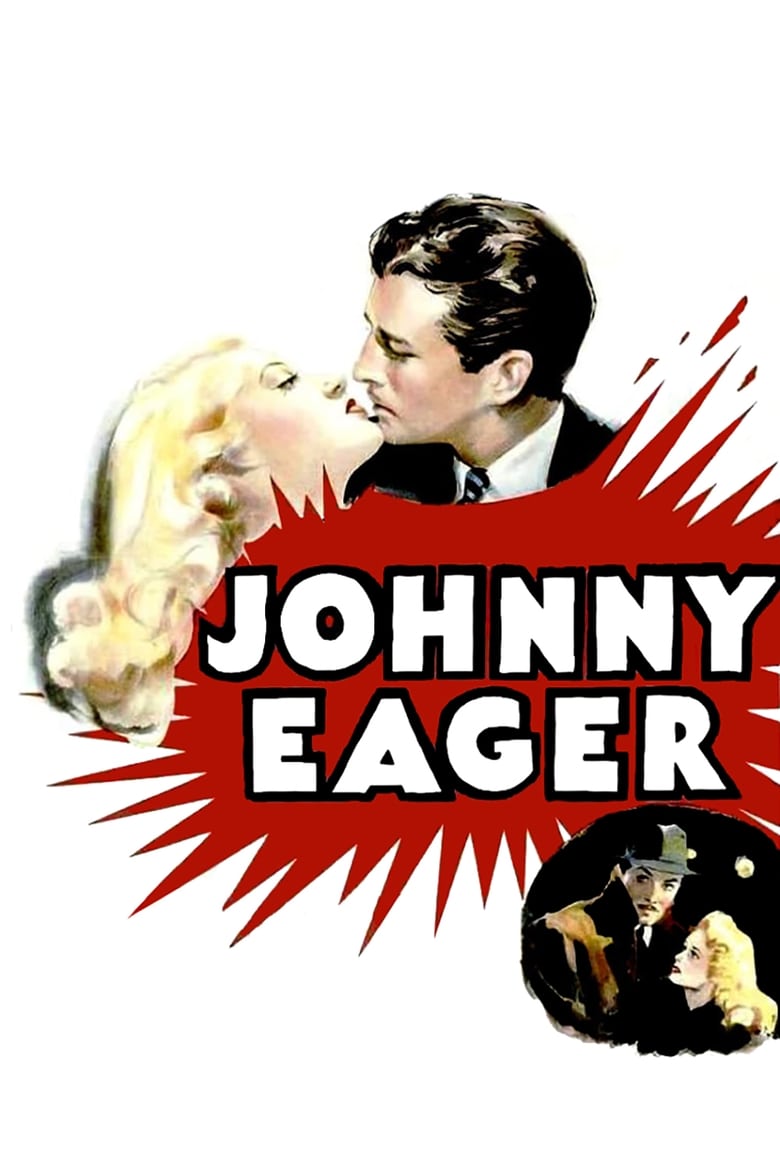
Johnny Eager 1941
1941 Loew's Incorporated
★★★☆☆ Notable
Film Noir · 107 minutes · Black & White

Johnny Eager

Directed by Mervyn LeRoy
Year 1941
Runtime 107 min
Studio Loew's Incorporated
TMDB 6.2 / 10
"A man who runs numbers and manipulates lives finds that the one thing he cannot control is the woman he chooses to destroy."

Johnny Eager (Robert Taylor) presents himself to his parole officer as a reformed cab driver living a modest, law-abiding life. In reality he runs a sprawling illegal gambling operation on the outskirts of the city, protected by political connections and sustained by the quiet loyalty of his associates. Into this carefully constructed double life steps Lisbeth Bard (Lana Turner), a sociology student on a supervised visit to the dog track Johnny fronts – and the stepdaughter of district attorney John Benson Farrell (Edward Arnold), the one man with the authority to shut Johnny down for good.

Johnny, recognizing Lisbeth's value as leverage, pursues her with calculated charm. When she falls for him in earnest, he stages a fake killing designed to implicate her and hold Farrell in check. The scheme works, but it produces an unforeseen complication: Johnny's closest companion, the dissolute, liquor-soaked intellectual Jeff Hartnett (Van Heflin), watches the manipulation with clear eyes and a conscience that will not stay quiet. As Lisbeth's grip on reality loosens under the weight of guilt she does not deserve, the film's moral axis shifts from the criminal world to the question of what one person's cynicism costs another.

Johnny Eager belongs to the early wartime cycle of studio noir, a period when Hollywood was testing how far the Production Code would permit moral ambiguity at the center of a mainstream crime picture. The film is less interested in the mechanics of the syndicate than in the psychological transaction between a predator and the people drawn into his orbit – and in whether a man shaped entirely by self-interest retains the capacity for anything resembling conscience.
Classic Noir

Johnny Eager occupies an instructive position in the early noir canon: it is a prestige production at MGM – polished, well-resourced, and slightly constrained by those facts – that nonetheless pushes meaningfully against the studio's preference for moral tidiness. Robert Taylor, cast against the grain of his matinee persona, delivers a performance of real coldness; his Johnny Eager is not a romantic outlaw but a technician of human weakness. The film's genuine distinction, however, belongs to Van Heflin, who won the Academy Award for Supporting Actor and earned it. His Jeff Hartnett – a man of apparent intelligence drinking himself to irrelevance in the shadow of someone he cannot stop admiring – carries the film's most honest argument about complicity and waste. Mervyn LeRoy directs without flourish, which is both a limitation and a kind of discipline; the restraint keeps the focus on performance and situation rather than style. What the film reveals about its era is the degree to which studio noir could accommodate a genuinely bleak view of masculine ambition while still routing the narrative toward formal resolution.

– Classic Noir
3 ★★★☆☆ Notable
Credits

The Crew

DirectorMervyn LeRoy
ScreenplayJohn Lee Mahin
CinematographyHarold Rosson
MusicBronislau Kaper
EditingAlbert Akst
Art DirectionCedric Gibbons
CostumesRobert Kalloch
ProducerMervyn LeRoy
Performances

The Cast

Close Reading

The Signature Scene

Johnny Eager – scene
The Racetrack Office The Manufactured Guilt

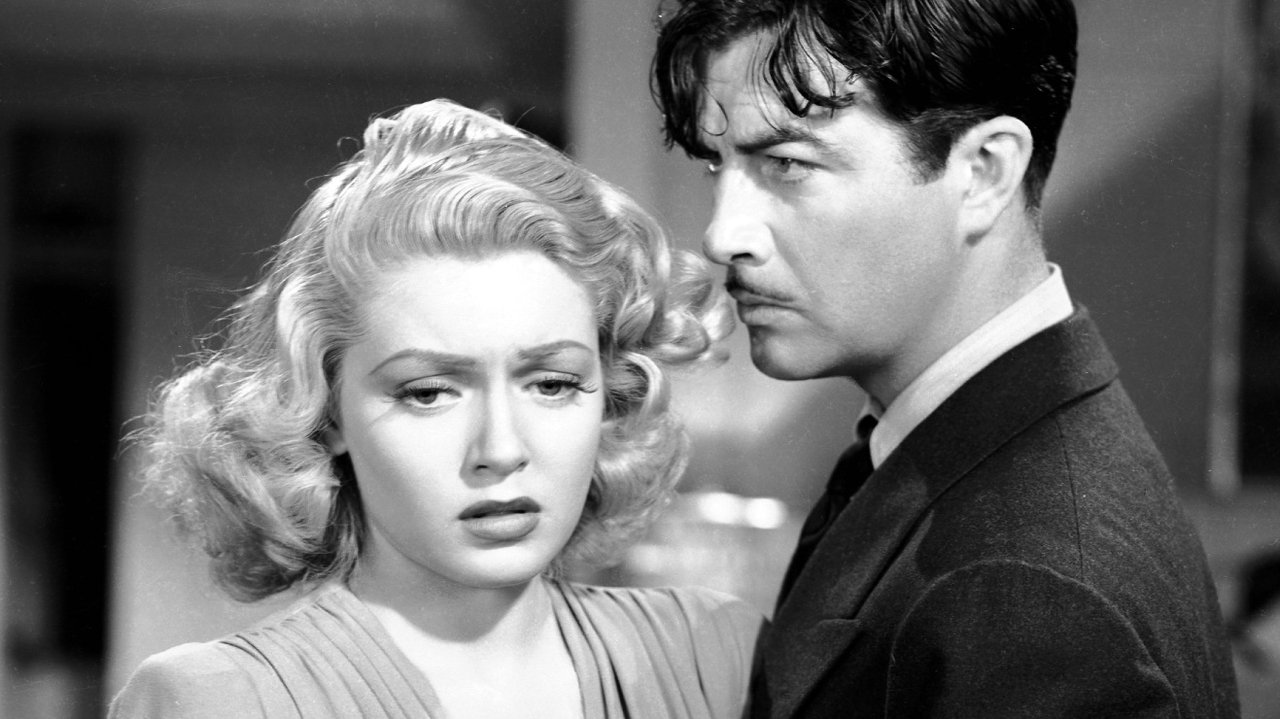
The staged shooting unfolds in a cramped interior, Harold Rosson's camera holding close on Lisbeth's face as the action she believes she has caused registers in real time. The light source is practical – a single overhead fixture – and Rosson allows the surrounding frame to fall into shadow so that Turner's expression occupies nearly the full moral weight of the composition. The spatial relationship between Lisbeth and Johnny is rendered through eyeline cuts rather than two-shots; they are physically proximate but the editing insists on their separateness, the distance between one person's genuine feeling and another's performance of it.

The scene is the film's thesis in miniature: Johnny does not simply deceive Lisbeth but converts her emotional capacity into an instrument of coercion. What Rosson's framing makes visible is that the damage is not to Farrell or to Johnny's enemies but to Lisbeth's sense of what is real. The film is, at its core, about the criminal use of another person's conscience, and this scene is where that argument becomes irreversible.

Visual Language

The Cinematography

🎞️
Harold Rosson – Director of Photography

Harold Rosson, who had already shot The Wizard of Oz and would later photograph Singin' in the Rain, brings to Johnny Eager a studio-trained rigor that suits the film's tonal register – not the expressionist excess of German-influenced noir but something cooler and more architectural. Working on MGM's controlled interior stages, Rosson uses high-contrast lighting selectively, reserving deep shadow for scenes in which Johnny's duplicity is most fully exposed and opening the frame to flatter, more even illumination during his public performance of reform. The gambling den sequences favor low-angle setups that give Taylor's frame a quality of dominance without tipping into caricature. Rosson's handling of Turner is precise: she is lit warmly in the early courtship scenes, and the warmth is gradually withdrawn as her psychological condition deteriorates, a subtle visual notation of moral contamination. The camera rarely moves without narrative purpose, which keeps the film's moral logic legible even when the script reaches for melodrama.

In the Catalogue

Themes & Motifs

Availability

Where to Watch

Also in the Directory

See Also