New Orleans, 1890s. Barbara Beaurevel is a respectable woman of Creole society who discovers she stands to inherit a considerable fortune from a relative – a fortune that had been denied her family through legal manipulation years earlier. When the inheritance is finally restored, Barbara finds herself possessed of wealth, social standing, and a desire she cannot reconcile: her love for Dr. Mark Lucas, a principled physician who has already married Corinne, a calculating woman who trapped him into the union. Barbara's cousin Paul, who controls much of the family's affairs, watches events with a proprietary interest that blurs the line between affection and obsession.
With her newfound resources, Barbara engineers a plan to reclaim Lucas – not through simple seduction but through the deliberate destruction of his marriage. She arranges for Corinne to be confronted with evidence of her past and maneuvers Clay Duchesne, a disreputable figure from that past, into position as her instrument. The scheme carries the logic of revenge dressed as desire, and Barbara prosecutes it with a cold discipline that unsettles even those who support her. Lucas, meanwhile, remains largely oblivious to the machinery working around him, caught between a wife he does not love and a woman whose intentions he cannot fully read.
My Forbidden Past operates within the Southern Gothic variant of noir, where decorum functions as a mask for appetite and the codes of polite society provide cover for private ruthlessness. The film belongs to a strand of period noir – rare in the cycle – that transposes the genre's moral pessimism into the gaslit world of the Gilded Age, finding in that milieu the same corruption and compulsion that characterize its contemporary counterparts. What emerges is a study of how wealth converts grievance into power and how that power, once exercised, tends to exceed its original purpose.
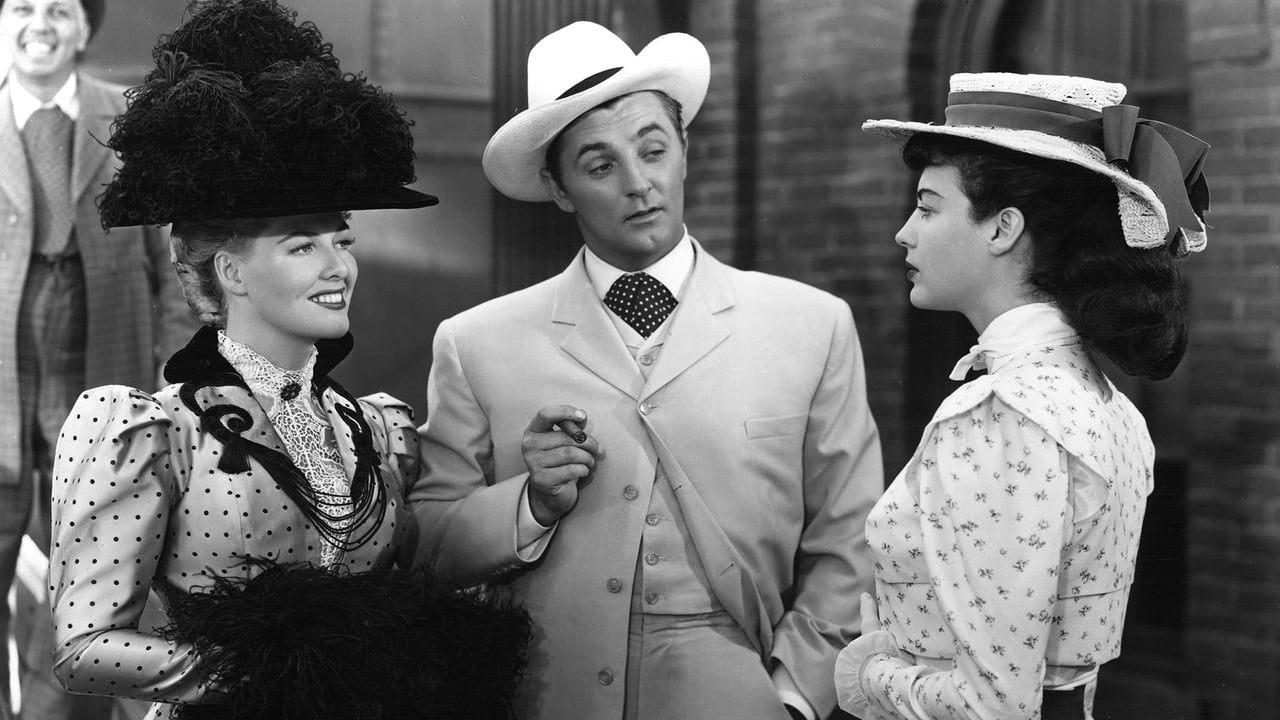
My Forbidden Past occupies an unusual position in the RKO noir cycle: a period film that uses the distance of the 1890s not to soften the genre's moral architecture but to expose its roots in class and property. Robert Stevenson directs with economy rather than flair, which suits material that depends on suppressed feeling rather than explosive incident. Gardner gives the film its center of gravity – Barbara is calculating without being sympathetic, and Gardner refuses to soften that calculation into likability. Mitchum, working against type as a passive figure acted upon rather than acting, is less comfortable, though his passivity reads usefully as the film's argument that virtue is insufficient protection against determined malevolence. Melvyn Douglas brings a studied ambiguity to Paul that the film never quite resolves, which is to its credit. At seventy minutes, the picture is spare to the point of thinness in places, but it sustains its central irony: the woman who pursues justice through injustice and finds that the machinery she sets in motion cannot be recalled.
– Classic Noir
Harry J. Wild frames Barbara alone in the parlor after her scheme has been set irrevocably in motion. The camera holds at a medium distance, refusing the close-up that would invite identification. A single lamp throws light across the near half of Gardner's face while the room's far corners dissolve into darkness – a composition that literalizes the film's central division between what Barbara presents to the world and what she has permitted herself to become. The furnishings of Creole prosperity fill the background, soft and slightly out of focus, wealth rendered as atmosphere rather than comfort.
The scene is nearly silent: no dialogue, no score intrusion. What it discloses is not remorse but recognition – Barbara understands, in this moment, that desire and revenge have become indistinguishable in her planning. The film does not condemn her here, nor does it excuse her. Wild's static frame and the quality of the light simply present the fact of what she is, and the camera's refusal to move toward or away from her becomes the film's moral position: witness without verdict.
Harry J. Wild, whose career at RKO encompassed some of the studio's most assured noir work, brings to My Forbidden Past a period-inflected visual sensibility that resists prettiness. Shooting on studio sets designed to evoke late nineteenth-century New Orleans, Wild treats gaslight and lamplight as hard sources rather than atmospheric softeners – shadows fall at angles that belong to the 1940s crime film more than to the costume picture, grounding the period setting in noir's moral vocabulary. His lens choices tend toward the slightly longer end for interior scenes, compressing figures against their backgrounds and denying characters the breathing room that might suggest freedom. The deep-focus work in ensemble scenes – particularly those involving Douglas and Gardner – keeps all parties in sharp relief simultaneously, a technique that underscores the film's argument that no one in this story is truly in the background. Where darkness falls, it falls with purpose: concealment in this film is always moral as well as optical.
TCM remains the most reliable broadcast source for RKO titles of this period and typically presents uncut prints; check the schedule for air dates.
TubiFree (Ad-Supported)My Forbidden Past has appeared on Tubi in a serviceable public-domain transfer; availability may vary, but it represents the most accessible no-cost option.
Archive.orgFreeA public-domain version is available for streaming and download, though print quality is variable and this should be treated as a fallback rather than a preferred source.