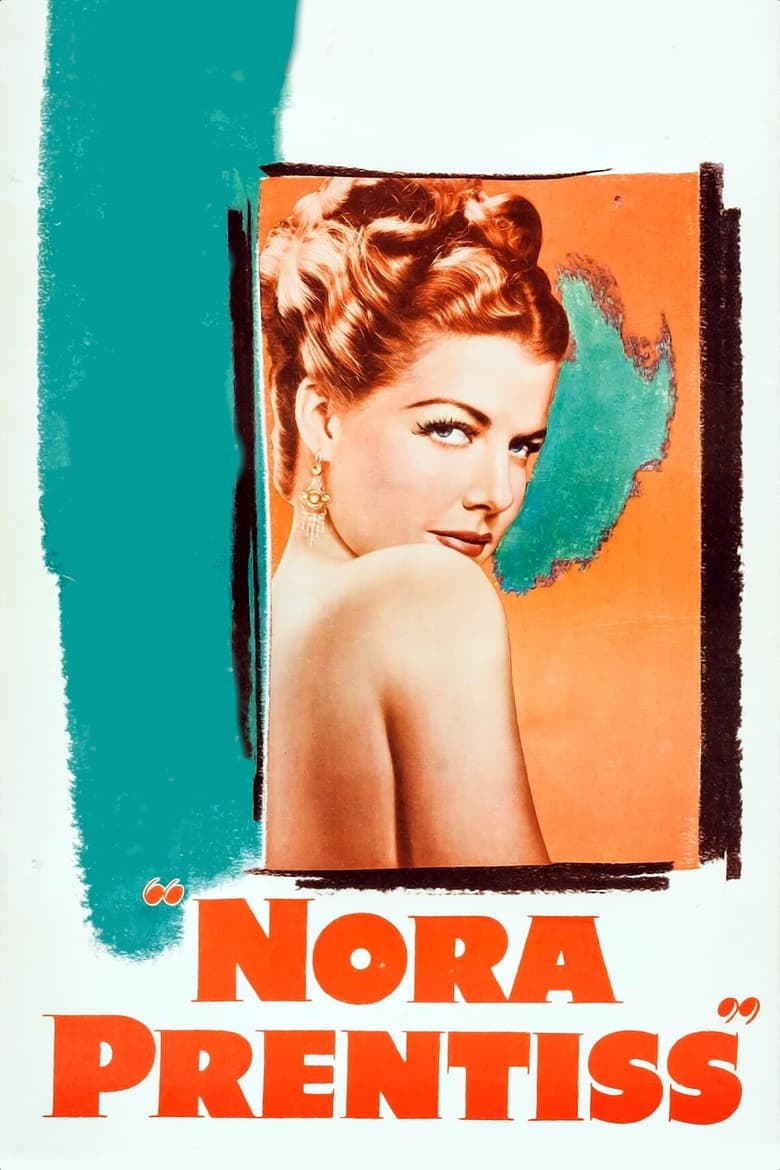
San Francisco, the late 1940s. Dr. Richard Talbot is a physician of modest ambitions and settled domesticity – a dutiful husband, an attentive father, a man who has long since made his peace with the contours of his life. When nightclub singer Nora Prentiss is brought into his office after a minor accident, something in Talbot shifts. Nora is direct, unguarded, and entirely outside the world he has constructed for himself. He begins to see her in secret, telling himself the arrangement is manageable.
Talbot's parallel existence accelerates toward crisis when he realizes he cannot sustain the deception indefinitely without destroying everything he has built. An opportunity to disappear presents itself – gruesome, improbable, and morally catastrophic – and Talbot takes it, assuming a dead man's identity to follow Nora to New York. But Nora, who never asked for this sacrifice and does not entirely want it, finds herself bound to a man undone by his own choices. The relationship curdles under the weight of guilt, suspicion, and Talbot's deteriorating psychological state. Phil Dinardo, a nightclub owner with his own claim on Nora, adds pressure from the margins.
Nora Prentiss belongs to a strand of postwar noir preoccupied less with crime as plot mechanism than with crime as symptom – the outward expression of a man's failure to reconcile desire with obligation. The film's structure, delivered largely in flashback from a courtroom, places the outcome beyond doubt early, insisting that what matters is not whether Talbot falls but how completely, and why. Ann Sheridan's Nora is the film's moral center, a woman who survives what destroys the man beside her.
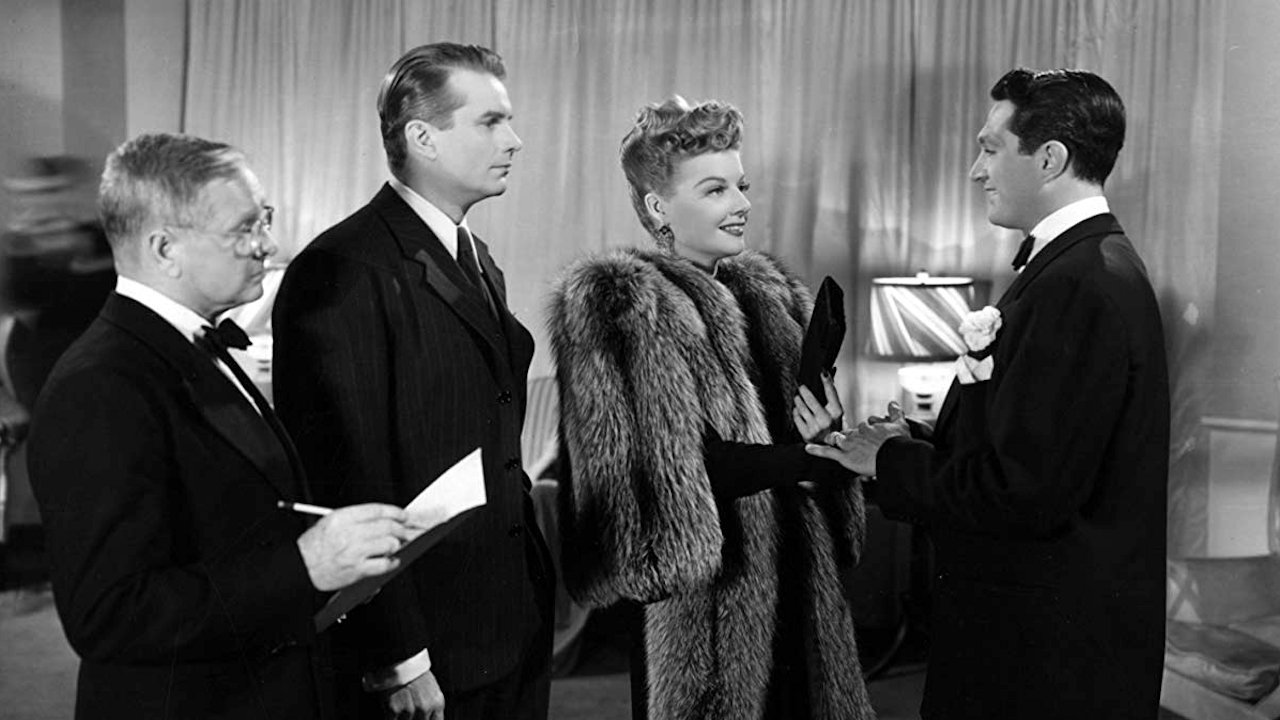
Nora Prentiss occupies a precise and underexamined position in the Warner Bros. noir cycle: it is a film about masculine self-destruction narrated almost entirely from the perspective of the man doing the destroying, yet its title and its emotional gravity belong to the woman he uses as an occasion for ruin. Vincent Sherman keeps the pacing deliberate, trusting the accumulation of bad decisions over spectacle. Kent Smith's casting is shrewder than it first appears – his blankness reads not as weak acting but as the portrait of a man who has never examined himself closely enough to know what he wants until wanting it has already cost him everything. Ann Sheridan brings a weary precision to Nora that resists victimhood without pretending to invulnerability. The film's social argument is quiet but legible: postwar American domesticity, presented here as comfortable suffocation, produces men who mistake infatuation for liberation and pay for the confusion with other people's lives. It is not among the era's most formally audacious works, but it is honest about its subject in ways the more celebrated noirs sometimes are not.
– Classic Noir
James Wong Howe shoots the hotel room as a compression chamber. The blinds are drawn against the city outside, and the light that enters comes in strips – horizontal bars falling across Talbot's face and hands as he paces a space that seems to shrink with each cut. Howe positions the camera at a slight low angle, which gives Talbot the appearance of height without authority, a man filling a frame that is nonetheless closing around him. Nora sits apart, her face in softer, more diffuse light, as though the noir logic of the scene has not yet fully claimed her.
The scene crystallizes the film's central argument about the difference between escape and entrapment. Talbot came to New York believing he had chosen freedom; the room reveals that he has chosen a different kind of cage. Nora's stillness against his agitation is not indifference – it is the composure of someone who understands, earlier than he does, that the arrangement cannot hold. The light that fragments him leaves her, for the moment, whole.
James Wong Howe's work on Nora Prentiss is less flamboyant than some of his more celebrated noir assignments but no less considered. Shooting largely on Warner Bros. soundstages, Howe uses controlled interior lighting to reflect the moral architecture of the story: Talbot's domestic spaces are rendered in flat, even light that suggests comfort without warmth, while the nightclub and hotel interiors where his obsession unfolds are shadowed and directional, the sources of illumination always slightly off-axis. Howe avoids the expressionist extremes common to the period, preferring a naturalistic grammar that makes the darkness feel earned rather than imposed. His handling of Ann Sheridan is particularly precise – she is lit to look like a real woman in a real room rather than an icon, which grounds Nora's characterization and prevents the film from reducing her to a femme fatale. The cumulative effect is a visual world that looks ordinary until it doesn't, which is exactly the story Nora Prentiss is telling.
Turner Classic Movies is the most reliable source for this title and typically presents it from a clean archival print.
MaxSubscriptionAvailable periodically through the Warner Bros. library on Max, though availability varies by region and rotation.
Archive.orgFreeA public domain version circulates on the Internet Archive; print quality is variable and this option is best treated as a fallback.