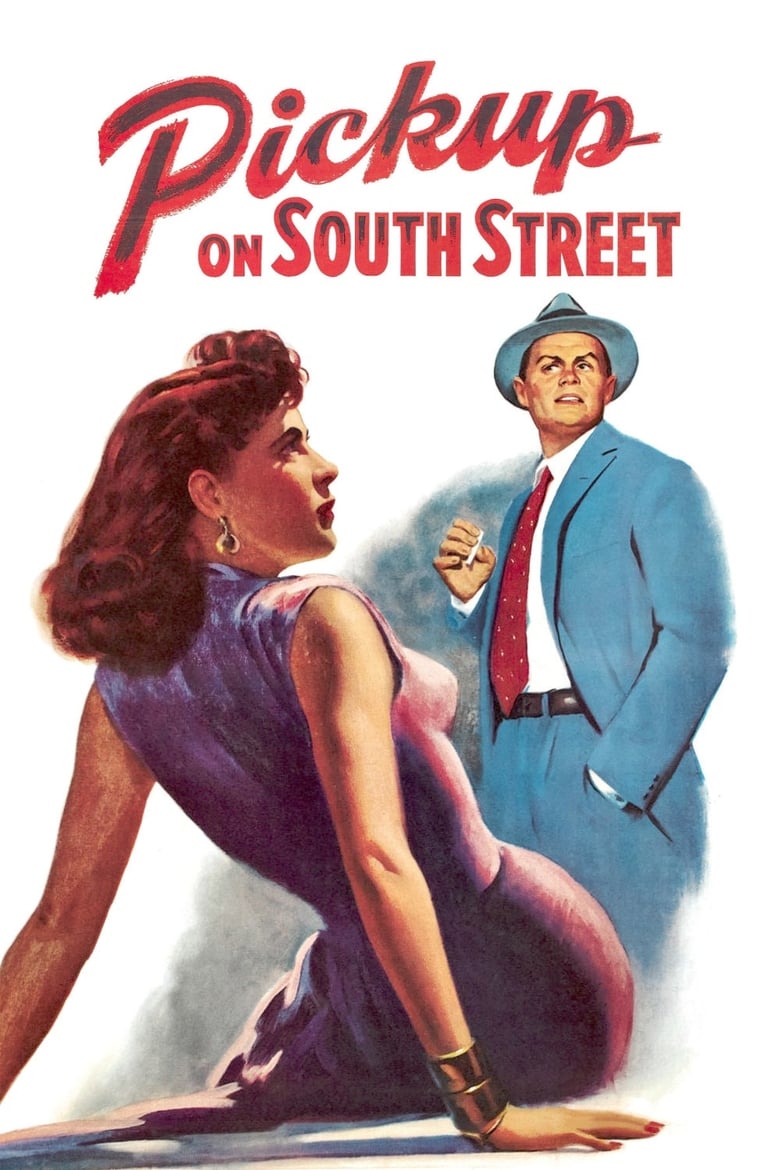
On a crowded New York subway, three-time loser Skip McCoy works a routine dip and comes away with a woman's wallet – along with a strip of microfilm neither he nor she knows she was carrying. The woman, Candy, was acting as an unwitting courier for her ex-boyfriend Joey, a Communist operative. Within hours, federal agents and New York police are pressing Skip to hand over the film, and Candy is working both sides, trying to recover it before Joey's handlers close in.
Skip refuses to cooperate with any authority, not out of ideology but out of ingrained contempt for institutions that have only ever prosecuted him. He senses the microfilm has a market value and intends to exploit it. Candy, meanwhile, occupies a more ambiguous position: she genuinely did not know what she was carrying, yet her loyalty to Joey softens only gradually, and only under pressure that turns violent. The film's real center of gravity, however, is Moe Williams – an aging stool pigeon who sells information to pay for her burial plot and who represents, without sentimentality, the exhausted pragmatism at the bottom of the city's social order.
Fuller works the triangle of Skip, Candy, and Moe against a Cold War backdrop that the film takes seriously but never reduces to propaganda. The microfilm functions as a MacGuffin that exposes how class, loyalty, and survival instinct operate independently of patriotism. The city – its docks, its tenements, its interrogation rooms – becomes the film's true protagonist, a place where allegiances are priced and sold, and where the line between criminal and citizen is a matter of paperwork.
Pickup on South Street arrives at a peculiar intersection: a B-picture budget, a studio mandate to address Communist espionage, and a director constitutionally unable to make anything simple. Fuller's film satisfies the era's anti-Communist brief while simultaneously undermining it, because his characters are too self-interested and too damaged to be ideological vessels. Richard Widmark's Skip McCoy is one of the period's most honest portraits of recidivism – not romanticized, not reformed, just calculating. Thelma Ritter's Moe earns what is arguably the film's most affecting scene through sheer behavioral truth. The Cold War framing ultimately matters less than what it frames: a study of people at the economic and social margins making the only decisions available to them. The film belongs to a strain of Fuller's work – alongside House of Bamboo and Underworld USA – that uses genre obligation as cover for social observation. At eighty minutes, it does not overstay.
– Classic Noir
Joseph MacDonald frames Moe in medium close-up against the spare furnishings of her room, the light falling flat and without drama – the deliberate absence of shadow is itself the statement. There is no expressionist play here, no venetian-blind geometry. The camera stays level with her face, neither elevating nor diminishing, and holds there long enough for Ritter's stillness to do the work. When Moe speaks about the burial plot she has been paying off installment by installment, the shot does not cut away. Fuller lets the silence sit.
The scene carries the film's moral weight because it refuses pity while insisting on consequence. Moe is not pathetic; she is entirely clear-eyed about what she is and what her life has cost her. Her practicality about death – the burial plot as savings account, dignity as the one investment within reach – articulates the film's argument more plainly than any of its espionage mechanics: in this city, at this level, survival is the only politics available, and even that is not guaranteed.
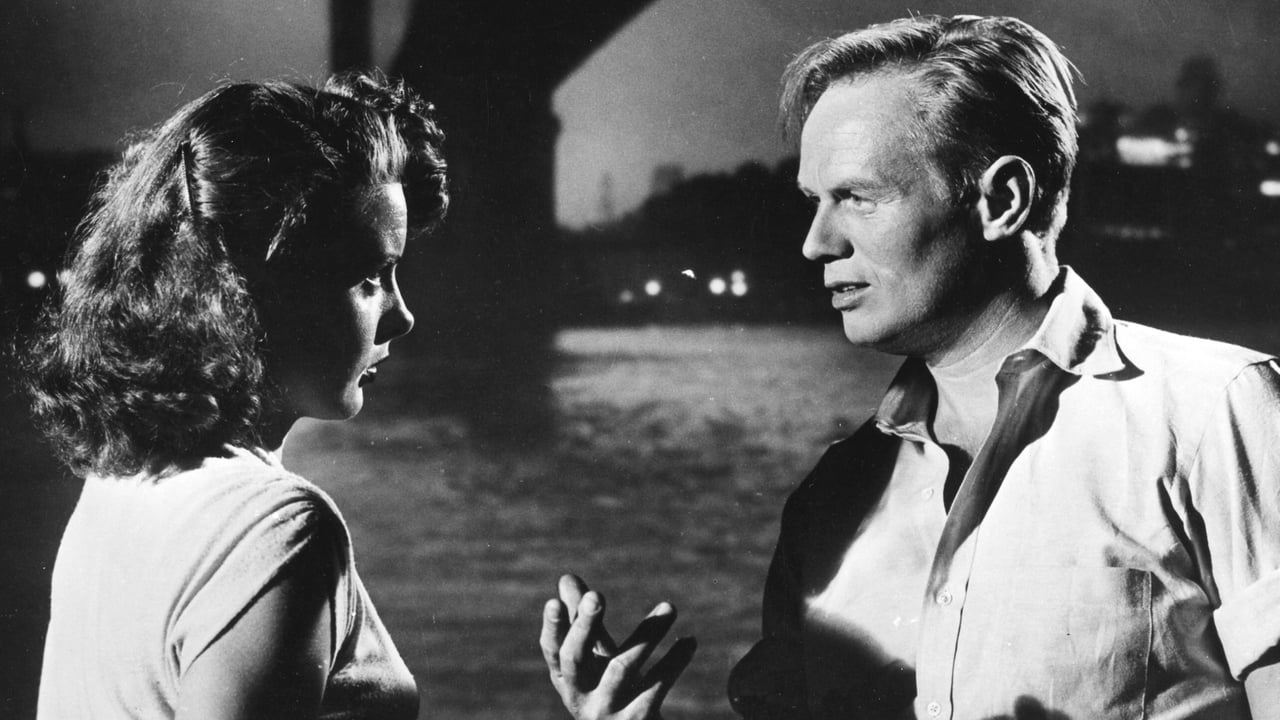
Joseph MacDonald shoots Pickup on South Street with a discipline that resists the more theatrical tendencies of studio noir. Working largely on location in New York and on studio sets constructed to match, MacDonald avoids the elaborate shadow choreography that distinguishes, say, the work of John Alton. His lighting here is harder, more matter-of-fact – the light of police corridors and tidal flats rather than nightclub interiors. The dock sequences use available-feeling illumination that makes the water and the rotting pilings feel genuinely proximate. Interior scenes are framed tightly, compressing the characters against walls and low ceilings in a way that speaks to constriction without announcing itself as symbolism. MacDonald's lens choices favor a slightly compressed middle distance that keeps faces readable while preserving environmental context. The effect is a visual texture that matches Fuller's moral logic: these are not people in a stylized underworld, they are people in a specific, worn, and recognizable city.
The Criterion Channel has presented the film as part of Fuller retrospectives and offers the most reliably restored transfer currently in circulation.
TubiFreeA free ad-supported option periodically available on Tubi, though transfer quality may vary; confirm current availability before viewing.
KanopyFreeKanopy offers the film through participating public libraries and universities, making it accessible without a subscription for eligible cardholders.