Films People Pull a Fast One Night Beat Reading Room On TV Shop
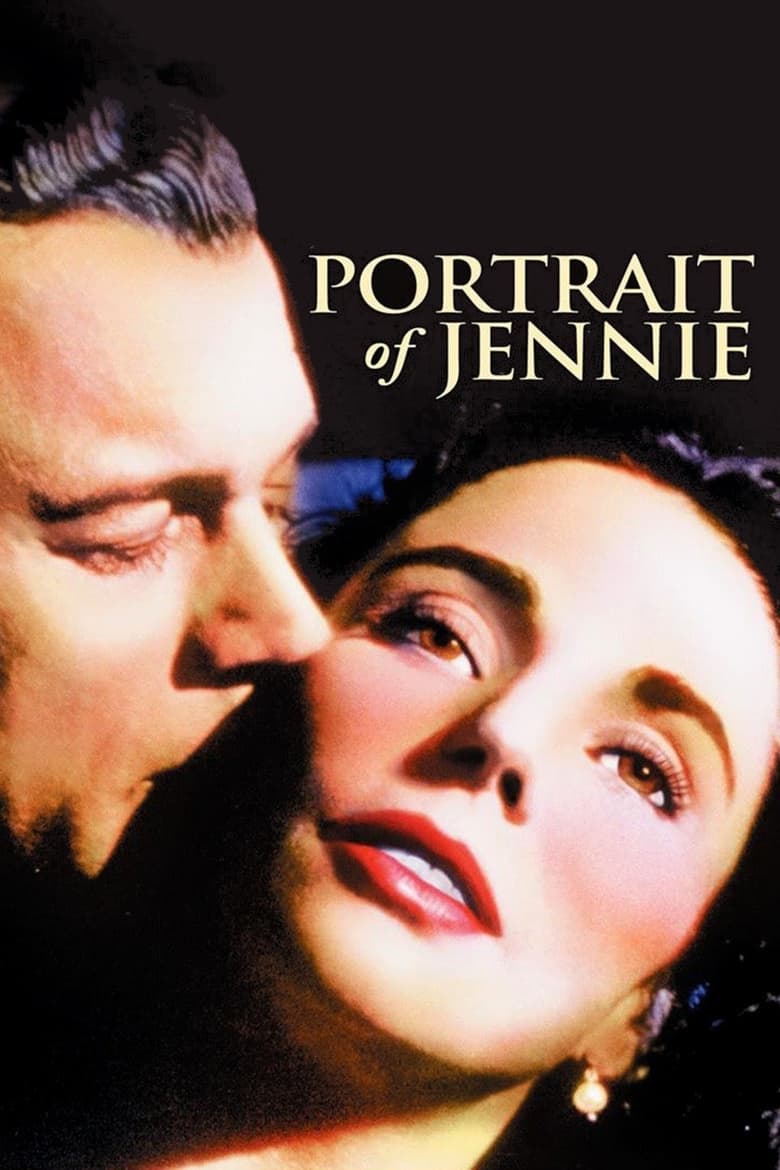
Portrait of Jennie 1948
1948 Selznick International Pictures
★★★☆☆ Notable
Film Noir · 86 minutes · Black & White

Portrait of Jennie

Directed by William Dieterle
Year 1948
Runtime 86 min
Studio Selznick International Pictures
TMDB 7.2 / 10
"A dead woman keeps returning, and a living man cannot stop waiting for her."

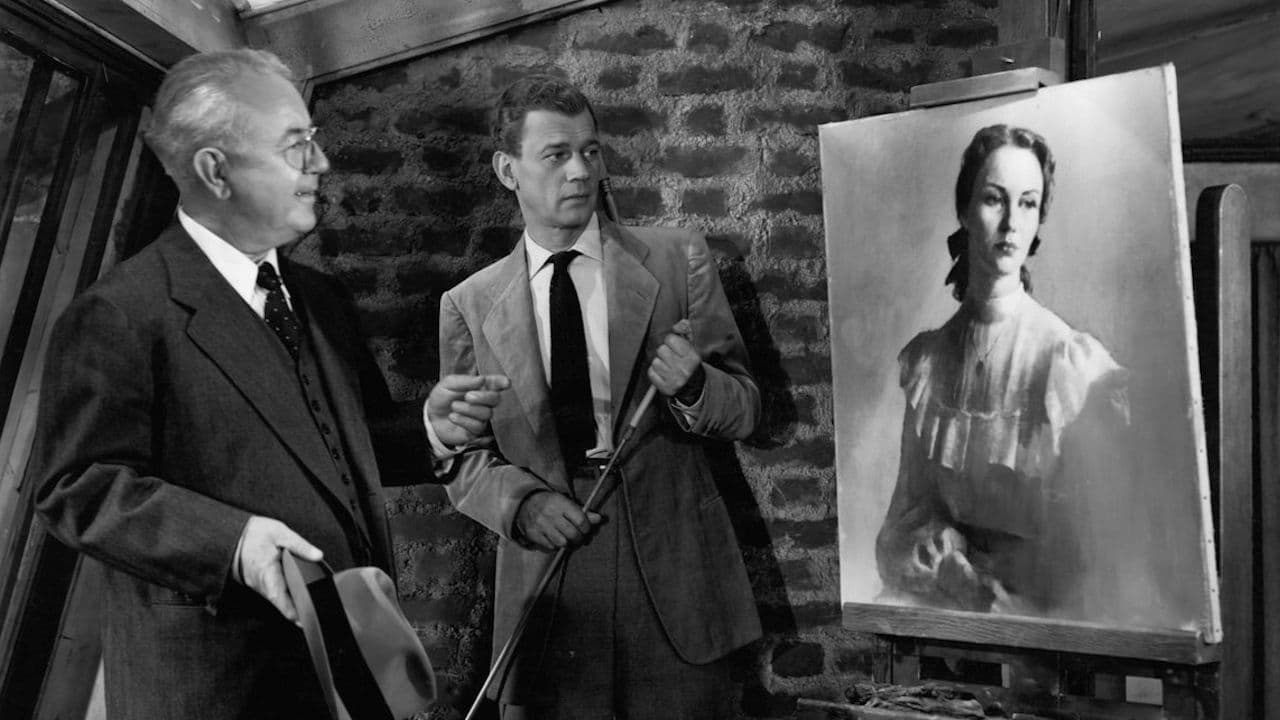
New York, the late 1940s. Eben Adams is a painter without direction – technically competent but spiritually adrift, unable to produce work that any gallery will take seriously. One winter afternoon in Central Park he encounters a young girl named Jennie Appleton, dressed in clothes that belong to another decade, singing songs no child her age should know. She vanishes as abruptly as she appeared. Eben is unsettled but not alarmed, and he begins sketching her from memory. The sketch catches the eye of Miss Spinney, a frame-shop owner with a quiet, watchful quality, and of Matthews, a gallery owner willing to stake Eben's future on a portrait not yet painted.

Jennie returns. Each time she does, she is older – weeks passing for Eben while years appear to pass for her. She speaks of family, of a convent, of a lighthouse at Land's End, all of it carrying the texture of a past that does not align with the present. Eben begins to investigate and finds records that suggest Jennie Appleton died years before their first meeting. Rather than retreating, he commits himself to the portrait and to Jennie, a devotion that the nun Mother Mary of Mercy regards with compassion and unease in equal measure. The love that develops is not of a conventional kind; it exists in a temporal margin where neither party fully controls the terms.

Portrait of Jennie sits at the border between psychological noir and the ghost story, borrowing from each without fully committing to either. Its anxieties are those of the postwar moment – the instability of identity, the refusal of the past to stay buried, the cost of romantic obsession when it becomes indistinguishable from artistic need. The film asks whether an image of a person is ever the person, and whether a man who falls in love with a vanishing woman is pursuing transcendence or simply refusing reality.
Classic Noir

Portrait of Jennie occupies an uneasy position in the Selznick catalogue and in the noir canon. It lacks the genre's characteristic moral framework – there is no crime, no femme fatale operating with intent, no corrupt institution to expose. What it has instead is the genre's emotional logic pressed to a metaphysical extreme: the past as threat, obsession as both motive and undoing, a world in which the visible cannot be trusted. William Dieterle, working with Joseph H. August's distinctive cinematography, constructs a film that uses noir's shadow grammar to tell a story about artistic fixation and temporal dislocation. Dimitri Tiomkin's score, built from Debussy, amplifies the drift between the real and the spectral. Jennifer Jones and Joseph Cotten bring complementary registers – her quality of existing slightly outside ordinary time, his of a man who has decided to stop questioning what he cannot explain. The film's 1948 release placed it inside a cycle of psychological melodramas testing how far genre conventions could be stretched before they ceased to function. The answer, here, is: further than expected.

– Classic Noir
3 ★★★☆☆ Notable
Credits

The Crew

DirectorWilliam Dieterle
ScreenplayPaul Osborn
CinematographyJoseph H. August
MusicDimitri Tiomkin
ProducerDavid O. Selznick
Performances

The Cast

Close Reading

The Signature Scene

Portrait of Jennie – scene
Land's End Lighthouse Storm Light on Water

The climactic sequence at the lighthouse is shot in a tinted green that borders on monochrome, the Technicolor process forced toward something closer to newsreel urgency than romantic spectacle. August's camera holds wide on the churning water, the lighthouse reduced to a vertical stroke against a sky that offers no horizon line. When the frame tightens on Eben moving through the storm, the compositions are deliberately unstable – foreground elements partially obscuring him, the light source shifting between natural grey and an unnatural green that seems to emanate from the water itself. There is no comfort in the framing. Every cut tightens the geography until escape is no longer a visible option.

The sequence crystallizes the film's central argument: that what Eben has pursued is not a woman but a condition of being, a state in which time behaves differently and loss is not permanent. The storm is the genre's externalization of interior crisis, familiar enough in noir, but here it functions as a kind of temporal machinery – the force that will either separate the two figures permanently or confirm that they were never fully in the same world. Eben's persistence through it is not heroism. It is the last logical act of a man who has already surrendered the practical world.

Visual Language

The Cinematography

🎞️
Joseph H. August – Director of Photography

Joseph H. August, whose career extended back to silent cinema and whose work on The Informer demonstrated his command of high-contrast expressionist light, brings a restrained version of that sensibility to Portrait of Jennie. The Central Park sequences are shot with a diffused, slightly overexposed quality that gives the exteriors an indoor stillness – Central Park rendered not as a location but as a stage. Interior scenes lean on single dominant light sources, isolating faces from their surroundings and denying the frame any visual comfort. August resists the deep shadow effects common to harder noir, preferring instead a milky, filtered light that makes everything slightly uncertain in outline. The deliberate optical softening of the scenes featuring Jones is not romantic convention but a systematic visual argument: this is a figure the camera itself cannot fully resolve. The famous Technicolor tinting at the finale, a late production decision, reads as an acknowledgment that the film's visual grammar had prepared the audience for exactly that kind of rupture.

In the Catalogue

Themes & Motifs

Availability

Where to Watch

Also in the Directory

See Also