Films People Pull a Fast One Night Beat Reading Room On TV Shop
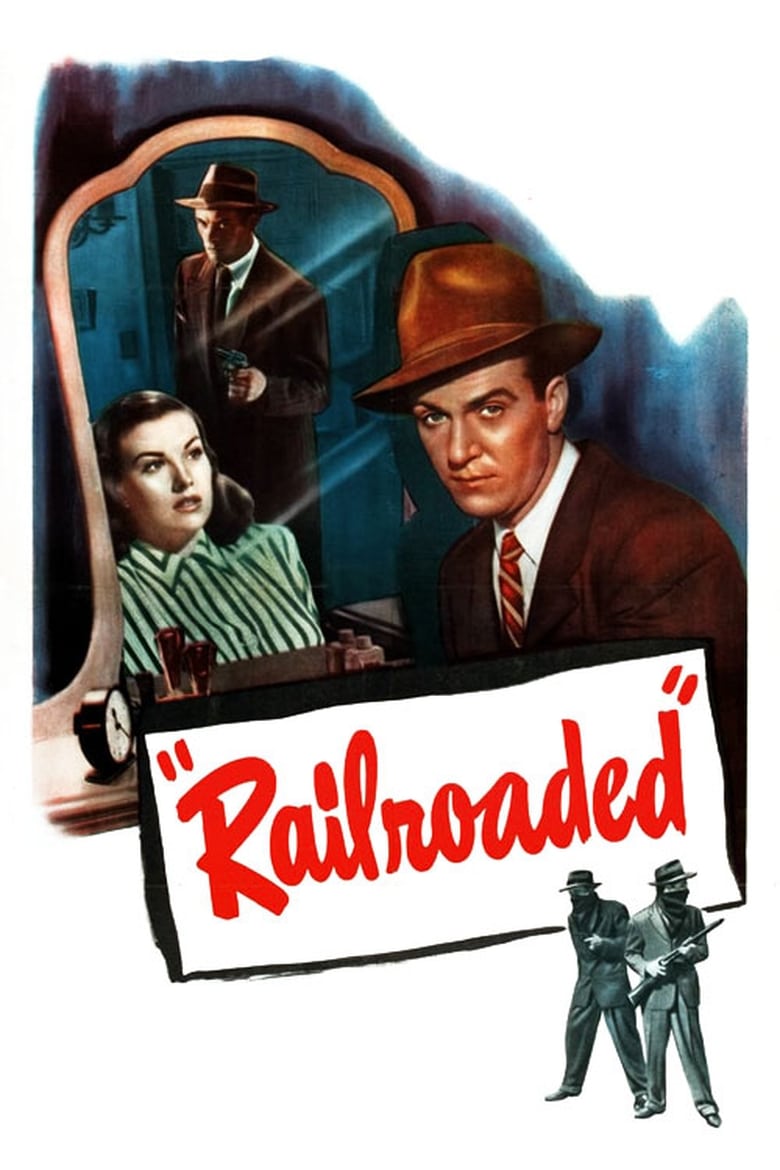
Railroaded! 1947
1947 PRC
★★★☆☆ Notable
Film Noir · 72 minutes · Black & White

Railroaded!

Directed by Anthony Mann
Year 1947
Runtime 72 min
Studio PRC
TMDB 6.7 / 10
"A man with clean hands takes the fall while the guilty one polishes his gun."

In a modest Los Angeles neighborhood, a beauty-parlor lottery operation is raided, and the robbery goes wrong – a police officer is killed. Steve Ryan, a young man with no criminal record, is caught near the scene and becomes the prime suspect. His sister Rosie, convinced of his innocence, turns to Police Sergeant Mickey Ferguson, a methodical and quietly determined detective who begins to doubt the official version of events.

The killing was in fact the work of Duke Martin, a sociopathic gunman distinguished by his habit of perfuming his bullets – a vanity that doubles as a signature. Duke operates in the orbit of Clara Calhoun, who runs the lottery racket, and the two share a relationship built on mutual usefulness rather than loyalty. As Ferguson closes in, Duke maneuvers to keep Steve in the frame, and the pressure on Rosie intensifies, pulling her between the investigation and her brother's deteriorating situation.

Railroaded! works within the framework of the wrongful-accusation thriller while pushing its energy toward the criminal rather than the victim. The film is less interested in exonerating innocence than in mapping the cold efficiency of a man who kills without remorse, and the procedural patience of the law that must outmaneuver him. Its tension derives not from mystery but from the gap between what the audience knows and what the justice system can prove.
Classic Noir

Railroaded! belongs to the lean, low-budget tier of postwar noir that PRC and its contemporaries produced with speed and economy – conditions that, under the right director, generated a particular kind of pressure. Anthony Mann was midway through a run of B-noirs that would culminate in T-Men and Raw Deal, and even here, working with a thin budget and a 72-minute runtime, his instinct for spatial tension and moral compression is legible. John Ireland's Duke Martin is an unusual noir antagonist: not tortured, not romantic, simply functional in his violence. That blankness is the film's most unsettling quality. Hugh Beaumont's Ferguson provides procedural grounding without becoming heroic in a conventional sense. The film does not pretend the system is infallible – it shows the machinery of justice grinding slowly while an innocent man sits exposed. For a production of this scale, that is an honest and precise argument about how guilt and innocence are established, and how much depends on who has the patience to keep looking.

– Classic Noir
3 ★★★☆☆ Notable
Credits

The Crew

DirectorAnthony Mann
ScreenplayJohn C. Higgins
CinematographyGuy Roe
MusicAlvin Levin
EditingLouis Sackin
Art DirectionPerry Smith
CostumesFrance Ehren
ProducerCharles Reisner
Performances

The Cast

Close Reading

The Signature Scene

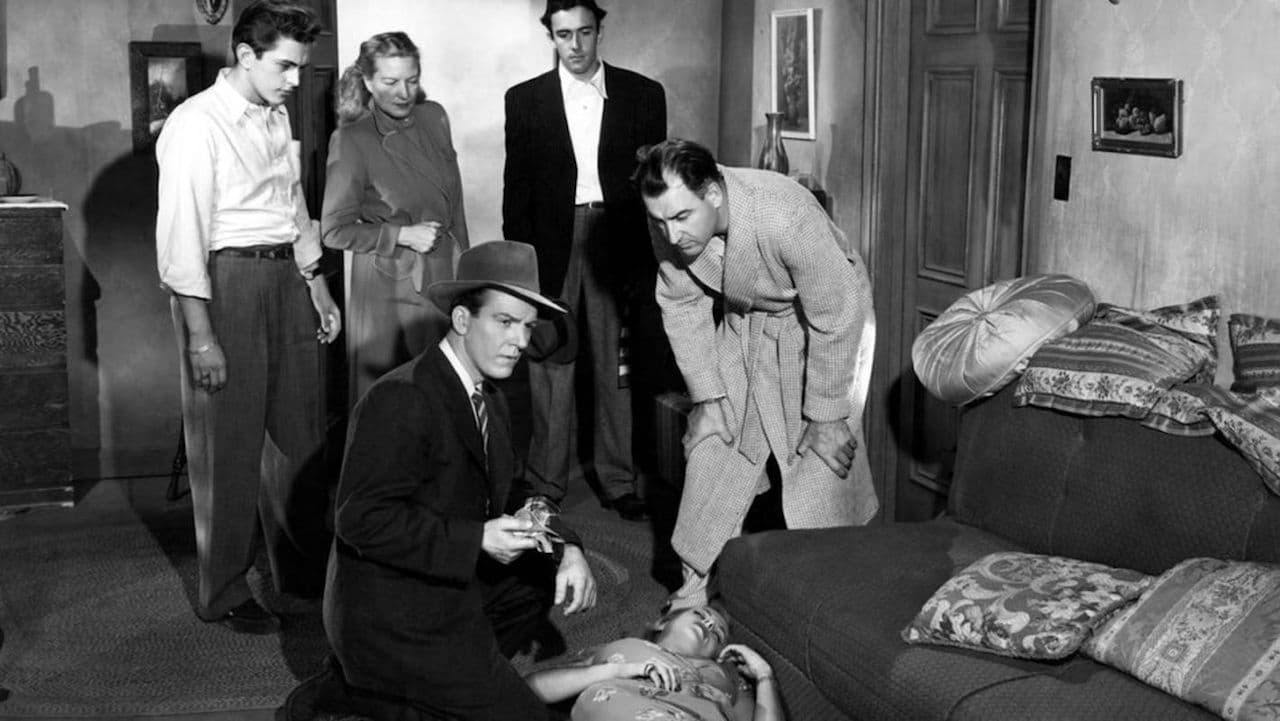
Railroaded! – scene
The Perfumed Bullets Duke Oils His Ammunition

Mann and cinematographer Guy Roe frame Duke Martin in close quarters, the light source reduced to a single hard lamp that carves one side of his face into shadow and leaves the other in an almost clinical brightness. The camera holds on his hands as he applies cologne to his bullets – a routine gesture performed with the attention of a craftsman. The composition is tight enough that the background dissolves into gray, isolating the act and the man performing it. There is no music to signal menace. The silence does that work.

The scene is the film's clearest statement about Duke's character: he is not a man in crisis, not driven by desperation or desire. He is organized, even fastidious, about the business of killing. The perfumed bullet is not a signature meant for investigators – it is a private ritual, which makes it more disturbing. Mann uses the moment to establish that the real threat in this film is not passion or greed but a kind of cheerful, methodical competence in violence.

Visual Language

The Cinematography

🎞️
Guy Roe – Director of Photography

Guy Roe's cinematography on Railroaded! operates within the severe constraints of PRC production – limited sets, compressed schedules, minimal location work – and turns those constraints into a visual grammar. Roe works with hard, directional light that does not flatter interiors but instead exposes them: rooms feel transactional, streets feel surveilled. Shadow is used structurally rather than decoratively, marking the moral status of a space rather than simply creating atmosphere. In the sequences centered on Duke Martin, the frame tends toward constriction – doorways, narrow rooms, angles that cut off exit. The procedural scenes with Ferguson open slightly, though never into comfort. There is little camera movement; Roe holds his setups and lets the performances carry momentum. The effect is a visual language that treats patience and entrapment as equivalent conditions, which mirrors the film's argument about guilt, innocence, and the slow convergence of evidence on a man who believes himself untouchable.

In the Catalogue

Themes & Motifs

Availability

Where to Watch

Also in the Directory

See Also