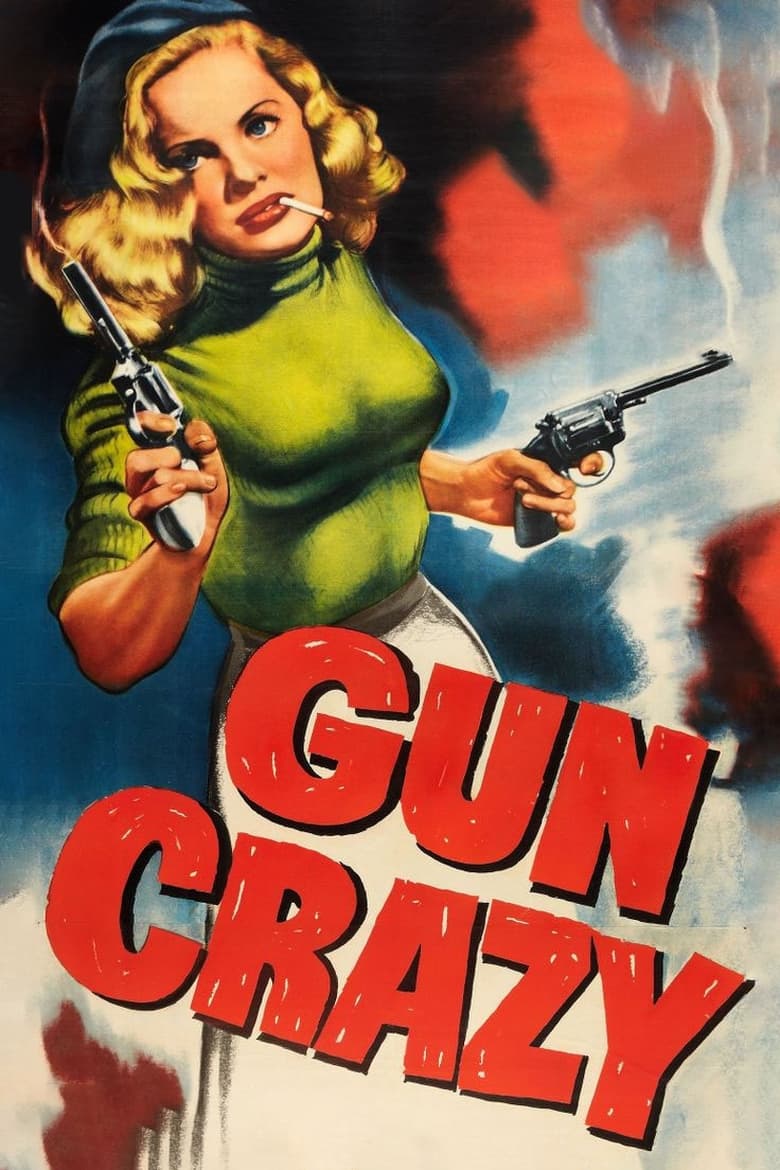
Bart Tare has been fascinated by guns since childhood – not by violence, but by the object itself, its weight and precision. That distinction matters to him, though it will matter less and less as the film progresses. Released from a reformatory and then an Army hitch, Bart drifts into a carnival where he meets Annie Laurie Starr, a sharpshooter whose skill with a pistol is matched only by her appetite for money and sensation. They marry quickly, drawn together by a shared fixation that functions as a substitute for whatever else they cannot name.
Annie's restlessness curdles the marriage almost immediately. She is candid about what she wants – money, motion, escape – and equally candid that Bart is her instrument for getting it. What follows is a series of robberies that escalate in ambition and carelessness, each job tightening the net around them. Bart is not a violent man by nature, and the film is careful to preserve that distinction even as his complicity deepens. Annie is something else: not a femme fatale in the classical sense, but a woman whose desires are presented without apology or psychological softening.
Gun Crazy belongs to the postwar cycle of crime films organized around the couple-on-the-run, a structure that allows the genre to examine romantic obsession and social dislocation simultaneously. Joseph H. Lewis directs with a leanness that refuses melodrama, and the film's moral logic is genuinely ambivalent – Bart and Annie are neither sympathetic victims nor straightforward criminals, but something more uncomfortable in between.
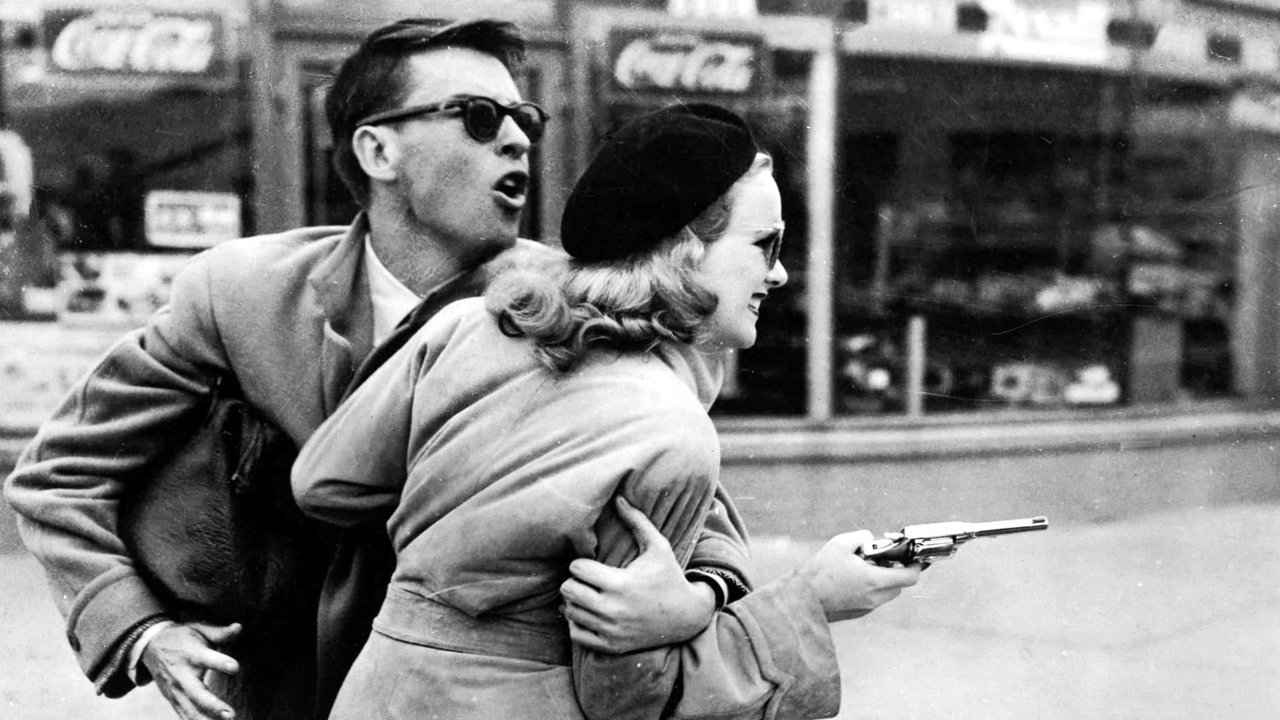
Gun Crazy arrives at a moment when American noir was beginning to interrogate the postwar promise of domesticity and stability. Lewis's film, based on MacKinlay Kantor's 1940 Saturday Evening Post story and adapted in part by the blacklisted Dalton Trumbo under a front, uses the outlaw-couple structure not for romance but for diagnosis. What Bart and Annie share is not love in any conventional sense but a mutual compulsion that the film encodes through the shared fetish object of the gun. The Poverty Row budget and King Brothers production context forced creative decisions – location shooting, minimal coverage, long unbroken takes – that became aesthetic assets. The Montrose bank robbery sequence, shot in a single continuous take from the backseat of a moving car, predates the European New Wave's embrace of similar techniques by nearly a decade. Peggy Cummins's performance is controlled and unnerving precisely because it avoids the standard noir-woman register of concealment; Annie's calculation is worn openly, and that transparency is more disturbing than any conventional mystery would be.
– Classic Noir
Russell Harlan mounts the camera in the back seat of the getaway car and holds it there for the duration of the sequence. The frame takes in both Bart and Annie in the front seats and the ordinary commercial street through the windshield, compressing the geography of the crime into a single unbroken spatial fact. There is no editing to direct sympathy or signal danger; the long duration forces the viewer into the same unprotected present tense as the characters. Light is flat and documentary – midday sun on storefronts, nothing expressionist, nothing that signals genre.
The choice to sustain the take without a cut is a moral as much as a technical decision. It denies the viewer the relief of ellipsis. We cannot look away at the moment of the crime because the film does not cut away; Bart and Annie's actions and our observation of them occupy the same uninterrupted time. The sequence quietly argues that spectatorship and complicity are not so different from each other, which is the film's central discomfort made visible.
Russell Harlan, whose career ranged from B-Westerns to Hawks productions, brings a documentary instinct to Gun Crazy that suits both the budget and the material. Shooting extensively on location in the San Fernando Valley and surrounding towns, Harlan works in available or near-available light rather than the heavily sculpted chiaroscuro associated with studio noir. Shadows appear where geography and time of day place them, not where a lighting designer has arranged them for symbolic effect. The result is a visual register that feels provisional and contingent – the world of the film does not arrange itself around the protagonists' fate, which is precisely the point. Where studio noir uses shadow to encode moral knowledge, Harlan's location work withholds that editorial function. The fog-shrouded marshland of the final sequence is an exception, and its theatrical weight is felt all the more sharply against everything that preceded it. Wide-angle lenses in enclosed spaces – notably the car interiors – flatten depth and compress characters against their surroundings, making the frame feel inescapable.
The Criterion Channel presents a clean transfer and is the most reliable streaming source for sustained critical engagement with the film.
TubiFreeTubi has carried Gun Crazy in its free ad-supported library, though transfer quality and availability should be verified before relying on it.
Archive.orgFreeThe film entered the public domain and versions circulate on Archive.org, though print quality varies significantly between uploads.