Films People Pull a Fast One Night Beat Reading Room On TV Shop
Timetable 1956
1956 Mark Stevens Productions
★★★☆☆ Notable
Film Noir · 121 minutes · Black & White

Timetable

Directed by Mark Stevens
Year 1956
Runtime 121 min
Studio Mark Stevens Productions
TMDB 5.9 / 10
"The man investigating the crime is the man who planned it."

Charlie Norman (Mark Stevens) is an insurance investigator dispatched to look into a daring robbery aboard a passenger train. The case is assigned to him in the ordinary course of business; what his employers do not know is that Charlie is the robbery's architect, a man who has spent months constructing a crime he intends to investigate himself in order to stay ahead of the law and collect the proceeds. The ironies of his position are not lost on him, and Stevens plays Charlie with a tight-lipped tension that registers the mental cost of maintaining two identities in close proximity.

As Charlie works the case from the inside, the investigation generates its own momentum. His colleague Joe Armstrong moves along parallel lines without knowing whose tracks he is following, and Frankie Page (Jack Klugman), a killer involved in the heist, becomes an unpredictable liability – a man with his own agenda and no particular loyalty to Charlie's careful architecture. Linda Brucker (Felicia Farr) enters the picture as a complication Charlie does not fully account for, her connection to the case more entangled than it first appears. Back home, Charlie's wife Ruth (Marianne Stewart) occupies the position that noir reserves for women married to men who are elsewhere in every sense that matters.

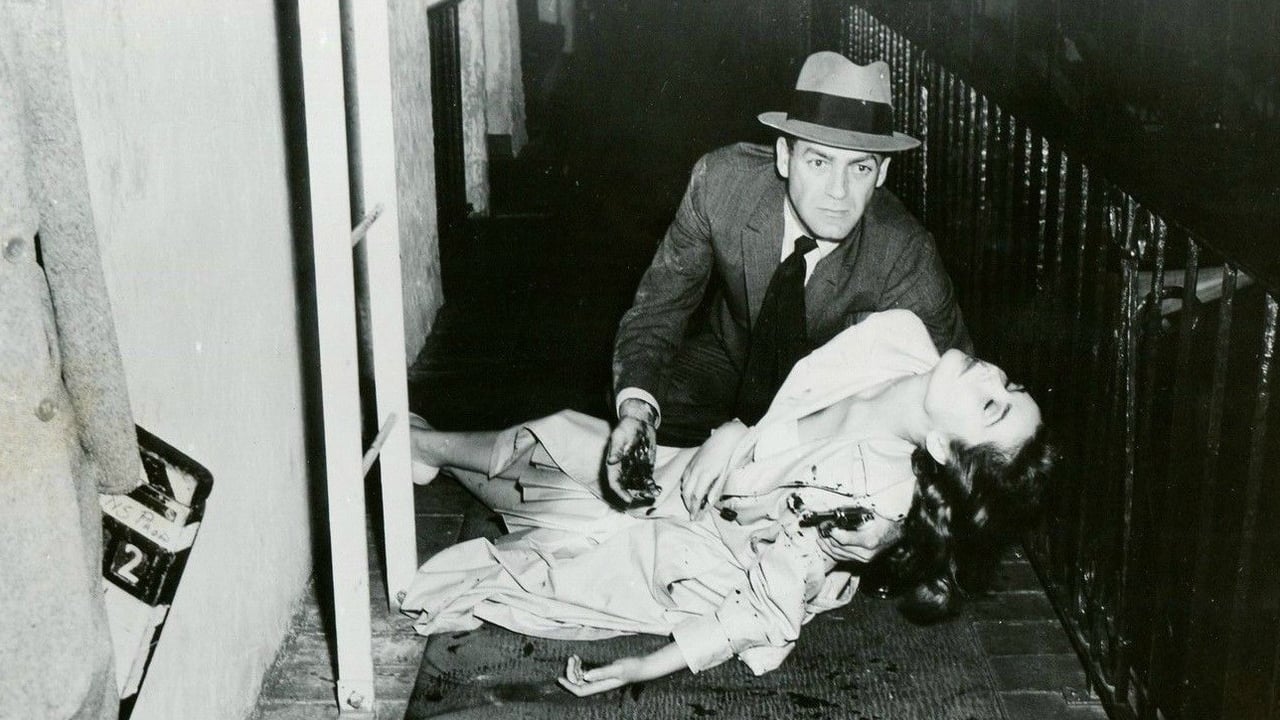
Timetable is a lean, compressed thriller that wrings considerable tension from the central premise: the investigator as perpetrator, the inquiry as self-incrimination in slow motion. Stevens, directing himself, keeps the procedural mechanics taut and resists the temptation to inflate his material. The film belongs to the late-cycle noir tradition in which the compromised protagonist is not destroyed by a femme fatale or a sudden moral failure but by the accumulated weight of a plan that was always more fragile than it appeared.
Classic Noir

Timetable is a minor-key entry in the late-cycle American noir that earns its place through the elegant economy of its central conceit. Mark Stevens, who produced and directed as well as starred, demonstrates a clear-eyed understanding of what the material can sustain: a tight procedural built around a structural irony that requires no embellishment. The film does not waste time on the mechanics of the heist itself – what interests Stevens is the investigative process as a form of self-betrayal, the way an intelligent man's professionalism becomes the instrument of his exposure. Jack Klugman, in a supporting role, brings an edge of genuine menace that prevents the picture from settling too comfortably into the competent-thriller register. Felicia Farr does more with her limited material than the script strictly requires. Charles Van Enger's cinematography is functional rather than atmospheric, which suits a film whose argument depends on the audience tracking procedure rather than drowning in shadow. Timetable will not reorder a serious viewer's understanding of noir, but as an example of the form operating cleanly within its own modest ambitions, it is difficult to fault.

– Classic Noir
3 ★★★☆☆ Notable
Credits

The Crew

DirectorMark Stevens
ScreenplayRobert Angus
CinematographyCharles Van Enger
MusicWalter Scharf
EditingKenneth G. Crane
Art DirectionWilliam H. Tuntke
CostumesMarko Cerovac
ProducerMark Stevens
Performances

The Cast

Close Reading

The Signature Scene

Timetable – scene
The Insurance Office Briefing The Wrong Side of the Desk

Van Enger frames the scene in which Charlie receives his assignment with a compositional neutrality that is itself the point: nothing in the lighting or camera placement marks this moment as sinister. The overhead office illumination is flat and institutional; Charlie sits with the controlled attentiveness of a professional receiving a professional task. His superiors are satisfied. The audience, already placed inside Charlie's knowledge by the film's opening, watches a scene of ordinary workplace procedure as a scene of extraordinary concealment.

Stevens's performance in the scene is the signature achievement of the film's first act: the absolute absence of visible strain. Charlie's composure is not the composure of innocence but of a man who has rehearsed this moment and is now executing the rehearsal. The scene argues that the most dangerous deception is one indistinguishable from competence, and that the investigative apparatus designed to expose crime is not immune to the intelligence of the criminals it seeks.

Visual Language

The Cinematography

🎞️
Charles Van Enger – Director of Photography

Charles Van Enger brings to Timetable the economical visual style that the film's budget and subject matter require. Working primarily on location and on modest studio sets, he avoids the elaborate shadow construction of the genre's more ambitious entries in favor of a clean, workmanlike approach that keeps the frame readable without sacrificing atmosphere entirely. His lighting of the train interiors – compartments, corridors, the functional geometry of a passenger carriage – makes use of practical-source motivated illumination that grounds the action in physical reality. The effect is to prevent the audience from retreating into the pleasures of pure style; Van Enger's camera insists on the procedural, on the documentation of movement and space. This is not unambitious photography but purposeful restraint: a film whose central tension depends on the invisible nature of Charlie's guilt is not well served by expressionist underlining. Van Enger's workis matched to Stevens's directing sensibility – both men appear interested in what the material demands rather than what the genre tradition permits.

In the Catalogue

Themes & Motifs

Availability

Where to Watch

Also in the Directory

See Also