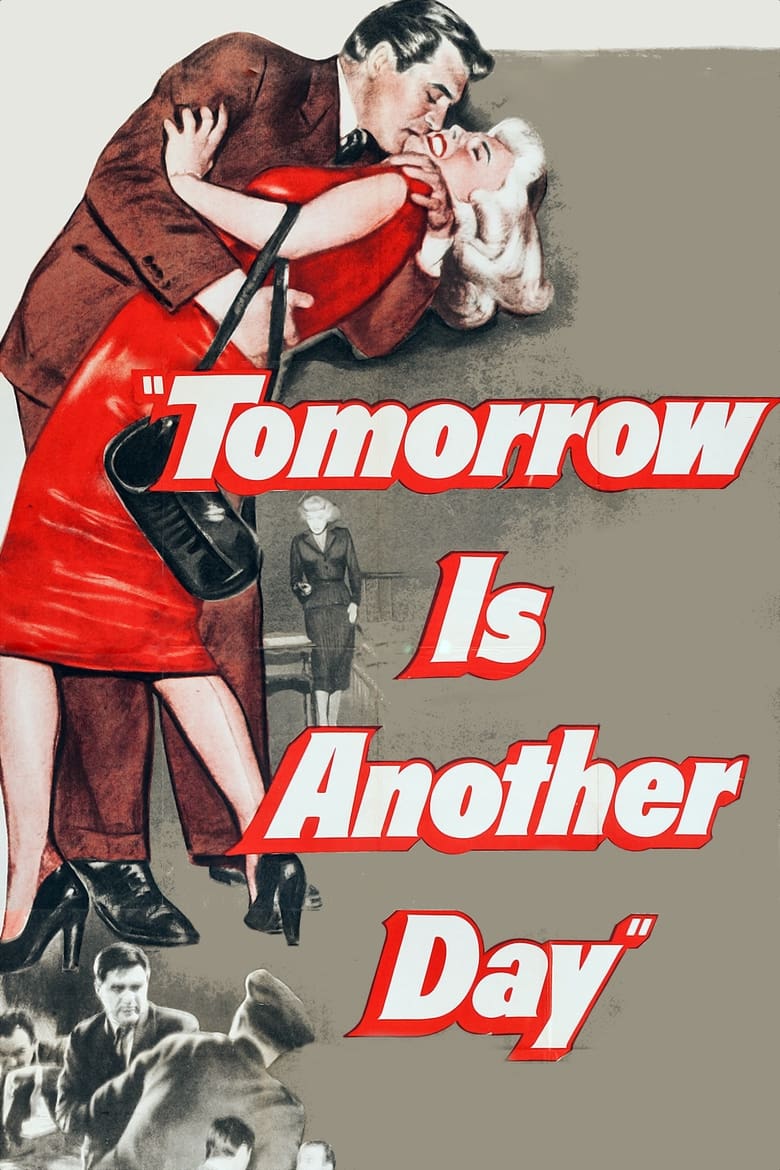
Bill Clark (Steve Cochran) walks out of prison after eighteen years, having entered as a boy convicted of a crime whose full weight he never understood. New York greets him with indifference. He drifts into a taxi-dance hall where he meets Cay Higgins (Ruth Roman), a hostess with a practiced hardness that conceals something more complicated. The two circle each other warily, drawn together less by desire than by a shared instinct for self-preservation.
When Cay's boyfriend Dan Monroe (John Kellogg) is shot dead during a violent confrontation, Bill – already marked by his record – flees with Cay rather than face a justice system he has no reason to trust. The two head west, assuming new identities among migrant farm workers in California, where they find temporary shelter with a decent couple, the Dawsons (Lurene Tuttle and Ray Teal). The fugitive arrangement forces honesty between them, and what began as mutual convenience shades into something resembling commitment. But a detective, Lt. Conover (Hugh Sanders), is closing in, and the life they are quietly constructing rests on a foundation of unspoken omissions.
Tomorrow is Another Day belongs to a strand of postwar noir preoccupied less with crime than with the social machinery that manufactures criminals and the difficulty of escaping one's designated role within it. The film presses against the genre's fatalism, testing whether rehabilitation and reinvention are available to people the system has already written off, and it does so in a register that is more sociological than sensational.
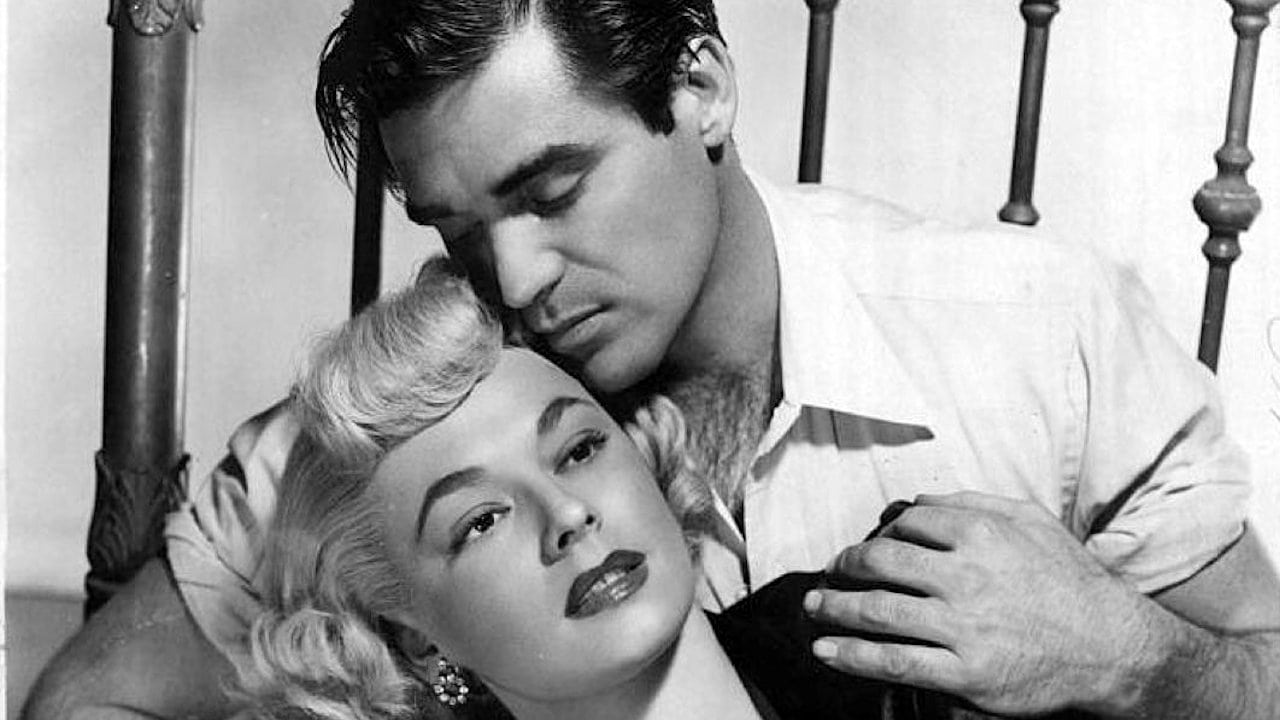
Felix Feist's film occupies a quiet but genuine place in the Warner Bros. noir cycle of the early 1950s, distinguished by its willingness to let the story breathe in spaces the genre rarely visited – the California agricultural belt, a migrant labor camp, the rhythms of ordinary working life. Cochran, often cast as menace, locates something unguarded in Bill Clark: a man stunted by incarceration who is learning, in his thirties, to feel. Roman matches him without condescension, playing Cay's damage as a condition of survival rather than a moral failing. The film's argument – that identity can be rebuilt if the right circumstances permit it – sits in uneasy tension with the genre conventions surrounding it, and it is precisely that unease that gives Tomorrow is Another Day its modest but lasting interest. It is not a film about guilt so much as about the persistence of categorization, the way institutional labels outlive their occasions. Robert Burks's cinematography, particularly in the pastoral California sequences, softens the shadows without abandoning the underlying anxiety.
– Classic Noir
Burks frames Bill and Cay outside the Dawson cabin as the sun drops behind a flat agricultural horizon. The light is lateral and cool, catching the side of Cochran's face while leaving Roman in a softer, more diffuse illumination. The camera holds a medium two-shot without cutting, allowing the silence between the characters to accumulate weight. There is almost no shadow geometry here – the darkness associated with their situation exists offscreen, in the past and in the approaching investigation – and that absence is itself expressive. The frame is unusually open, a compositional choice that registers as both relief and exposure.
The scene functions as the film's quietest argument: that these two people, given space and time and the anonymity of ordinary labor, might actually become the identities they have assumed. It is the moment at which noir's iron determinism loosens its grip, however briefly. What the camera refuses to do – close in, tighten the frame, return to darkness – is as meaningful as what it shows. Feist and Burks allow the possibility of escape, knowing the audience cannot yet be certain whether that possibility is real or simply one more false dawn.
Robert Burks, who would shortly move to his long and celebrated collaboration with Hitchcock, brings to Tomorrow is Another Day a visual intelligence attuned to tonal modulation rather than dramatic contrast. His work in the film's New York sequences relies on the low-key conventions of studio noir – controlled source lighting, deep shadows, a tight palette – but the shift to California location shooting produces a different register entirely. Burks opens up the frame and admits natural light, using the agricultural landscape not as picturesque escape but as a visual correlative for the fragile possibility of reinvention. The transitions between these two visual worlds track the film's moral argument precisely: darkness belongs to the institutional world of prisons, dance halls, and police files; the measured, unadorned California light belongs to the life the characters are attempting to construct. What is notable is that Burks does not sentimentalize the latter. The light remains cool, even cautious, and the openness of the frame reads as vulnerability as much as freedom.
TCM remains the most reliable broadcaster for Warner Bros. titles of this period and periodically airs Tomorrow is Another Day in restored prints; check the schedule or stream via the TCM app with a cable login.
TubiFree (Ad-Supported)Tubi has carried the film in its classic noir rotation, making it the most accessible free option, though print quality may vary; verify current availability before viewing.
Archive.orgFreeAs a Warner Bros. title the film's public domain status is uncertain, so Archive.org availability may be intermittent; worth checking if other platforms are inaccessible.