Films People Pull a Fast One Night Beat Reading Room On TV Shop
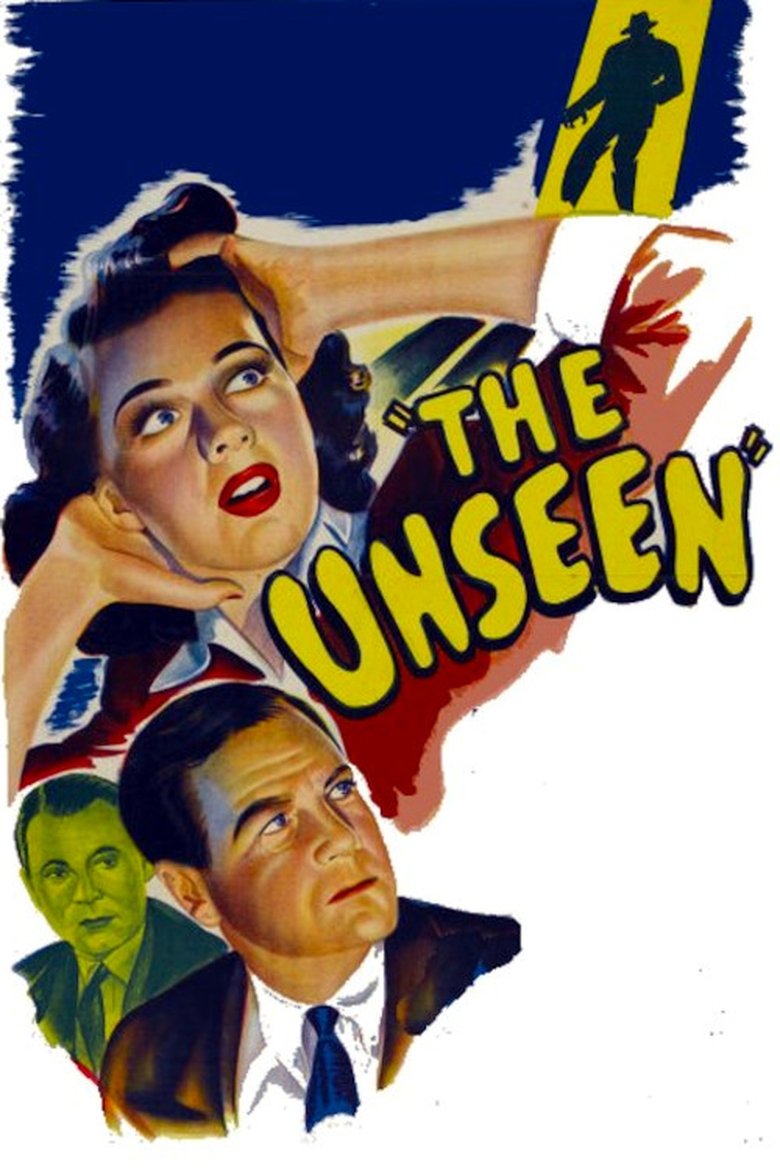
Unseen 1945
1945 Paramount Pictures
★★★☆☆ Notable
Film Noir · 80 minutes · Black & White

Unseen

Directed by Lewis Allen
Year 1945
Runtime 80 min
Studio Paramount Pictures
TMDB 4.7 / 10
"A widower's house conceals more than grief."

David Fielding, a recently widowed attorney in London, hires a new governess, Elizabeth Howard, to care for his two young children. Elizabeth is young, inexperienced, and quietly troubled – carrying the residue of a past she has not fully disclosed. The household she enters is already burdened: the previous governess has disappeared under circumstances no one is eager to explain, and the children, particularly the elder boy, are withdrawn in ways that suggest they witnessed something they cannot articulate.

Suspicion accumulates around Dr. Charles Evans, the family physician, a composed and socially confident man whose relationship to the missing woman remains ambiguous. Maxine, a woman from Fielding's recent past, complicates the domestic arrangement further, and the eccentric neighbors who inhabit the adjoining property introduce an atmosphere of concealed menace that Elizabeth begins to feel before she can name it. As she probes the silence surrounding the disappearance, her own position in the household grows precarious.

Unseen belongs to the domestic Gothic strain of 1940s noir, in which the house itself becomes the site of dread and the threat is lodged not in the urban underworld but in the routines of middle-class respectability. The film aligns itself with a cycle of Paramount productions that placed young women inside compromised domestic spaces – a structure that draws on both the suspense tradition and the emerging postwar anxiety about what lies beneath ordered surfaces.
Classic Noir

Unseen is a minor but instructive entry in the mid-1940s cycle of Gothic-inflected suspense films that Paramount produced with some regularity. Lewis Allen, who had directed The Uninvited the previous year, brings a similar economy to the atmosphere here, though the material is thinner and the script less willing to commit to its darker implications. What the film accomplishes is a credible transfer of menace from the supernatural to the social: the threat is a person, not a presence, and the house is dangerous because of what human beings have done inside it. Joel McCrea is characteristically reliable without being stretched, and Gail Russell – who carried a genuine quality of unease that required little acting effort – is well suited to a role built on watchfulness and suppressed alarm. Herbert Marshall's Dr. Evans is the film's most controlled performance, his surface cordiality functioning as a sustained mask. The film reveals something specific about its moment: the domestic space, destabilized by wartime absence and death, is no longer a site of safety, and the professional man who moves through it with authority is not to be trusted.

– Classic Noir
3 ★★★☆☆ Notable
Credits

The Crew

DirectorLewis Allen
ScreenplayRaymond Chandler
CinematographyJohn F. Seitz
MusicErnst Toch
Art DirectionA. Earl Hedrick
CostumesDorothy O'Hara
Performances

The Cast

Close Reading

The Signature Scene

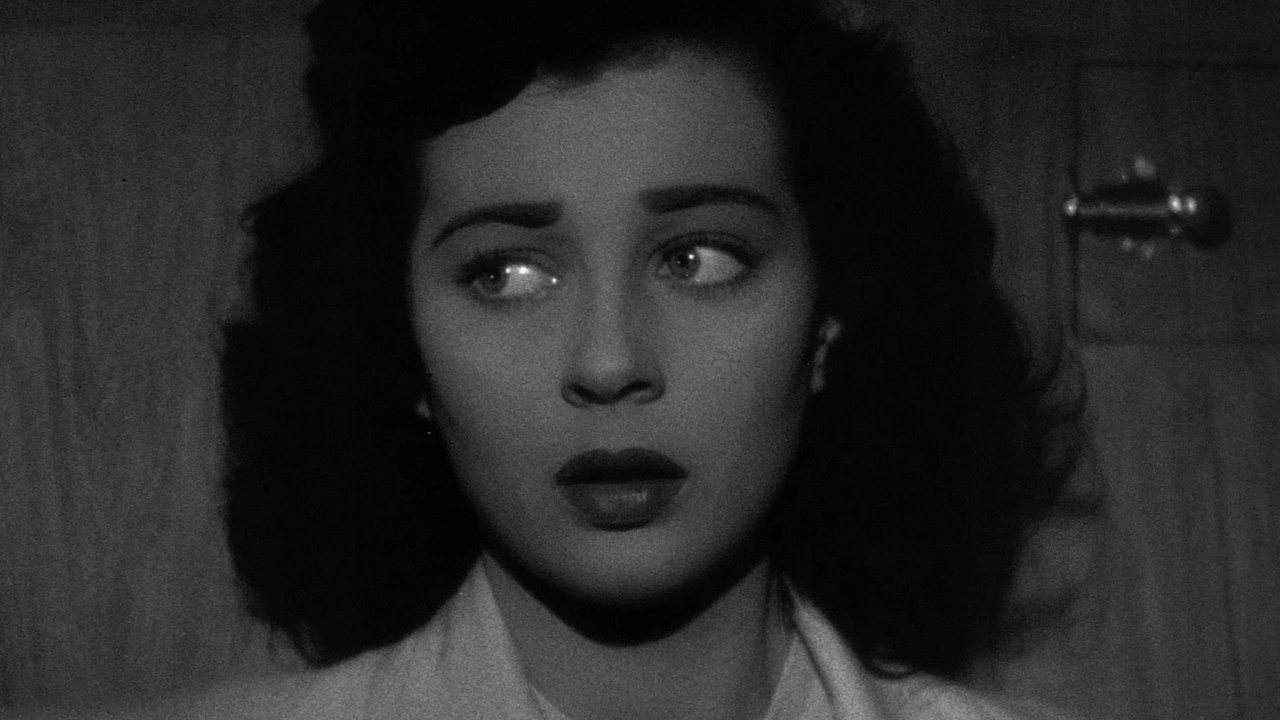
Unseen – scene
The Cellar Staircase Light Failing on the Steps

John F. Seitz composes the descent into the cellar as a study in withheld information. The frame holds Elizabeth at the top of the stair, the light source behind her so that she is partially silhouetted, her face catching only enough illumination to register uncertainty. The staircase drops into darkness that the camera refuses to resolve – whatever lies below is suggested by sound and by the geometry of shadow, not by revelation. Seitz allows the negative space at the bottom of the frame to carry the weight of the scene.

The staging externalizes Elizabeth's situation throughout the film: she sees partially, knows incompletely, and is always positioned at a threshold between what she suspects and what she can confirm. The cellar sequence makes literal the epistemological condition the narrative imposes on her – to descend is to risk knowledge, and the camera's refusal to illuminate the bottom of the stair is the film's clearest statement about the cost of looking too far into a household's hidden life.

Visual Language

The Cinematography

🎞️
John F. Seitz – Director of Photography

John F. Seitz, whose work on Double Indemnity and Sullivan's Travels had already demonstrated his range, brings a disciplined low-key approach to Unseen that favors deep shadow over expressionist distortion. Seitz uses high-contrast lighting in the interior sequences not for stylization but for moral calibration: rooms occupied by characters concealing something tend to be lit from sources that leave faces half in shade, while the few scenes of provisional safety are lit more diffusely. The studio sets are dressed to read as solid domestic architecture, and Seitz shoots them with moderately wide lenses that keep depth of field generous enough to populate backgrounds with ambient unease – a figure partially visible through a doorway, a staircase that continues beyond the frame's edge. There is no single bravura shot; the effect accumulates through consistency of approach, a cinematographic argument that ordinary spaces, lit with sufficient restraint, become sufficiently threatening.

In the Catalogue

Themes & Motifs

Availability

Where to Watch

Also in the Directory

See Also