Films People Pull a Fast One Night Beat Reading Room On TV Shop
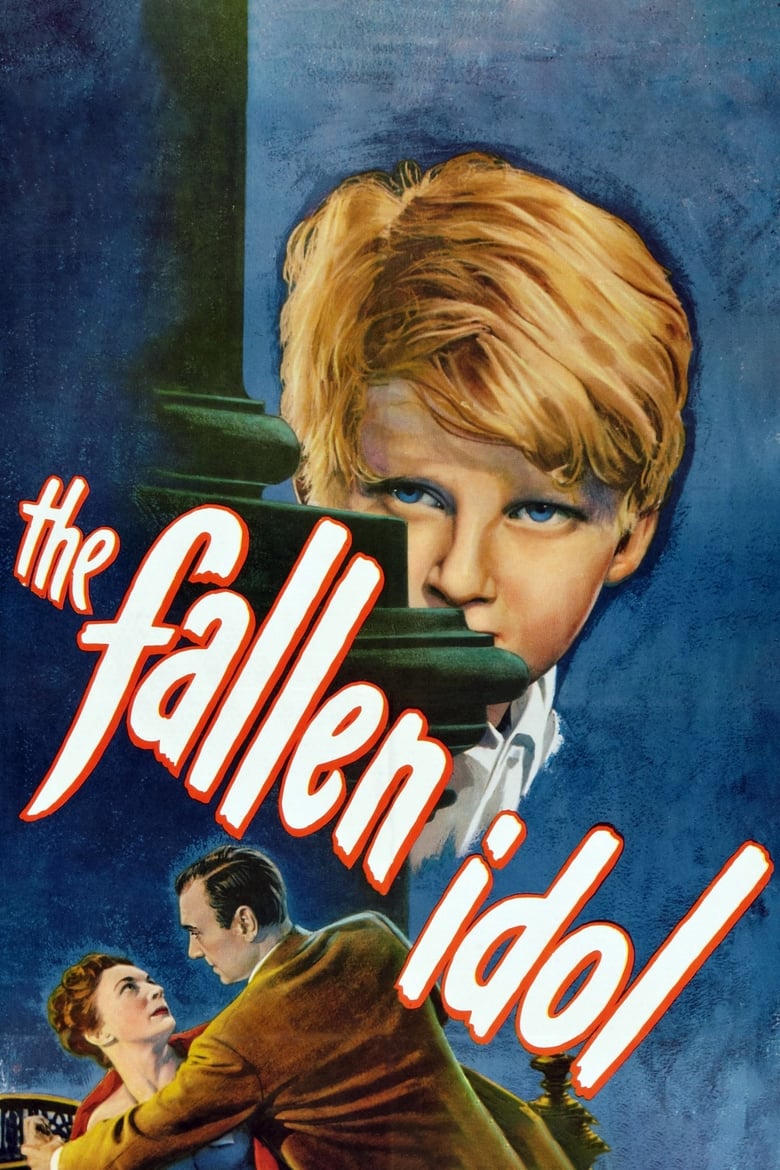
Fallen Idol 1948
1948 London Films Productions
★★★★☆ Recommended
Film Noir · 96 minutes · Black & White

Fallen Idol

Directed by Carol Reed
Year 1948
Runtime 96 min
Studio London Films Productions
TMDB 7.2 / 10
"A boy's loyalty becomes the evidence that may hang the man he loves."

In postwar London, eight-year-old Phillipe is the son of a French diplomat stationed at the Belgian Embassy. Left in the care of the household staff while his parents are abroad, he forms a devoted attachment to Baines, the embassy butler – a quiet, dignified man who fills the vacuum of parental absence with stories of colonial adventure and a steady, undemanding affection. Baines is conducting a discreet affair with Julie, a young woman he meets on his days off, and Phillipe, sworn to secrecy, becomes an unwitting accomplice in the deception.

The arrangement fractures when Mrs. Baines, the butler's cold and watchful wife, closes in on her husband's secret. A confrontation at the top of the embassy staircase ends with Mrs. Baines dead on the pavement below. Phillipe witnesses enough to be confused and enough to be dangerous. As the police investigation tightens – led by the measured Inspector Crowe and his colleague Ames – the boy's attempts to protect Baines through improvised lies begin to construct a circumstantial case against the very man he is trying to save.

Fallen Idol belongs to the tradition of the psychological thriller rather than the procedural, and its tension derives from the gap between what a child perceives and what adults understand. The murder investigation is almost incidental to the film's real subject: the cost of misplaced trust, the violence concealed inside respectable institutions, and the way innocence, when pressed into service as an instrument of loyalty, can become its own form of devastation.
Classic Noir

Carol Reed's adaptation of Graham Greene's short story 'The Basement Room' arrives one year before The Third Man and shares that film's preoccupation with the corruption that hides inside affection. Where The Third Man uses the geography of a ruined city as moral landscape, Fallen Idol uses the embassy itself – a sealed, hierarchical space governed by propriety – to examine what adults conceal from children and what children, in their misreading, expose. Ralph Richardson gives a performance of considerable restraint; Baines is neither innocent nor calculated, and Richardson refuses to tip the character toward sympathy or guilt. Sonia Dresdel's Mrs. Baines registers as genuinely threatening, her domestic surveillance a low-grade tyranny the film takes seriously. What the film reveals about its era is an unease with the postwar household as a site of suppressed violence, and a suspicion that the institutions of order – marriage, service, diplomacy – generate exactly the secrets they are designed to prevent. Bobby Henrey's unrehearsed quality as Phillipe is less a performance than a condition, and Reed uses that quality with precision.

– Classic Noir
4 ★★★★☆ Recommended
Credits

The Crew

DirectorCarol Reed
ScreenplayGraham Greene
CinematographyGeorges Périnal
MusicWilliam Alwyn
EditingOswald Hafenrichter
CostumesIvy Baker
ProducerCarol Reed
Performances

The Cast

Close Reading

The Signature Scene

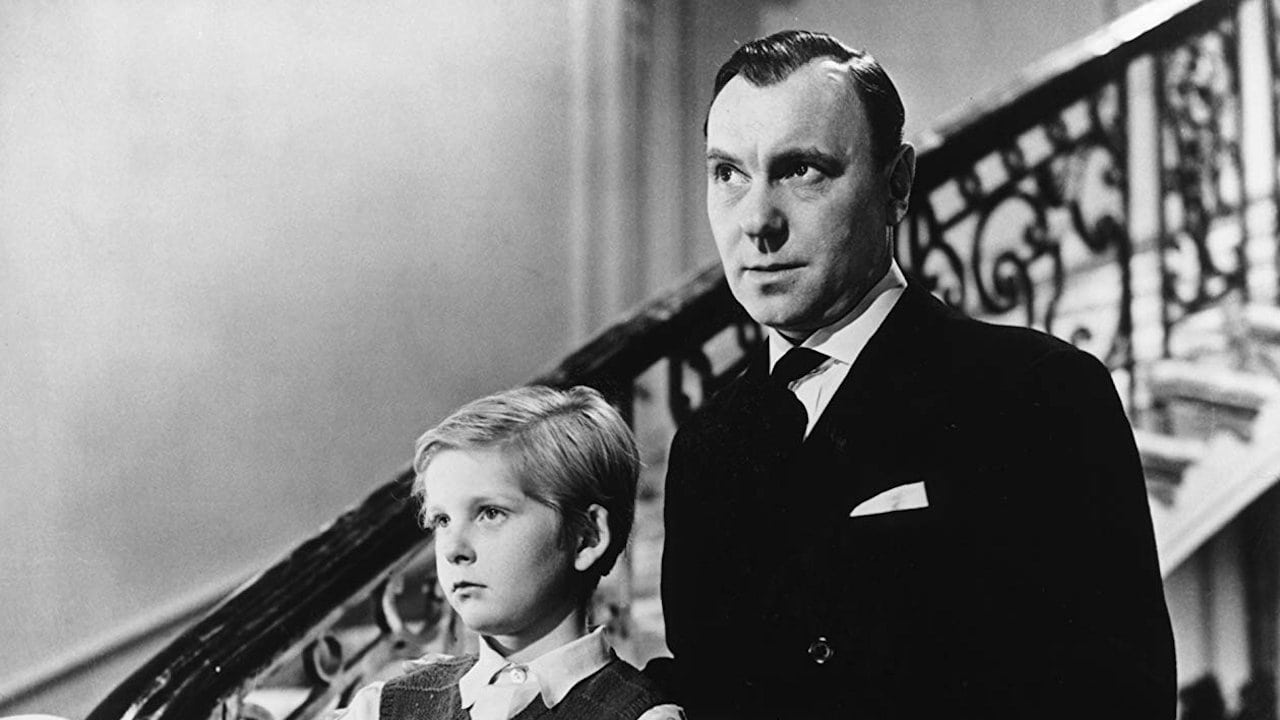
Fallen Idol – scene
The Embassy Staircase Shadows Fall on Marble

Périnal frames the stairwell from below, the geometry of the banister receding into an upper darkness that the available light does not reach. Mrs. Baines moves along the upper landing as a figure partly dissolved by shadow, her solidity undermined by the composition. The camera holds its position rather than following her, so the crucial moment occurs at the edge of the frame's legibility – seen and not quite seen, which is the film's central epistemological condition made spatial.

The scene encodes the film's argument in its refusal of clarity. Phillipe watches from a remove that denies him – and the audience – the certainty needed to assign guilt. What falls is not only Mrs. Baines but the possibility of stable knowledge. The sequence establishes that the subsequent police investigation will operate on evidence that is structurally unreliable, and that the child's testimony, however earnest, will be shaped by a loyalty that distorts even as it intends to protect.

Visual Language

The Cinematography

🎞️
Georges Périnal – Director of Photography

Georges Périnal, whose work stretched back to René Clair's early sound films and Alexander Korda's London productions, brings to Fallen Idol a visual discipline that serves Greene's moral architecture directly. Shooting primarily on constructed sets at Shepperton, Périnal uses the vertical dimensions of the embassy interior – stairwells, high ceilings, long corridors – to establish spatial hierarchies that mirror the social ones. His lighting favors deep shadows in peripheral areas of the frame while maintaining comparative clarity at the dramatic center, so that the film's world is always partly illegible. The camera placement consistently adopts positions that belong to observation rather than omniscience – low angles that approximate a child's sightline, or fixed positions that record events from a distance that prevents full comprehension. This is not stylistic decoration; it is the visual argument of the film, insisting that what we see is always conditioned by where we stand and what we are permitted to understand.

In the Catalogue

Themes & Motifs

Availability

Where to Watch

Also in the Directory

See Also