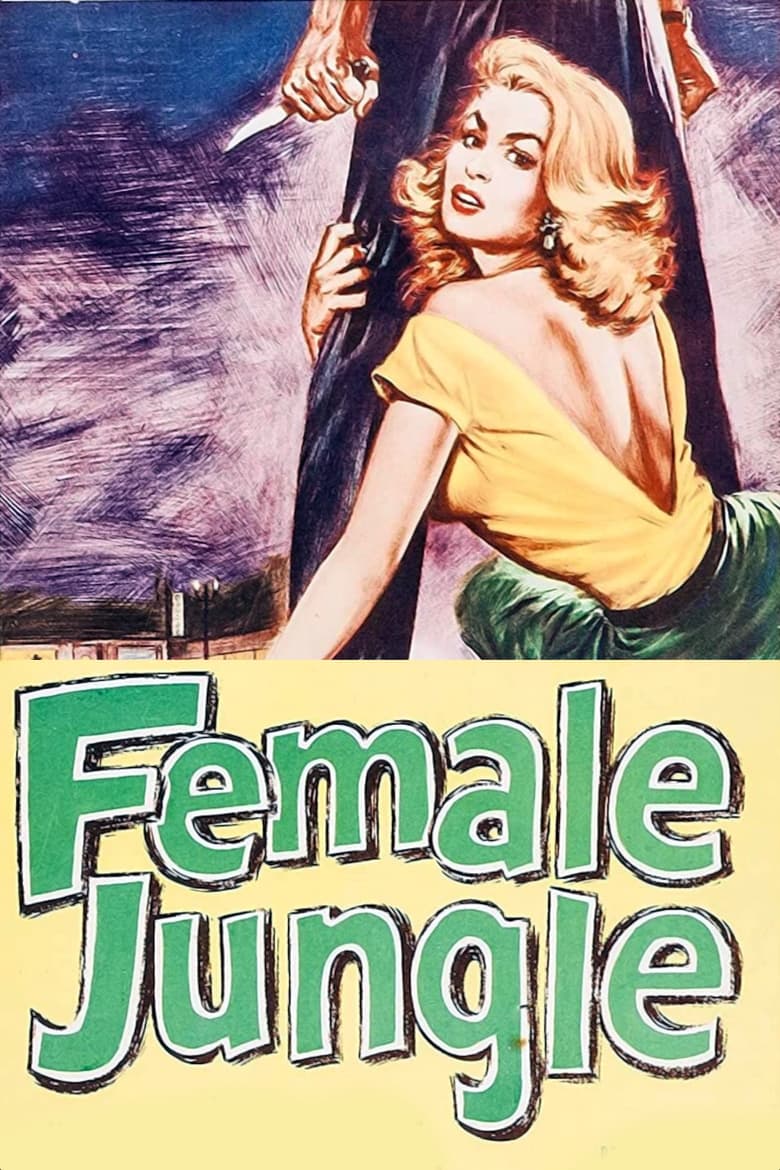
Detective Sergeant Jack Stevens wakes in a Los Angeles alley with no memory of the previous night and a body nearby – that of a murdered actress. Stevens, a hard-drinking cop whose blackouts have become a professional liability, finds himself the chief suspect in a killing he cannot account for. His investigation begins less as a procedural search for a killer than as a desperate excavation of his own lost hours.
The case pulls Stevens into the orbit of Claude Almstead, a gossip columnist whose livelihood depends on knowing other people's secrets, and Candy Price, a voluptuous fixture of the local nightlife scene whose involvement with the victim remains deliberately unclear. Alex Voe and his wife Peggy occupy a more domestic corner of the same corrupt world, their marriage shadowed by infidelity and mutual distrust. Allegiances shift as each character's proximity to the crime begins to imply motive, and Stevens finds that clearing his own name requires implicating people he has reason to protect.
Female Jungle operates within the well-worn territory of the amnesia procedural, but its real subject is the corrosive effect of moral weakness on institutional authority. The film uses its low budget and compressed runtime to concentrate pressure rather than expand narrative, positioning itself closer to the B-picture crime dramas of the early 1950s than to the more polished studio noirs of the same period. That economy is both its limitation and its discipline.
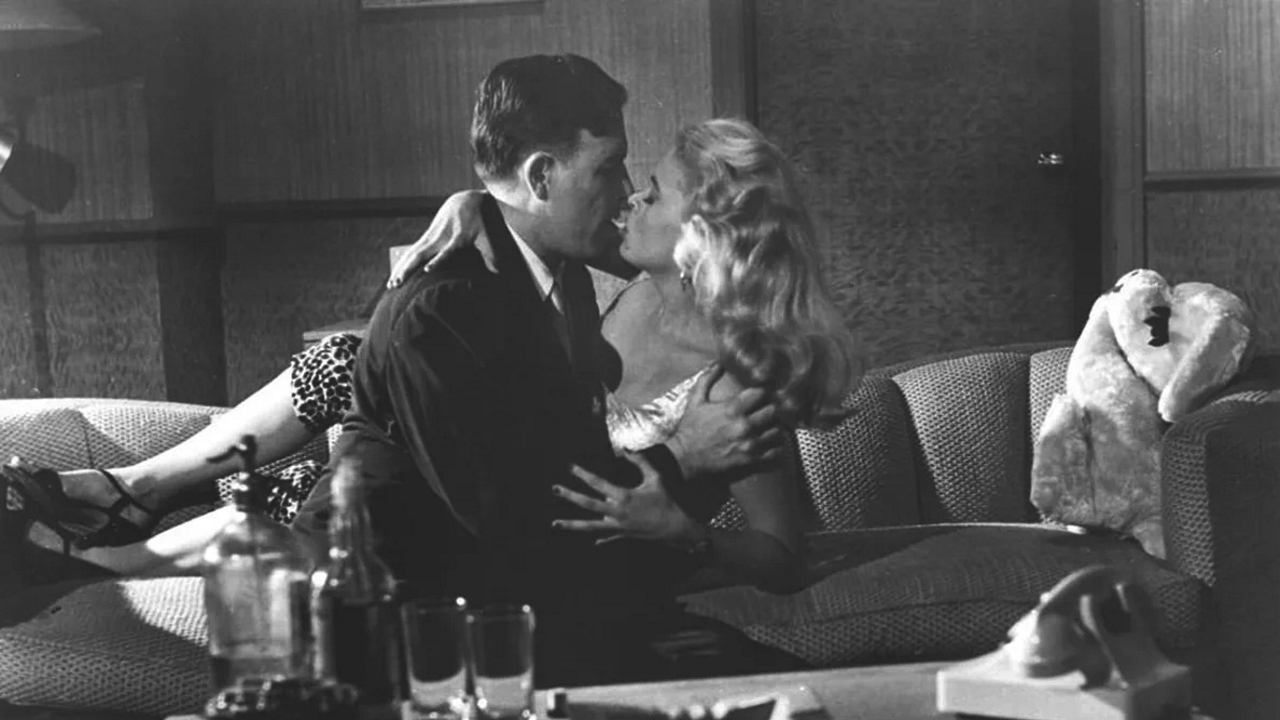
Female Jungle is a minor but instructive entry in the mid-decade American B-noir cycle, produced independently and released through the low-end distribution channels that sustained the genre's working-class audience long after the major studios had begun retreating from it. Bruno VeSota, better known as a character actor than a director, keeps the material compact and unsentimental. Lawrence Tierney, whose off-screen volatility had by this point curtailed his career at every major studio, turns that damaged quality into a performance asset: his Stevens is not a compromised hero fighting temptation but a man already past the point of self-deception. John Carradine's Almstead is the more calculated figure, a parasite whose social function the film treats with genuine contempt. Jayne Mansfield, in one of her earliest screen roles, is used as spectacle in ways the film is self-aware enough to make slightly uncomfortable. What Female Jungle reveals about its era is the degree to which the genre had become a vehicle for anxieties – about male authority, institutional corruption, female sexuality – that mainstream cinema could not accommodate directly.
– Classic Noir
Elwood Bredell's camera holds Mansfield in a tight medium shot, the key light placed high and slightly forward so that it catches the sequined fabric of her dress while leaving the background figures in a soft undifferentiated murk. The frame is crowded but the depth is shallow, compressing the nightclub's geography into a single plane of surface and shadow. The camera does not move to accommodate her; it waits, which has the effect of making her the one stable object in an unstable world.
The scene clarifies the film's central argument about visibility and danger. Candy is watched by everyone in the room and understood by none of them, a condition the film treats not as glamour but as a kind of exposure. Her position in the frame – lit, isolated, surrounded by darkness – anticipates her narrative function: she is the point through which the film's various male anxieties converge, without ever quite becoming their resolution.
Elwood Bredell, whose earlier work with Robert Siodmak on Phantom Lady established his credentials as a noir cinematographer of the first order, brings a practiced economy to Female Jungle that the budget does not otherwise permit. Working largely on studio interiors, Bredell relies on low-key single-source lighting to generate the moral atmosphere the script requires, using hard shadow lines to divide frames into zones of knowledge and ignorance. His lens choices favor moderate focal lengths that flatten space without distorting it, keeping characters in proximity to each other in ways that suggest complicity rather than coincidence. The nightclub sequences use practical light sources as motivation, allowing the frame to remain coherent while the narrative information it contains stays deliberately incomplete. Where a larger production would use location photography to anchor the story in a recognizable city, Bredell uses the studio's controlled environment to suggest a Los Angeles that is less a place than a moral condition – enclosed, watched, without exits.
Female Jungle is in the public domain and available in full on the Internet Archive; print quality varies by upload, so select the highest bitrate version available.
TubiFreeTubi has carried the film as part of its rotating classic crime catalog; availability fluctuates, but it is among the more stable free streaming options for this title.
Amazon Prime VideoSubscriptionAvailable through Prime's catalog of public-domain noir titles, though as with most PD prints the transfer is unlikely to have been restored.