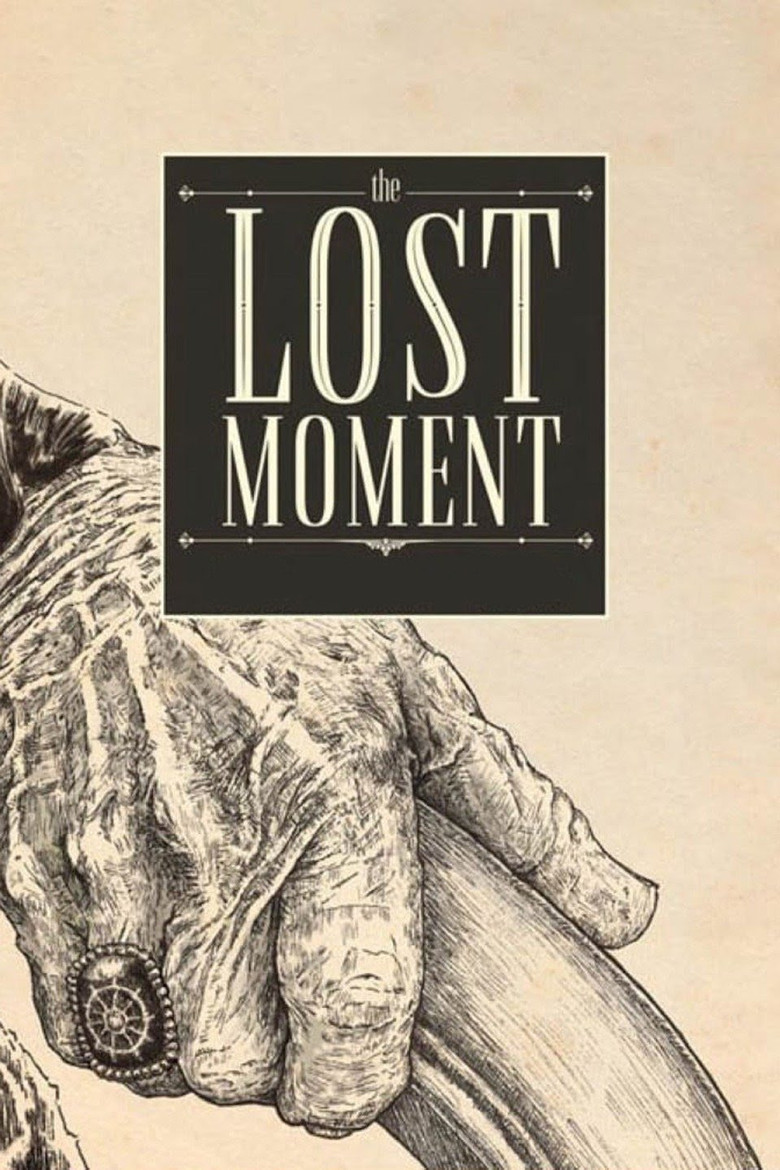
American publisher Lewis Venable arrives in Venice determined to acquire a cache of love letters written by a celebrated nineteenth-century poet. The letters are held by Juliana Bordereau, the poet's former lover, now an impossibly ancient woman who has guarded them for decades in a decaying palazzo. To gain access, Venable takes lodgings in the house under a false name, posing as an ordinary tenant rather than revealing his true purpose. Sharing the palazzo with Juliana is her niece, Tina, a young woman whose behavior shifts without warning between docility and a disturbing, uncontrolled intensity.
As Venable moves deeper into the household's airless routines, it becomes clear that Tina is subject to episodes in which another personality – volatile, seductive, and potentially dangerous – takes hold of her entirely. The letters remain locked away, and Juliana, despite her apparent frailty, proves a shrewd and implacable guardian. Venable's professional scheme gradually entangles with genuine feeling, while Father Rinaldo and the household servant Pietro watch the intrusion with quiet alarm. The question of who is deceiving whom grows harder to answer.
Adapted from Henry James's novella The Aspern Papers, The Lost Moment transposes its source to the immediate postwar period, loading the atmosphere of Gothic obsession with a psychological dimension that aligns it with the era's broader noir preoccupations. The film belongs to that strand of American noir set against European decay – ornate, enclosed spaces standing in for moral and psychological entrapment – and asks what it costs a man to treat the past as property.
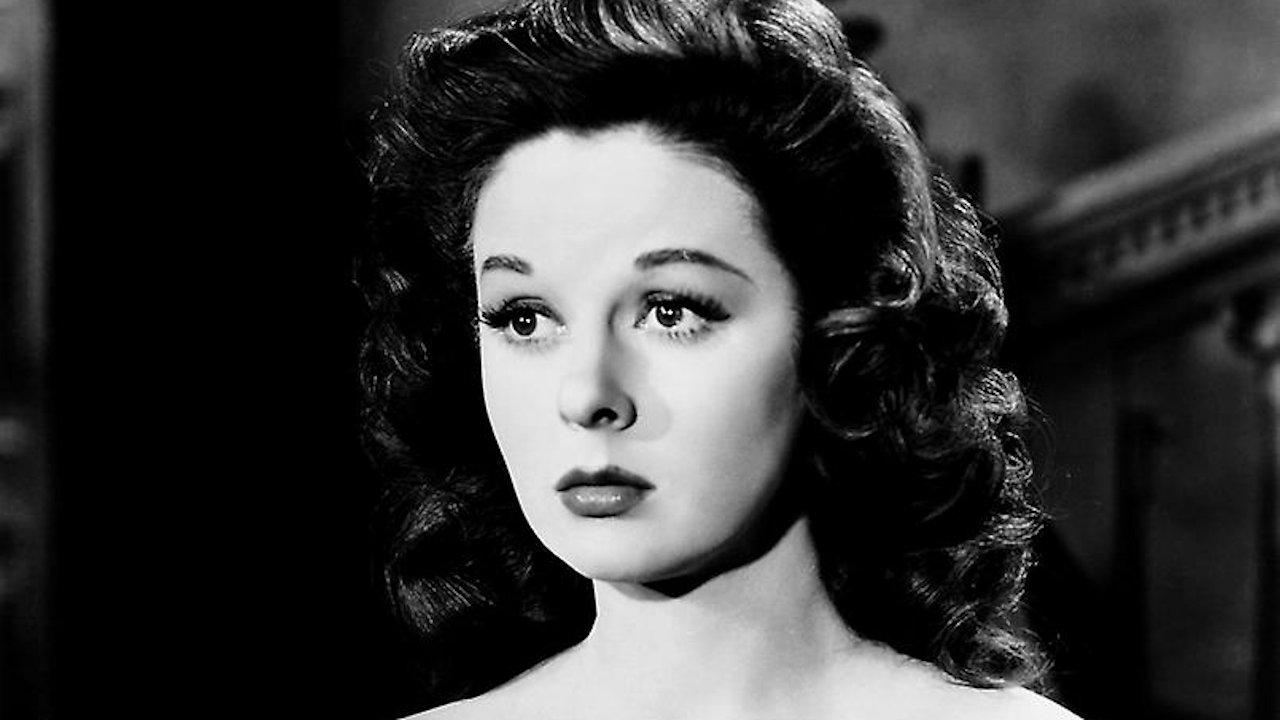
The Lost Moment occupies an unusual position in the noir canon: a literary adaptation that wears its source's Jamesian ambiguity with reasonable fidelity while reshaping it through the conventions of postwar psychological melodrama. Martin Gabel, directing his only feature film, keeps the pacing deliberate to the point of austerity, which works against easy genre satisfactions but serves the material's concern with obsession as a slow corrosion. Susan Hayward's dual performance as the pliable Tina and her possessed alter ego is the film's central gamble, and she executes it with controlled ferocity – the shifts are abrupt but never arbitrary. Agnes Moorehead's Juliana is equally precise: a figure of accumulated will rather than mere menace. Robert Cummings is the film's principal liability; his instinct toward affability resists the moral hollowness the role requires. Still, the Venice setting – largely recreated on studio stages with notable atmosphere – and Hal Mohr's cinematography give the film a visual coherence that sustains its argument about the dangers of treating living people as custodians of a usable past.
– Classic Noir
The camera holds at a low angle as Tina seats herself behind Juliana's writing desk, the frame weighted by shadow on three sides and a single lateral light source catching the left half of her face. Hal Mohr keeps focus shallow, so the locked drawers and stacked papers behind her dissolve into a soft dark mass. Her hands rest flat on the desk surface in a gesture that reads simultaneously as ownership and supplication. The stillness of the composition is broken only by the slow turn of her head toward Venable, who stands at the edge of the frame.
The scene crystallizes the film's central inversion: the man who came to extract something from this house finds himself the one being studied and assessed. Tina – or the presence that sometimes inhabits her – understands the desk and what it holds in ways Venable never will, and the framing makes that disparity legible before a word is spoken. What the film argues here is that the past does not yield to the merely determined; it yields, if at all, only to those who have already surrendered something to it.
Hal Mohr's work on The Lost Moment is studio cinematography pressed into the service of psychological displacement. Shooting largely on constructed Venice interiors at Universal, Mohr uses overhead sources sparingly, preferring raking side light that leaves significant portions of each frame in unresolved shadow – a technique that flattens spatial depth and produces the sensation of rooms without exits. His lens choices favor moderate telephoto focal lengths that compress the distance between characters and their surroundings, making the palazzo feel inhabited rather than merely decorative. Water reflections are introduced on ceilings and walls in several scenes, a device that destabilizes surfaces without announcing itself as expressionist. The Gothic architecture of the sets is never lit for grandeur; Mohr consistently finds the damp and the worn. This restraint serves the film's moral logic precisely: the beauty that once drew the poet to this place is present only as residue, and the cinematography treats luminosity as something that has to be searched for and that, when found, tends to illuminate the wrong things.
TCM holds the most reliable broadcast rights to Walter Wanger productions of this period and offers the cleanest available print.
Archive.orgFreeA public domain version is available here, though transfer quality varies and the print may show age damage; acceptable for reference viewing.
Amazon Prime VideoRental / PurchaseAvailable periodically as a paid rental through third-party classic-film channels; confirm availability before seeking elsewhere.