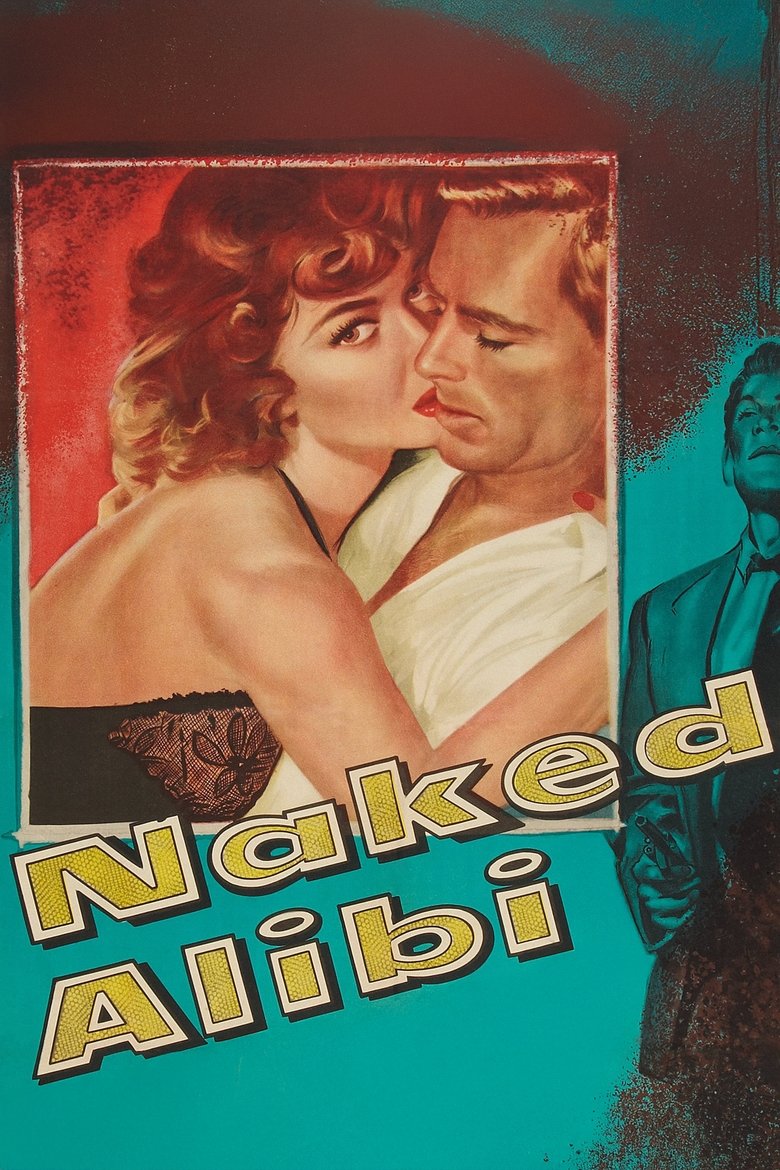
Police Chief Joe Conroy (Sterling Hayden) has his eye on Al Willis (Gene Barry), a smooth, soft-spoken bakery owner with a talent for looking innocent. When three officers are murdered and Willis surfaces near each scene, Conroy pushes hard enough to get himself fired – his obsession having outrun the evidence his superiors require. Stripped of his badge and estranged from his career, Conroy follows Willis south to a dusty border town in Mexico, where the veneer of respectability Willis maintained back home has no reason to hold.
In that border town Conroy finds Marianna (Gloria Grahame), a nightclub singer who shares Willis's bed without sharing his confidence. She has lived long enough in proximity to dangerous men to read them accurately, and she reads Willis as someone who will eventually kill her too. The triangle that forms between Conroy, Marianna, and Willis is less romantic than transactional – two people calculating whether survival requires them to trust each other. Willis's wife Helen (Marcia Henderson), loyal and deliberately blind back home, represents the domestic order that Willis has already abandoned in everything but name.
Naked Alibi works the familiar noir axis of institutional failure and personal obsession, but it grounds the tension in a specific geography – the heat and disorder of the border zone where American authority dissolves and private reckoning takes over. The film belongs to a mid-1950s cycle in which the returning or displaced male protagonist finds that the law is insufficient and that the women consigned to the margins of that law often see more clearly than anyone with a badge.
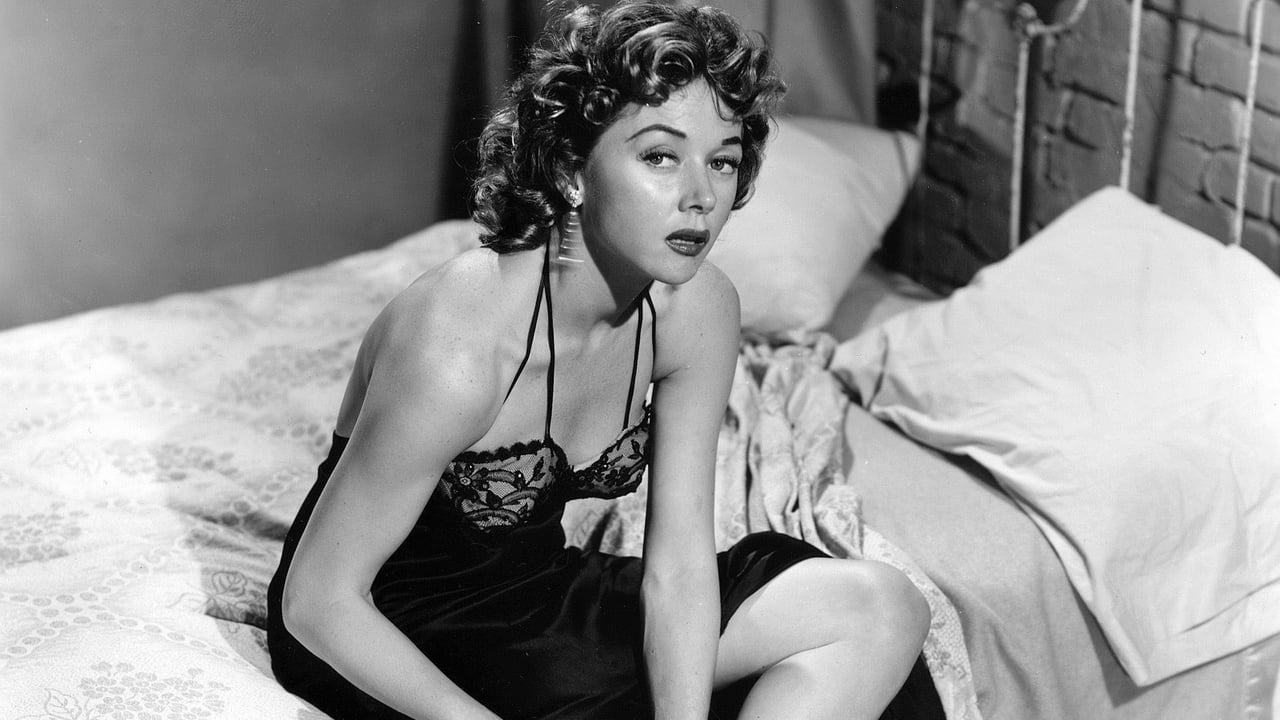
Naked Alibi arrives at a moment when Universal International was producing competent, commercially minded noir at pace, and Jerry Hopper's direction is efficient rather than distinctive. What elevates the film above the journeyman product it might have been is the friction between its two leads. Hayden, physically imposing and constitutionally stubborn, plays Conroy as a man whose righteousness has curdled into something close to pathology – he cannot stop because stopping would mean the system he served was right to discard him. Grahame, working in her specialty of women who survive through clear-eyed pragmatism rather than sentiment, gives Marianna an intelligence the script barely earns. Gene Barry's Willis is the film's most carefully constructed element: charming, thin-lipped, capable of sudden violence that arrives without warning. The border setting is used less for atmosphere than for jurisdictional argument – once you are south of the line, the only law is the one you enforce yourself, which is exactly where Conroy's obsession has been taking him all along. As a document of postwar masculine anxiety and the limits of institutional authority, the film repays attention.
– Classic Noir
Russell Metty keeps the cantina interior deliberately flat and overlit – no moody shadow play here, just the unforgiving fluorescence of a cheap room that has nowhere to hide. The camera holds a medium shot on Willis as Conroy enters, and the compression of the frame denies Barry any of the open space in which his character normally operates. A ceiling fan moves without cooling anything. The light source is frontal, stripping depth from the background and pushing both men into a shallow, airless plane.
The flatness of the light is the point: Willis has spent the entire film cultivating shadow – social, moral, spatial – and Metty's setup denies it to him at the moment of reckoning. What the scene argues is that obsession, however pathological, can function as a form of illumination. Conroy's pursuit is excessive and extralegal, but it has driven Willis into a space where his particular gift for misdirection no longer works. The film's central moral question – whether a discredited man's private justice is worth anything – sits unresolved inside that flat, uncomfortable light.
Russell Metty, who would shoot Orson Welles's Touch of Evil four years later, brings a disciplined economy to Naked Alibi that suits its stripped-down narrative logic. Working largely on studio sets dressed to suggest a sun-bleached border town, Metty avoids the deep-focus expressionism he would deploy with Welles and instead opts for a harder, more compressed image – medium shots that crowd figures into the frame, shallow depth of field that isolates faces from their environments, and a key-light strategy that varies sharply between the American scenes and the Mexican sequences. In the first half, interiors carry conventional shadow work consistent with late noir grammar; once the story crosses the border, the lighting flattens and warms, using fill more aggressively to suggest an environment where concealment is harder to achieve. It is not a showy approach, but it is a coherent one: the cinematography tracks the film's argument that moving outside institutional structures does not mean moving into darkness – it means losing the shadows that both criminals and cops depend upon.
Tubi has carried Naked Alibi in its Universal classics rotation and is likely the most accessible free option for most viewers in the United States.
Amazon Prime VideoRentalAvailable to rent in HD through Amazon's digital storefront, offering a cleaner transfer than most free streaming sources.
TCMSubscription / BroadcastTCM periodically schedules the film as part of Sterling Hayden or Gloria Grahame retrospective programming; check listings for broadcast dates.