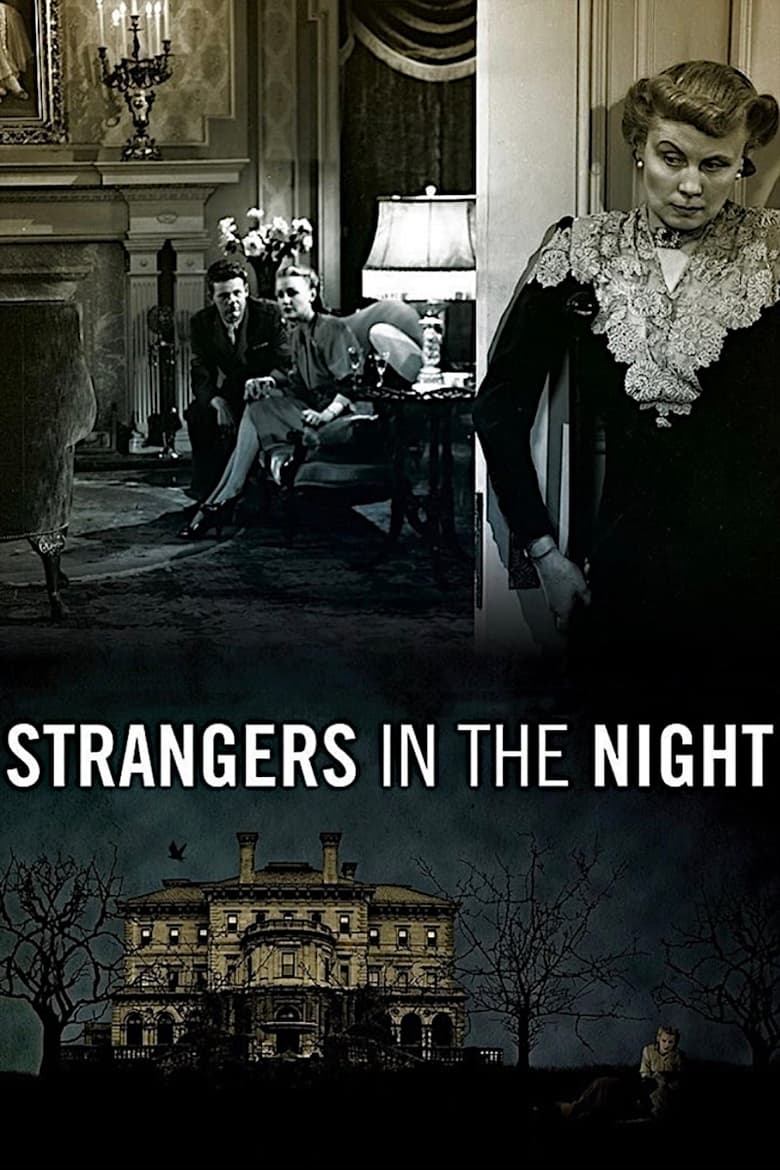
Sergeant Johnny Meadows returns stateside after wartime service carrying letters from Rosemary Blake, a young woman he has never met but with whom he has conducted a tender correspondence. Arriving at a remote California coastal town, he seeks out the Blake cottage, where he is received not by Rosemary but by her mother, Hilda – a fervid, possessive woman who has orchestrated the entire exchange. Rosemary, it emerges, has been absent from the house for some time, and the explanations Hilda offers shift with each telling.
Johnny's unease deepens when he encounters Dr. Leslie Ross, the local physician, whose guarded manner and evasive answers suggest she knows considerably more about Rosemary's fate than she will say. Ivy Miller, a companion living under Hilda's roof, provides a second unsettled presence – someone trapped by circumstance and fear. The house itself operates as the film's true antagonist: its rooms closed off, its history suppressed, its matriarch constructing a fiction so complete it has come to replace the truth.
Strangers in the Night belongs to the wartime Gothic cycle that noir absorbed from women's melodrama – the returned soldier standing in for a readership conditioned to dread what the home front had become in absence. Republic Pictures, working within tight budget constraints, channels its limitations into atmosphere, and Anthony Mann, two years before Raw Deal and T-Men would establish his noir credentials, demonstrates an already confident instinct for confined spaces and psychological pressure.
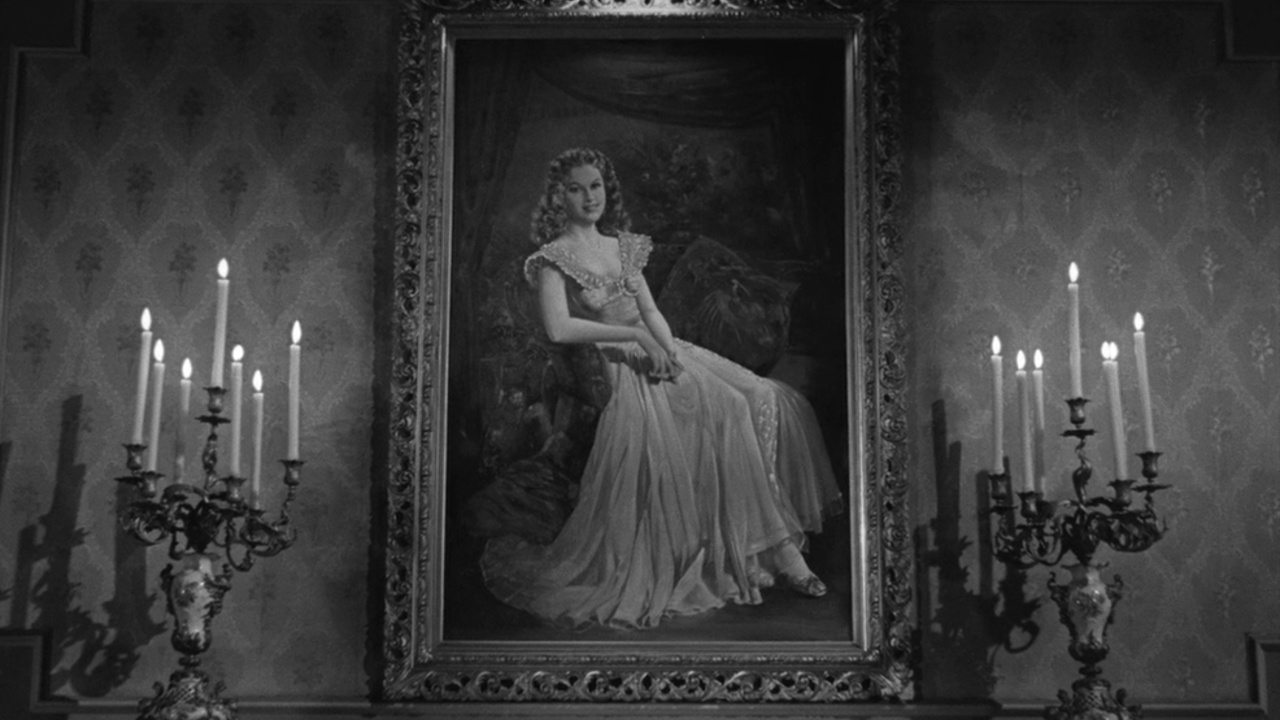
Strangers in the Night is a minor but instructive entry in Mann's early career, made before he found his full genre voice and before his collaborations with John Alton redefined what low-budget cinematography could achieve. At 56 minutes it operates closer to the B-programmer tradition than to noir proper, yet its central conceit – a mother who has fabricated a daughter's identity to attract a husband surrogate – anticipates the psychological disturbance that would animate Mann's stronger work. Helene Thimig's performance as Hilda Blake is the film's genuine asset: European in training and bearing, she brings a controlled menace to a role that could easily tip into caricature. The screenplay's debt to Gothic literature is legible throughout, and the domestic space as site of delusion and control connects the film to a wartime anxiety about home, family, and the constructed nature of the female ideal that soldiers were supposedly fighting to protect. It does not fully resolve its tensions, but it locates them with precision.
– Classic Noir
Reggie Lanning frames Hilda in the cottage doorway with the interior darkness pressing behind her and a single practical source – a lamp just off the hall table – catching only one side of her face. Johnny stands in the exterior grey, slightly below her eyeline, so that the composition places him in the position of supplicant without the film stating it. The camera holds rather than moves, and the stillness is doing work: there is no cutting to reaction shots, no relief for the eye.
The scene establishes the film's central power arrangement in visual terms before the screenplay makes it explicit. Hilda admits Johnny into the house the way a trap admits a mechanism – with apparent welcome and with no visible seam. His military bearing, which should confer authority, reads here as vulnerability; he has been rehearsed for combat, not for this. The threshold functions as the point at which his version of reality ends and hers begins.
Reggie Lanning, a Republic Pictures house cinematographer whose work seldom receives sustained critical attention, shoots Strangers in the Night with a pragmatism that serves the material. Working on studio-constructed interiors rather than location, he compensates for the constrained sets with aggressive shadow placement – walls that absorb more light than they reflect, windows whose curtains admit thin blades rather than ambient fill. Lens choices favor modest focal lengths that keep backgrounds in enough resolution to feel inhabited without competing with the foreground action. The cottage's recurring hallway is lit with a practical-source logic: pools of visibility separated by dark intervals, so that characters moving through the space pass in and out of legibility in ways that mirror the film's epistemological argument about what can be known and by whom. The cinematography does not attempt anything beyond its resources, which is itself a form of discipline – and it produces, within those limits, images that carry genuine unease.
The film is in the public domain and available in full as a free stream or download; print quality varies by upload.
TubiFreeTubi has carried Republic Pictures titles from this period; availability fluctuates, so confirm before searching.
Amazon Prime VideoSubscriptionPublic domain prints occasionally appear via Prime's ad-supported tier; check current listings as catalogue rotation is frequent.