Films People Pull a Fast One Night Beat Reading Room On TV Shop
Unknown Man 1951
1951 Metro-Goldwyn-Mayer
★★★☆☆ Notable
Film Noir · 86 minutes · Black & White

Unknown Man

Directed by Richard Thorpe
Year 1951
Runtime 86 min
Studio Metro-Goldwyn-Mayer
TMDB 5.1 / 10
"A respectable man discovers that innocence, once bartered, cannot be bought back."

Dwight Bradley Masen is a senior partner at a distinguished Chicago law firm, a man whose reputation for integrity has been the foundation of a comfortable life shared with his wife Stella and their son Bob. When Masen agrees to defend Joe Bucknor, a small-time criminal with connections to organized crime, he does so out of professional obligation and confidence in his own detachment. He wins the acquittal. Only afterward does he learn that Bucknor is guilty, and that his legal skill has returned a killer to the streets.

Masen's conscience, long insulated by professional distance, begins to fracture. He initiates a private investigation into Bucknor's activities, moving through a shadow world of informants and syndicate pressure that his courtroom life had kept safely abstract. His son Bob, working as a junior attorney, grows suspicious of his father's behavior, while Stella watches the man she married recede behind a new, harder purpose. As Masen moves closer to the truth, the syndicate figure Andrew Jason Layford makes clear that certain inquiries carry a price.

Unknown Man operates in the register of the institutional noir – less concerned with femmes fatales or expressionist shadows than with the question of what a man owes to the system he has served and profited from. The film places its moral weight on complicity: the practiced competence that allows guilt to walk free, and the impossible arithmetic of restitution. It is a courtroom film that understands courtrooms as places where justice and outcome routinely diverge.
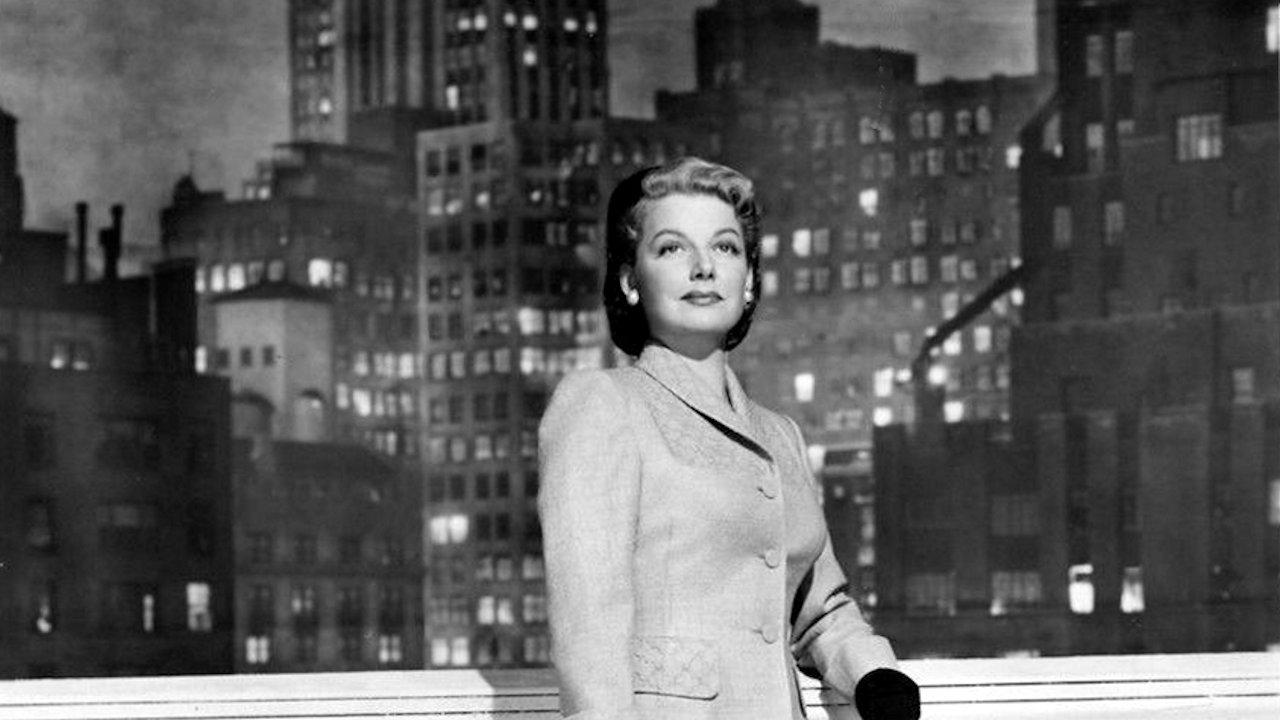
Classic Noir

Unknown Man occupies a specific and underexamined corner of early-fifties noir: the professional-conscience picture, in which the corruption is not introduced from outside but discovered to have always been latent in the protagonist's most valued skill. Walter Pidgeon brings a controlled gravity to Masen that the film needs – his performance resists self-pity, which is the only way the character's eventual actions carry moral weight rather than melodrama. Richard Thorpe, a reliable MGM craftsman rarely associated with noir, keeps the film disciplined and slightly cold, which suits its argument. The studio gloss works against atmospheric darkness but in favor of a certain institutional plausibility: this is a world of wood-paneled offices and pressed suits where evil is administered, not performed. Barry Sullivan's Bucknor is appropriately slippery, a man who knows the value of legal procedure without ever respecting it. The film reflects a postwar American anxiety about professional expertise as a morally neutral instrument, a concern that would sharpen considerably through the decade.

– Classic Noir
3 ★★★☆☆ Notable
Credits

The Crew

DirectorRichard Thorpe
ScreenplayGeorge Froeschel
CinematographyWilliam C. Mellor
MusicConrad Salinger
EditingBen Lewis
Art DirectionCedric Gibbons
CostumesHelen Rose
ProducerRobert Thomsen
Performances

The Cast

Close Reading

The Signature Scene

Unknown Man – scene
The Confrontation in Layford's Office Counsel Across the Desk

William C. Mellor places the camera at a measured distance, the desk functioning as a formal barrier between Masen and Layford. The lighting is largely frontal on Pidgeon, removing the expressive shadow typical of noir confrontation scenes and leaving his face exposed – readable, without refuge. Eduard Franz's Layford sits in a zone of softer, more diffuse illumination that makes him appear less a villain than an administrator, his menace delivered in the register of corporate courtesy. The frame is symmetrical almost to the point of irony, two men in suits conducting what amounts to a negotiation over whether the law or its opposite will prevail.

The scene's visual restraint is its argument. Masen is not facing a dark alley or a raised gun but something closer to a mirror: a man who also understands exactly how institutions work and who uses that understanding without the inconvenience of conscience. The even lighting refuses to distribute moral clarity through shadow, insisting that what Masen must confront is not darkness but a legible, well-lit version of the choices his profession has always made available to him.

Visual Language

The Cinematography

🎞️
William C. Mellor – Director of Photography

William C. Mellor, whose career ranged from A Place in the Sun to a broad body of MGM studio work, brings to Unknown Man a visual approach that is less expressionist than diagnostic. Working predominantly on studio sets, he employs relatively flat, institutional lighting in the office and courtroom sequences – not from lack of craft but as a deliberate tonal choice that identifies the professional world as one where shadow is not permitted to accumulate. When the film moves into criminal terrain, Mellor introduces harder directional sources and tighter frames, but the contrast is never extreme: the point is that these two worlds are adjacent, not opposite. His composition throughout favors the medium shot and the two-shot, keeping characters in legible spatial relation to one another rather than isolating them in the expressive close-ups favored by more stylized noir. The result is a cinematography that serves moral argument over atmosphere, placing the audience in the position of observing men make choices rather than watching fate operate upon them.

In the Catalogue

Themes & Motifs

Availability

Where to Watch

Also in the Directory

See Also