Films People Pull a Fast One Night Beat Reading Room On TV Shop
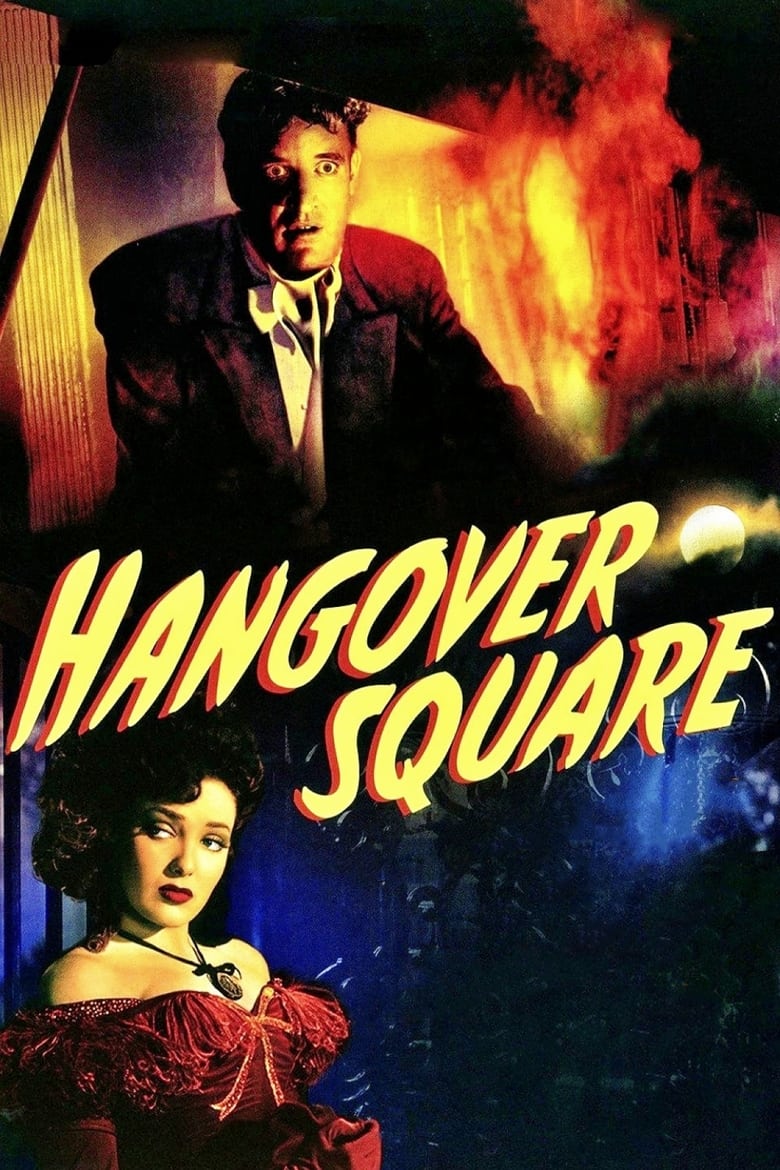
Hangover Square 1945
1945 20th Century Fox
★★★☆☆ Notable
Film Noir · 78 minutes · Black & White

Hangover Square

Directed by John Brahm
Year 1945
Runtime 78 min
Studio 20th Century Fox
TMDB 7.0 / 10
"A composer loses himself in the fog of London – and finds something worse than madness."

London, 1903. George Harvey Bone (Laird Cregar) is a large, gentle composer laboring over a serious piano concerto while supplementing his income writing popular songs for the music halls. He suffers from a dissociative condition: sharp, discordant sounds trigger blackouts during which he has no memory of his actions. When he emerges from one such episode to find a body and a bonfire, the pattern begins to take shape – though Bone himself cannot see it. His physician and friend Dr. Allan Middleton (George Sanders) is concerned but cautious, unwilling yet to name what he suspects.

Into this fragile existence comes Netta Longdon (Linda Darnell), a calculating music-hall singer who recognizes Bone's usefulness as a songwriter and cultivates his obsession without returning it. She is involved with Eddie Carstairs (Glenn Langan), a man of no particular scruple, and she manages both relationships with a practiced indifference to consequence. Bone, meanwhile, is genuinely drawn to Barbara Chapman (Faye Marlowe), a woman of steadier character who sees him clearly – but Netta's hold on his imagination proves impossible to break, and his blackouts grow more frequent as his concerto nears completion.

Hangover Square operates at the intersection of the psychological thriller and the period Gothic, using its Edwardian London setting to distance its violence just enough to permit a tragic rather than simply criminal reading of its protagonist. The film belongs to a cycle of Fox productions in the mid-1940s that imported German Expressionist atmosphere into studio genre work, and it asks whether a man who cannot remember his crimes is guilty of them – a question it pursues with more seriousness than most films of its kind.
Classic Noir

Hangover Square arrives at the end of Laird Cregar's brief career – he died before the film was released, at thirty-one, having crash-dieted to change the image that made him effective here – and that biographical shadow is difficult to separate entirely from the performance. Yet the film earns its place in the noir-adjacent canon on formal grounds alone. John Brahm, working from Barre Lyndon's adaptation of Patrick Hamilton's novel (which he substantially transformed), constructs a portrait of dissociation that Fox's Expressionist house style suits precisely. Bernard Herrmann's score, built around a full piano concerto that reaches its climax in the film's finale, is one of the most purposeful uses of original composition in 1940s Hollywood: the music does not illustrate the action but competes with it, insisting on Bone's interior life even as the narrative condemns him. LaShelle's photography disciplines the fog and gaslight into a consistent moral argument – darkness is not atmosphere here but condition. The film is not Hamilton's novel, and viewers who know the source may resist the Hollywood tragedy it becomes; taken on its own terms, it is a precise and melancholy piece of work.

– Classic Noir
3 ★★★☆☆ Notable
Credits

The Crew

DirectorJohn Brahm
ScreenplayBarré Lyndon
CinematographyJoseph LaShelle
MusicBernard Herrmann
EditingHarry Reynolds
Art DirectionLyle R. Wheeler
CostumesKay Nelson
ProducerRobert Bassler
Performances

The Cast

Close Reading

The Signature Scene

Hangover Square – scene
The Bonfire on Guy Fawkes Night Flames Rising Around Him

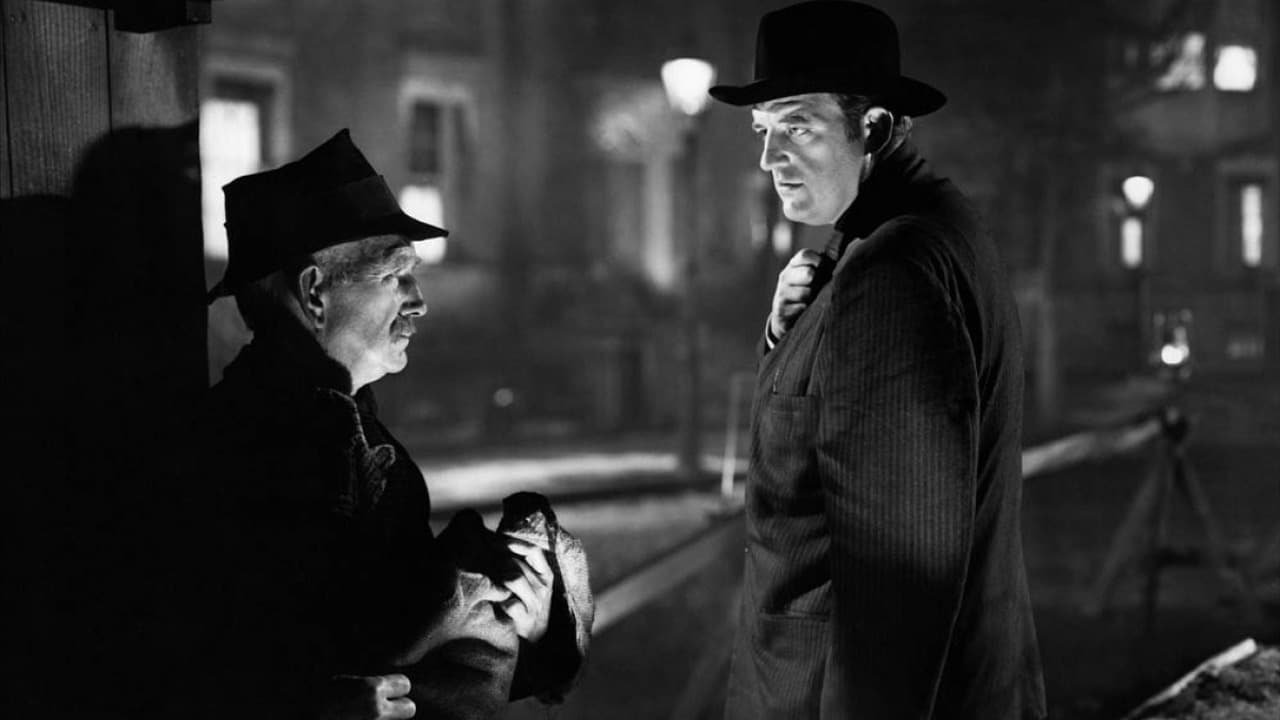
Brahm and LaShelle frame Bone at the center of a public bonfire celebration, the crowd moving around him in soft focus while the fire fills the right third of the frame with undifferentiated light. The camera holds at a medium distance, refusing the close-up that would invite identification; Bone is a figure within the spectacle rather than the spectacle's subject. Sparks drift upward through the frame's upper register, and the reflected firelight on Cregar's face is the only warm illumination in an otherwise cold composition – the surrounding street lamps produce halos in the fog but no usable light.

The scene makes visible what the film's narrative structure can only imply: that Bone's violence is not private but performed before an audience that does not know what it is watching. The crowd's festivity and his dissociation occupy the same physical space without touching. It is the film's clearest statement about the distance between a man's external circumstances and his interior collapse – and it foreshadows the concerto's finale by establishing fire as the element through which Bone's story will resolve.

Visual Language

The Cinematography

🎞️
Joseph LaShelle – Director of Photography

Joseph LaShelle, who had shot Laura for Otto Preminger the year before and would win the Academy Award for that work, brings to Hangover Square a related but distinct visual sensibility. Where Laura used shadow to produce mystery, LaShelle here uses it to produce enclosure. The film is shot entirely on Fox studio stages dressed as Edwardian London, and rather than disguising the artificiality, LaShelle leans into it: the fog is denser than any natural fog, the gas lamps produce pools of light surrounded by absolute darkness, and the geometry of streets and interiors is consistently simplified to remove the incidental. Wide-angle lenses in the interior scenes make Cregar's large frame fill rooms uncomfortably. The lighting setups favor side and back light over frontal illumination, so that faces are partially in shadow even in domestic scenes. The effect is to make Bone's world feel already half-lost to darkness – the moral logic of the photography insists that his environment and his condition are one thing, not two.

In the Catalogue

Themes & Motifs

Availability

Where to Watch

Also in the Directory

See Also