Films People Pull a Fast One Night Beat Reading Room On TV Shop
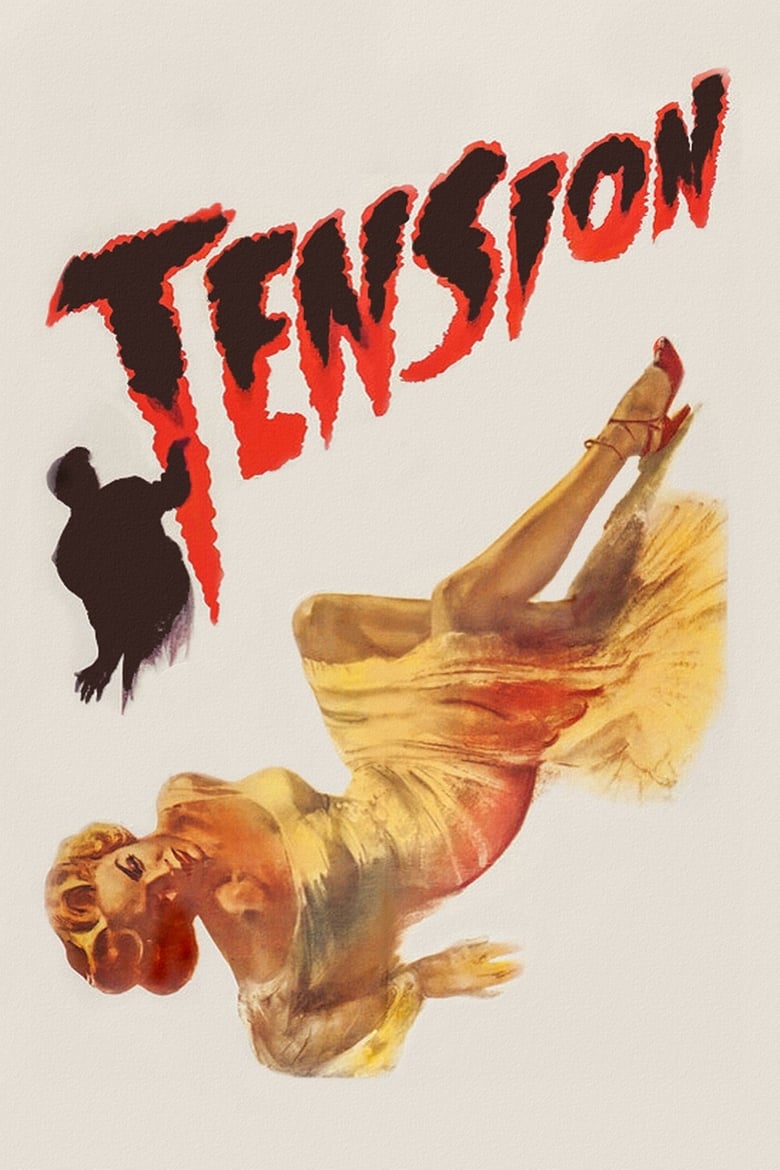
Tension 1949
1949 Metro-Goldwyn-Mayer
★★★☆☆ Notable
Film Noir · 95 minutes · Black & White

Tension

Directed by John Berry
Year 1949
Runtime 95 min
Studio Metro-Goldwyn-Mayer
TMDB 6.8 / 10
"A man invents a new identity to commit the perfect murder – then discovers someone else has already done it for him."

Warren Quimby (Richard Basehart) is a mild-mannered drugstore pharmacist whose life is ordered, respectable, and quietly suffocating. His wife Claire (Audrey Totter) is openly contemptuous of him, conducting an affair with the coarse and wealthy Barney Deager (Lloyd Gough) and making no effort to conceal it. When Warren confronts Barney and is humiliated, something in him finally breaks. He constructs an elaborate scheme: he will assume a second identity, establish an alibi through a new life and a new address, and then return long enough to kill Barney without suspicion falling on Warren Quimby.

Before the plan reaches its conclusion, Warren meets Mary Chanler (Cyd Charisse), a warm and uncomplicated woman who falls for the man he is pretending to be. Her presence complicates everything. Then Barney is found murdered – not by Warren, who lost his nerve at the last moment, but by someone else entirely. The investigation falls to Lt. Collier Bonnabel (Barry Sullivan), a cool, sardonic homicide detective who methodically works backward from motive, and who fixes his attention on Warren almost immediately. Claire, meanwhile, understands exactly how exposed Warren is, and uses that knowledge to her own advantage.

Tension belongs to the strain of late-1940s noir that is less concerned with crime as spectacle than with the psychology of the ordinary man who discovers in himself the capacity for violence. The procedural frame – Bonnabel narrates and controls the investigation with practiced detachment – gives the film a structural irony: we know Warren's guilt of intention even as his guilt of action remains uncertain. The moral and legal questions the film raises are kept in careful balance until the final reel.
Classic Noir

Tension occupies an instructive middle position in the MGM noir cycle – polished enough to carry the studio's production values, honest enough to sustain genuine unease. John Berry directs with economy rather than flair, which suits the material. The film's central conceit – a man who engineers a murder only to be accused of one he did not commit – is a variant on the wrong-man formula, but Berry and screenwriter Allen Rivkin complicate it by making Warren genuinely culpable in intention. Richard Basehart's performance is the film's quiet engine: he registers the pharmacist's passivity, his slow radicalization, and his paralysis without tipping into caricature. Audrey Totter, playing one of the period's more caustic femmes fatales, brings a specific working-class sharpness to Claire that the script earns. Barry Sullivan's Bonnabel is an unusual figure – a detective who openly manipulates suspects and admits to it – and his narration gives the film a procedural coldness that sits in productive tension with Warren's emotional disorder. André Previn's score, one of his earliest, is restrained and functional. The film does not transcend its genre, but it executes its premises with discipline.

– Classic Noir
3 ★★★☆☆ Notable
Credits

The Crew

DirectorJohn Berry
ScreenplayAllen Rivkin
CinematographyHarry Stradling Sr.
MusicAndré Previn
EditingAlbert Akst
Art DirectionLeonid Vasian
ProducerRobert Sisk
Performances

The Cast

Close Reading

The Signature Scene

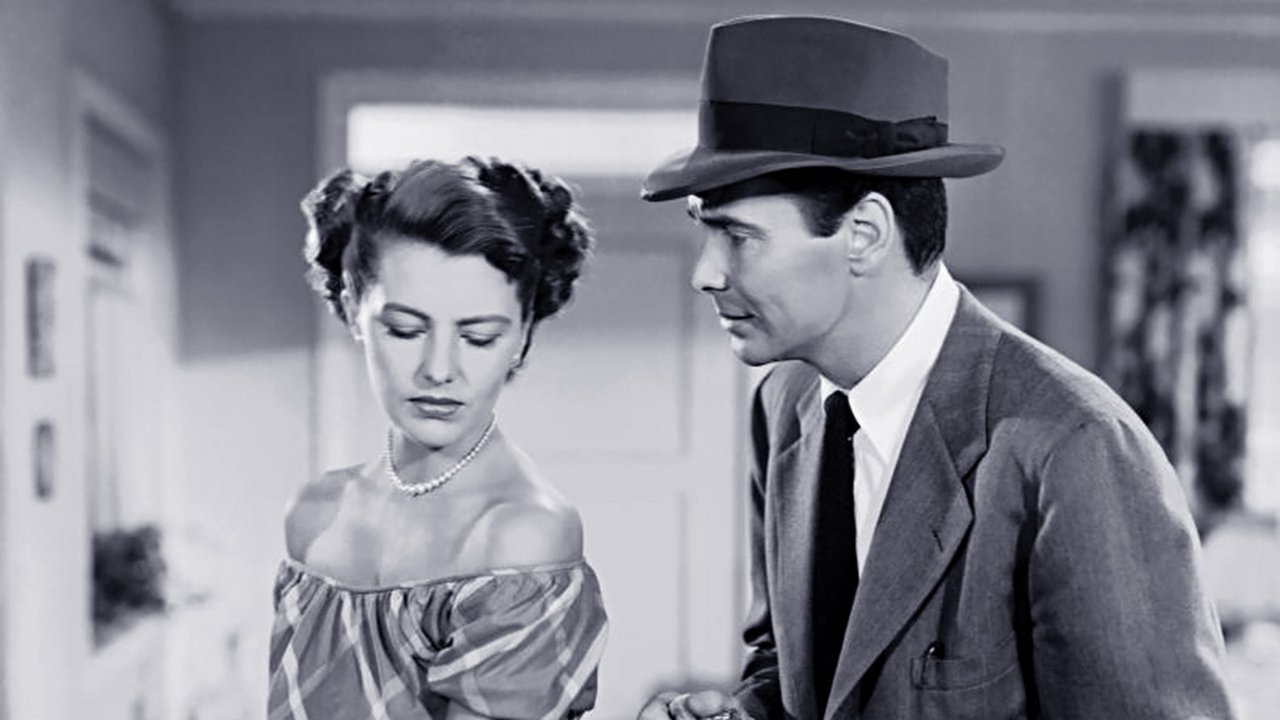
Tension – scene
The Beach House Confrontation Two Men, One Door

Harry Stradling frames the scene with Warren positioned just outside Barney Deager's beach house, the doorway a hard rectangle of interior light cutting into the coastal darkness. The camera holds at a middle distance, refusing to move in as Warren raises his fist to knock. Light from inside falls across his face in a single diagonal band, leaving the rest of his figure in near-total darkness. When the door opens and Barney fills the frame, the composition places Warren at the threshold in every sense – physically outside, morally on the edge – while Barney's bulk and confidence occupy the lit interior as a kind of territorial assertion.

The scene does the film's essential argumentative work. Warren has constructed an alter ego and crossed a great deal of psychic distance to arrive at this door, yet the staging makes clear that he has not arrived anywhere decisive. The light refuses to claim him fully; the darkness refuses to release him. It is the film's most compressed image of its central idea – that a man can plan a murder in elaborate detail and still lack the thing that would actually make him dangerous. The threshold, lit on one side and dark on the other, is where Tension locates its moral question.

Visual Language

The Cinematography

🎞️
Harry Stradling Sr. – Director of Photography

Harry Stradling Sr. brings to Tension a controlled chiaroscuro that serves the film's psychological argument without drawing attention to itself. Working largely on studio sets dressed to suggest Southern California suburban and coastal spaces, Stradling uses deep shadow not as atmosphere for its own sake but as a mapping of his protagonist's moral condition – Warren is repeatedly framed in partial darkness, never fully in light, never fully concealed. The lighting setups favor single hard sources that produce precise shadow edges, consistent with the period's preference for high-contrast monochrome, but Stradling modulates contrast carefully: scenes involving Mary Chanler are lit with noticeably softer fills, encoding the normative domestic world Warren is in the process of abandoning. The exterior work at the beach house and the drugstore sequences use available architectural lines to create natural frames within the frame. Stradling does not impose visual rhetoric on the story; he makes the story visible through it.

In the Catalogue

Themes & Motifs

Availability

Where to Watch

Also in the Directory

See Also